
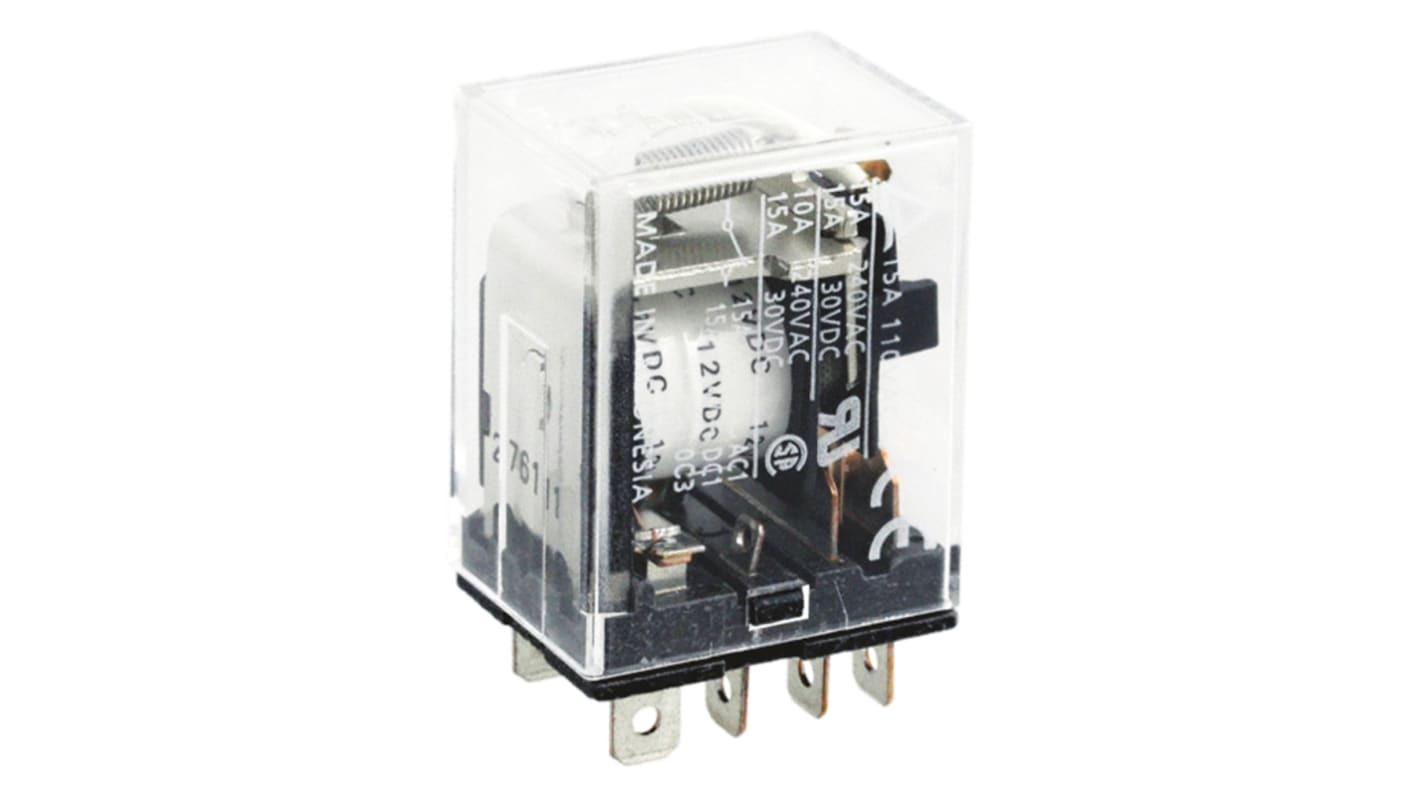
Omron LY2Z 24VDC Relay: Technical Guide for Control Panel Applications
The Omron LY2Z 24VDC relay is a plug-in electromechanical relay designed for control panel, automation, and industrial switching applications where dependable signal separation and compact installation are important. As part of Omron’s LY relay family, this model is built for engineers, panel builders, maintenance teams, and automation specialists who need a clear understanding of coil voltage, contact structure, load capacity, and installation behavior before selecting a relay for a circuit.
This relay uses a 24 VDC coil and features a DPDT contact arrangement, also known as a two-pole double-throw configuration. That means the relay can control two separate circuits while switching each circuit between normally open and normally closed contacts. This makes it useful in automation panels where one relay may be required to manage multiple control signals, interlock logic, alarm circuits, or auxiliary switching paths.
Core Technical Characteristics
The Omron LY2Z 24VDC relay is specified as a two-pole relay with bifurcated contacts. Bifurcated contacts are especially valuable when switching lower-level signals because the split contact structure improves contact reliability by creating multiple contact points. In practical terms, this can help reduce the risk of unstable switching in sensitive control circuits.
The relay has a 24 VDC coil rating with an approximate coil current of 36.9 mA and a coil resistance of around 650 ohms. Its plug-in terminal structure allows the relay to be mounted into compatible sockets, making replacement and maintenance easier compared with soldered or fixed-terminal relays.
Contact Ratings and Load Handling
The Omron LY2Z 24VDC relay is suitable for moderate control loads. It is rated for 110 VAC resistive loads up to 5 A and 24 VDC resistive loads up to 5 A. For inductive loads, the rating is lower, which is normal for electromechanical relays because motors, solenoids, and coils generate electrical stress during switching.
When designing a control circuit, it is important to distinguish between resistive and inductive loads. A heater or simple lamp circuit may behave mostly as a resistive load, while a solenoid valve, contactor coil, or small motor has inductive behavior. Using the relay within its rated limits helps maintain switching consistency and supports longer service life.
Where the Omron LY2Z 24VDC Relay Is Commonly Used
This relay is often selected for machine control panels, relay logic circuits, interface panels, alarm circuits, instrumentation systems, and auxiliary control functions. Because it uses a 24 VDC coil, it fits naturally into modern industrial control environments where 24 VDC control power is widely used.
The DPDT structure gives designers flexibility. One pole may be used to switch a control input, while the second pole can drive an indicator, provide feedback to a PLC, or isolate another circuit. This makes the relay a practical component when panel space, wiring simplicity, and serviceability are all priorities.
Installation and Maintenance Notes
Since the Omron LY2Z 24VDC relay is a plug-in relay, socket compatibility should be checked before installation. The relay should be installed in a clean control cabinet, away from excessive vibration, moisture, conductive dust, and heat sources. Proper wire sizing, secure terminal tightening, and correct polarity for the DC coil are essential for safe and reliable operation.
For additional product context, visit Omron information.
Frequently Asked Questions
What type of relay is the Omron LY2Z 24VDC relay?
The Omron LY2Z 24VDC relay is a plug-in electromechanical general-purpose relay with a 24 VDC coil and DPDT contact configuration. It is commonly used in control panels and automation circuits.
What does DPDT mean on this relay?
DPDT means double pole double throw. The relay can switch two independent circuits, and each circuit can change between normally open and normally closed contact states.
What makes bifurcated contacts useful?
Bifurcated contacts provide two contact points per switching path. This can improve reliability, especially in circuits with lower signal levels where stable electrical contact is important.
Can the Omron LY2Z 24VDC relay switch AC and DC loads?
Yes, it can switch both AC and DC loads within its rated values. The load type, voltage, and current must always remain within the relay’s published specifications.
Is this relay suitable for PLC interface circuits?
Yes, it can be used in PLC interface circuits when the coil voltage, contact rating, and wiring design match the system requirements. It is especially useful when electrical isolation is required between control and field devices.
Does this relay require a socket?
It is designed as a plug-in relay, so it is normally installed with a compatible relay socket. This makes replacement easier during maintenance.
What should be checked before replacing an existing relay with this model?
Check the coil voltage, contact form, pin layout, socket compatibility, contact rating, load type, and control circuit requirements before replacement.