
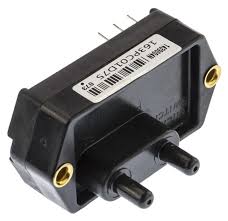
Honeywell 163PC01D75 MEMS Pressure Sensor Guide
The Honeywell 163PC01D75 MEMS pressure sensor is a board-mount differential pressure device designed for precise low-pressure measurement in compact electronic systems. Engineers often choose this Honeywell 163PC01D75 MEMS pressure sensor when stable analog output, temperature compensation, and reliable long-term signal performance matter more than a basic unamplified sensing element.
What Makes the Honeywell 163PC01D75 MEMS Pressure Sensor Different?
The Honeywell 163PC01D75 pressure sensor belongs to Honeywell’s 160PC family and is built for differential pressure measurement. It is especially relevant in designs where very small pressure changes must be converted into a readable voltage signal without adding unnecessary complexity to the PCB. Because it uses amplified output, the sensor is easier to integrate into control boards, monitoring systems, and industrial instrumentation where signal conditioning needs to stay efficient.
In practical terms, the Honeywell 163PC01D75 MEMS pressure transducer helps developers measure airflow, pressure drop, and low-pressure system behavior with a compact 3-SIP through-hole format. That makes it a sensible fit for prototyping as well as long-life embedded applications.
Technical Characteristics of 163PC01D75
This Honeywell MEMS pressure sensor is a differential type with an operating pressure of ±0.09 psi. It provides an analog voltage output in the 3.5 V to 8.5 V range and is designed for a 6 V to 16 V supply. The device is temperature compensated, offers amplified output, and operates from -40°C to 85°C. Its dual 0.2 inch male ports and PC pin termination make installation straightforward on compatible boards and pneumatic layouts.
Where the 163PC01D75 Pressure Sensor Is Commonly Used
The Honeywell 163PC01D75 pressure sensor is well suited to applications that need repeatable low-pressure monitoring rather than high-pressure media handling. Typical examples include airflow verification, pneumatic instrumentation, gas flow observation, clean equipment monitoring, and pressure-drop tracking across filters or internal chambers. In systems where a small signal shift can affect control accuracy, a Honeywell 163PC01D75 differential pressure sensor can support stable measurement without a large external signal-conditioning burden.
Why Engineers Still Search for 163PC01D75 MEMS Pressure Sensor
There is continued demand for the Honeywell 163PC01D75 MEMS pressure sensor because many maintenance teams, OEM service departments, and retrofit projects prefer proven analog-output pressure components. Instead of redesigning an entire sensing stage, engineers often look for the same Honeywell pressure sensor part number to preserve calibration behavior, board compatibility, and predictable electrical integration.
For more information about Honeywell, it is useful to review the broader sensor portfolio alongside this specific part.
FAQ
Is the 163PC01D75 a differential or gauge pressure sensor?
The Honeywell 163PC01D75 is a differential pressure sensor. It is intended to compare pressure between two ports, which makes it useful for measuring pressure drop, air movement, or relative pressure changes across a system.
What kind of output does the 163PC01D75 provide?
This Honeywell 163PC01D75 MEMS pressure sensor provides an amplified analog voltage output. That is important for designers who want a cleaner electrical interface and reduced dependence on external amplification stages.
Is the Honeywell 163PC01D75 suitable for industrial electronics?
Yes, it can be a strong choice for industrial and instrumentation electronics where low-pressure differential measurement is needed. Its compensated design and wide operating temperature range make it appropriate for stable embedded use.
Why is the Honeywell 163PC01D75 still relevant in existing systems?
Many installed systems were designed around the electrical and mechanical footprint of this Honeywell 163PC01D75 MEMS pressure sensor. For service, replacement, and continuity in validated equipment, keeping the original sensor family often reduces redesign risk.