
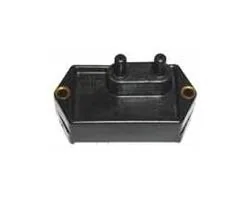
Honeywell 163PC01DW98 MEMS Pressure Sensor Overview
The Honeywell 163PC01DW98 MEMS pressure sensor is a differential board-mount sensor developed for applications that need dependable analog pressure feedback across a broader low-pressure range than ultra-fine differential models. For control designers, the Honeywell 163PC01DW98 pressure sensor offers a practical balance between measurable range, compensated performance, and straightforward PCB integration.
Understanding the Honeywell 163PC01DW98 Pressure Sensor
The Honeywell 163PC01DW98 belongs to the 160PC family, a range known for amplified output and stable low-pressure sensing. This specific Honeywell MEMS pressure sensor is aimed at systems where both sensitivity and usable measuring span are important. In many embedded control platforms, the part serves as a reliable differential sensing element for gas flow monitoring, internal pressure comparison, and process control feedback.
Because the Honeywell 163PC01DW98 MEMS pressure transducer provides a conditioned analog voltage signal, it can simplify front-end electronics. That matters in equipment where designers want to reduce additional amplification stages and keep the signal path consistent over temperature.
Key Technical Features of 163PC01DW98
The Honeywell 163PC01DW98 differential pressure sensor measures from -0.72 psi to 4.34 psi. It offers an analog voltage output from 3.5 V to 8.5 V and runs on a 6 V to 16 V supply. Accuracy is listed at ±1.5%, while the sensor also includes amplified output and temperature compensation. It uses dual male 0.2 inch ports, PC pin termination, a 3-SIP module format, and supports operating temperatures from -40°C to 85°C.
Application Perspective
In real-world engineering work, a Honeywell 163PC01DW98 MEMS pressure sensor can be used where a pressure differential must be observed continuously and translated into a stable voltage signal. Examples include airflow supervision, gas path control, pneumatic system monitoring, environmental equipment, and instrumentation that compares upstream and downstream pressure conditions.
Another reason engineers search for the Honeywell 163PC01DW98 pressure transducer is continuity. Existing boards and validated assemblies often depend on a specific mechanical footprint, output window, and response profile. Replacing it with a nominally similar sensor may still force recalibration or PCB changes. That is why exact Honeywell part identification remains important in maintenance and refurbishment workflows.
Why This Honeywell MEMS Pressure Sensor Still Matters
The Honeywell 163PC01DW98 MEMS pressure sensor remains relevant because it combines classic analog integration with dependable family-level performance. In sectors where redesign is expensive and field reliability matters, a known Honeywell differential pressure sensor can be more useful than a newer but less proven substitute.
For more information about Honeywell, reviewing the wider sensing range can help place this component in the context of a complete industrial measurement strategy.
FAQ
What pressure range does the 163PC01DW98 measure?
The Honeywell 163PC01DW98 measures differential pressure from -0.72 psi to 4.34 psi. This makes it suitable for applications that need a wider low-pressure span than ultra-low differential devices.
Does the 163PC01DW98 have analog output?
Yes. The Honeywell 163PC01DW98 MEMS pressure sensor provides an analog voltage output, which helps it integrate with monitoring boards, controller inputs, and signal acquisition circuits.
Is the Honeywell 163PC01DW98 temperature compensated?
Yes, this Honeywell differential pressure sensor includes temperature compensation. That supports more stable behavior when environmental conditions vary across the operating range.
Why would an engineer specify the exact 163PC01DW98 part number?
Exact part selection matters because pressure range, electrical output, footprint, and calibration expectations all affect system behavior. Using the exact Honeywell 163PC01DW98 MEMS pressure sensor helps reduce redesign effort and preserves compatibility in established equipment.