
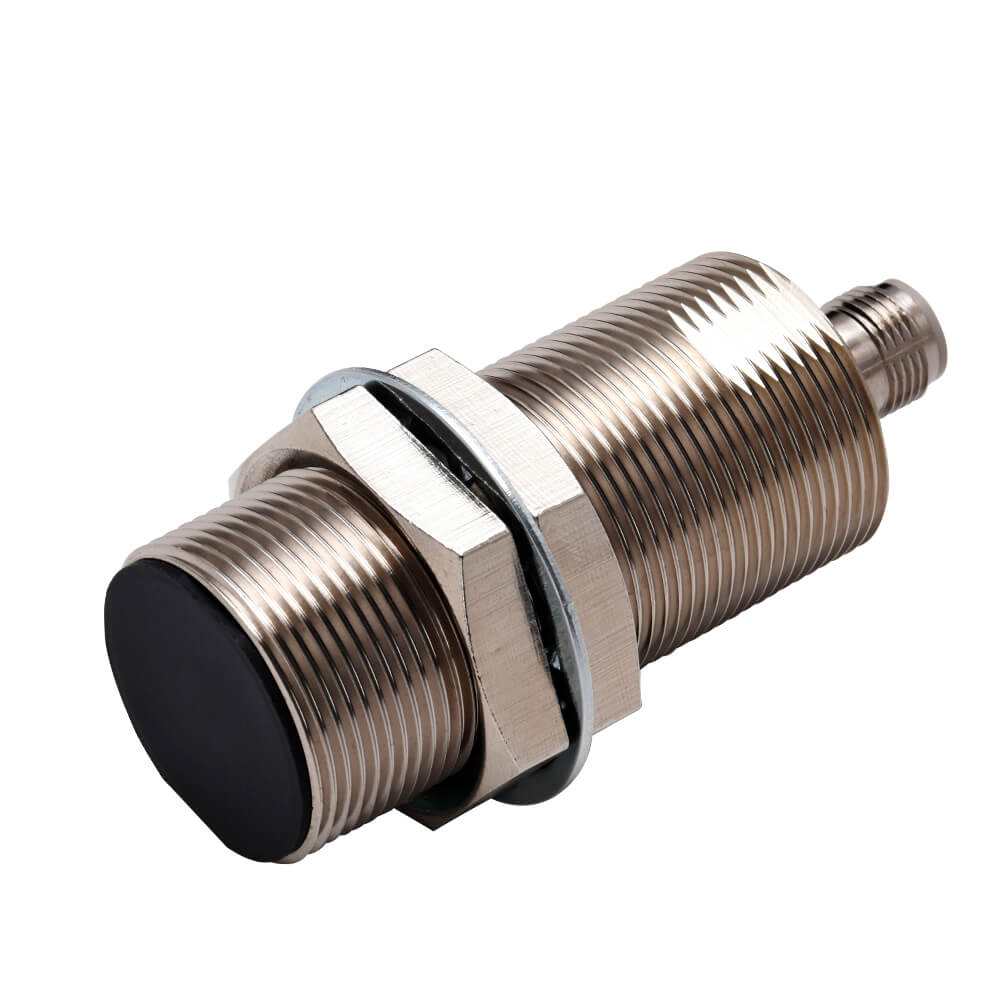
Omron E2E-X22C1L30-M1 Inductive Proximity Sensor
| Feature | Value |
|---|---|
| Sensor Type | Inductive Proximity Sensor |
| Series | E2E NEXT |
| Housing Size | M30 |
| Sensing Distance | 22 mm |
| Mounting Type | Quasi-flush |
| Output Type | NPN |
| Operation Mode | Normally Open (NO) |
| Connection Method | M12 Connector |
| Supply Voltage | 10 to 30 VDC |
| Response Frequency | 200 Hz |
| Housing Material | Nickel-Plated Brass |
| Overall Length | 80 mm |
| Thread Length | 64 mm |
| Protection Rating | IP67 / IP69K |
| Operating Temperature | -25°C to +70°C |
Technical Overview
The Omron E2E-X22C1L30-M1 Inductive Proximity Sensor is designed for non-contact detection of metallic targets in industrial automation systems. As part of the E2E NEXT series, it combines extended sensing distance with a robust M30 cylindrical housing suitable for demanding production environments.
This model features a 22 mm sensing distance, a 3-wire NPN normally open output configuration, and an M12 connector interface. Its nickel-plated brass housing provides mechanical durability while maintaining resistance against harsh industrial conditions. The sensor is intended for applications requiring reliable metal detection without physical contact.
How the Sensor Works
The Omron E2E-X22C1L30-M1 Inductive Proximity Sensor operates by generating an electromagnetic field at its sensing face. When a conductive metal object enters this field, eddy currents are induced within the target material. These currents alter the oscillator characteristics inside the sensor, allowing the internal circuitry to detect the presence of the object and switch the output state.
Because the sensing principle is based on electromagnetic interaction, the sensor is unaffected by ambient light, color variations, or surface finishes that may influence optical detection technologies.
Key Features and Advantages
- 22 mm sensing distance for increased installation flexibility
- NPN normally open output suitable for many PLC input architectures
- IP67 and IP69K protection against dust, water ingress, and washdown processes
- M12 connector simplifies installation and replacement procedures
- Nickel-plated brass housing supports long-term industrial operation
- Quasi-flush mounting capability for integration into machine structures
- Stable sensing performance across a wide temperature range
Typical Applications
The Omron E2E-X22C1L30-M1 Inductive Proximity Sensor is commonly used where reliable metal object detection is required. Typical applications include:
- Position verification on automated assembly systems
- Metal component presence detection on conveyor lines
- Fixture and tooling monitoring in machining centers
- Actuator position confirmation in automated machinery
- Part counting and transfer monitoring in production cells
- Mechanical movement verification in packaging equipment
Industrial Application Examples
Automotive Manufacturing
Production equipment can use the sensor to confirm the presence of stamped metal parts before robotic assembly operations begin.
Machine Building
Machine designers frequently integrate inductive sensors to verify cylinder positions, indexing mechanisms, and moving machine components.
Material Handling Systems
Conveyor installations benefit from reliable metal target detection for routing, sorting, and positioning processes.
Packaging Machinery
The sensor can detect metal machine elements and moving assemblies to ensure synchronized machine operation.
Considerations When Selecting This Sensor
Several factors should be evaluated before implementing the Omron E2E-X22C1L30-M1 Inductive Proximity Sensor. The target material, available mounting space, required sensing distance, electrical interface requirements, and environmental conditions all influence sensor suitability.
Engineers should also verify compatibility between the NPN output configuration and the receiving PLC or controller input circuitry. The M30 housing dimensions and quasi-flush mounting requirements should be reviewed during mechanical design.
For additional sensor technologies and product families, explore Omron sensor products.
Maintenance and Reliability
Inductive proximity sensors generally require minimal maintenance because they operate without mechanical contact. Periodic inspection of mounting hardware, connector integrity, and sensing surfaces can help maintain reliable performance throughout the equipment lifecycle.
The IP67 and IP69K protection ratings make the sensor suitable for installations exposed to dust, moisture, and cleaning procedures commonly encountered in industrial facilities.
Frequently Asked Questions
What type of sensor is the Omron E2E-X22C1L30-M1 Inductive Proximity Sensor?
It is an inductive proximity sensor designed for non-contact detection of metallic objects.
What is the sensing distance of this model?
The rated sensing distance is 22 mm under specified test conditions.
What output configuration does the sensor use?
The sensor provides a 3-wire NPN normally open output.
Can it detect non-metallic materials?
No. Inductive sensing technology is specifically intended for conductive metallic targets.
What protection rating does the sensor provide?
The unit is rated IP67 and IP69K for resistance to dust and water exposure.
What connection method is used?
The sensor uses an M12 connector interface for electrical connection.
Where is the Omron E2E-X22C1L30-M1 Inductive Proximity Sensor commonly installed?
It is frequently used in manufacturing equipment, conveyor systems, assembly machines, and metal processing applications.
Why choose an M30 sensor body?
The larger housing supports longer sensing distances and provides increased mechanical robustness for industrial installations.
Does the sensor require regular calibration?
Under normal operating conditions, routine calibration is not typically required.
What should be checked before installation?
Verify the target material, available mounting space, power supply voltage, wiring compatibility, and environmental conditions.