
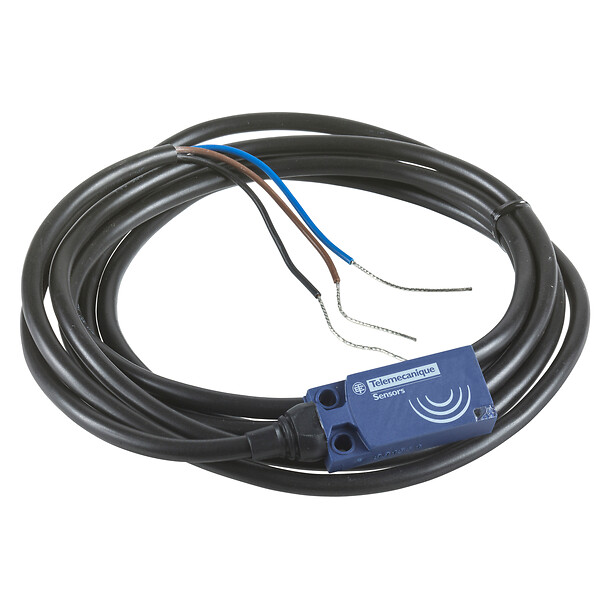
Telemecanique XS7F1A1PAL2 Inductive Proximity Sensor Overview
The Telemecanique XS7F1A1PAL2 inductive proximity sensor is a compact flat-form device used for non-contact detection of metallic targets in industrial automation. It is designed for applications where repeatable sensing, compact mounting, and dependable DC switching are required. By detecting metal without physical contact, it reduces mechanical wear and helps support stable operation in repetitive machine cycles.
This sensor is part of the Telemecanique XS range and is commonly selected for machine builders, maintenance teams, and automation engineers who need a rectangular proximity sensor rather than a threaded cylindrical design. The Telemecanique XS7F1A1PAL2 inductive proximity sensor is especially relevant for small equipment, conveyors, packaging systems, handling units, and general-purpose metal detection tasks.
Technical Characteristics
The Telemecanique XS7F1A1PAL2 uses a flat-form 15 x 32 x 8 mm housing and a PBT plastic enclosure. It is flush mountable, allowing installation into compatible metal or machine surfaces with a clean, space-saving layout. The sensor has a nominal sensing distance of 5 mm, which makes it suitable for close-range detection of metal parts.
This model operates from a 12 to 24 VDC supply and uses a 3-wire connection. Its output is PNP normally open, so it provides a positive switching signal when a valid metal target is detected. The device is supplied with a 2 m cable and supports switching capacity up to 100 mA. Its IP68 rating provides strong environmental protection for many industrial conditions.
Telemecanique XS7F1A1PAL2 Understanding the PNP Normally Open Output
The PNP normally open output is an important distinction for this model. In many PLC systems, PNP sensors are used when the input module expects a positive voltage signal during activation. When the XS7F1A1PAL2 detects a suitable metal object, the output switches to indicate target presence. Before installation, the PLC input type should be checked to ensure compatibility.
This is one of the main differences between the XS7F1A1PAL2 and similar NPN versions. The mechanical format and sensing purpose may look similar, but the output logic must match the electrical design of the control system. Selecting the wrong output type can create commissioning delays or require wiring changes.
Common Applications
The Telemecanique XS7F1A1PAL2 inductive proximity sensor is used for metal object detection, component presence verification, actuator position checks, machine sequence confirmation, and conveyor part sensing. Its small flat body makes it practical in compact machinery where standard cylindrical sensors may not fit easily.
In packaging equipment, it can confirm the position of a metal guide, stop, or moving mechanism. In assembly systems, it can detect whether a metal part has reached the correct location. In handling systems, it may monitor the travel of a slide or confirm that a fixture has returned to its reference position.
Installation and Selection Notes
For best performance, the sensing face should be aligned with the target path, and the target should remain within the effective sensing zone. Although the nominal sensing distance is 5 mm, detection may vary with target material, target thickness, surrounding metal, and mounting method. The flush-mountable design supports neat integration, but installation guidance should still be followed carefully.
For additional product family details, visit Telemecanique industrial sensor information.
Telemecanique XS7F1A1PAL2 Frequently Asked Questions
What is the Telemecanique XS7F1A1PAL2 used for?
It is used to detect metallic objects without contact. Typical applications include position sensing, metal part detection, fixture verification, and machine cycle monitoring in industrial automation systems.
What is the sensing distance of the XS7F1A1PAL2?
The nominal sensing distance is 5 mm. Actual detection distance can change depending on the target material, target size, installation style, and surrounding conditions.
What output does the XS7F1A1PAL2 provide?
This sensor provides a PNP normally open output. It is intended for control systems that accept a positive switching signal when the sensor detects a metallic target.
Is this sensor the same as the XS7F1A1NAL2?
The two models are similar in form and sensing distance, but the output type is different. The XS7F1A1PAL2 has a PNP normally open output, while the XS7F1A1NAL2 uses an NPN normally open output.
Why is IP68 important for this sensor?
IP68 protection indicates a high level of resistance against dust and water ingress under defined conditions. This helps the sensor operate reliably in many industrial environments, especially where exposure to contamination or moisture may occur.