
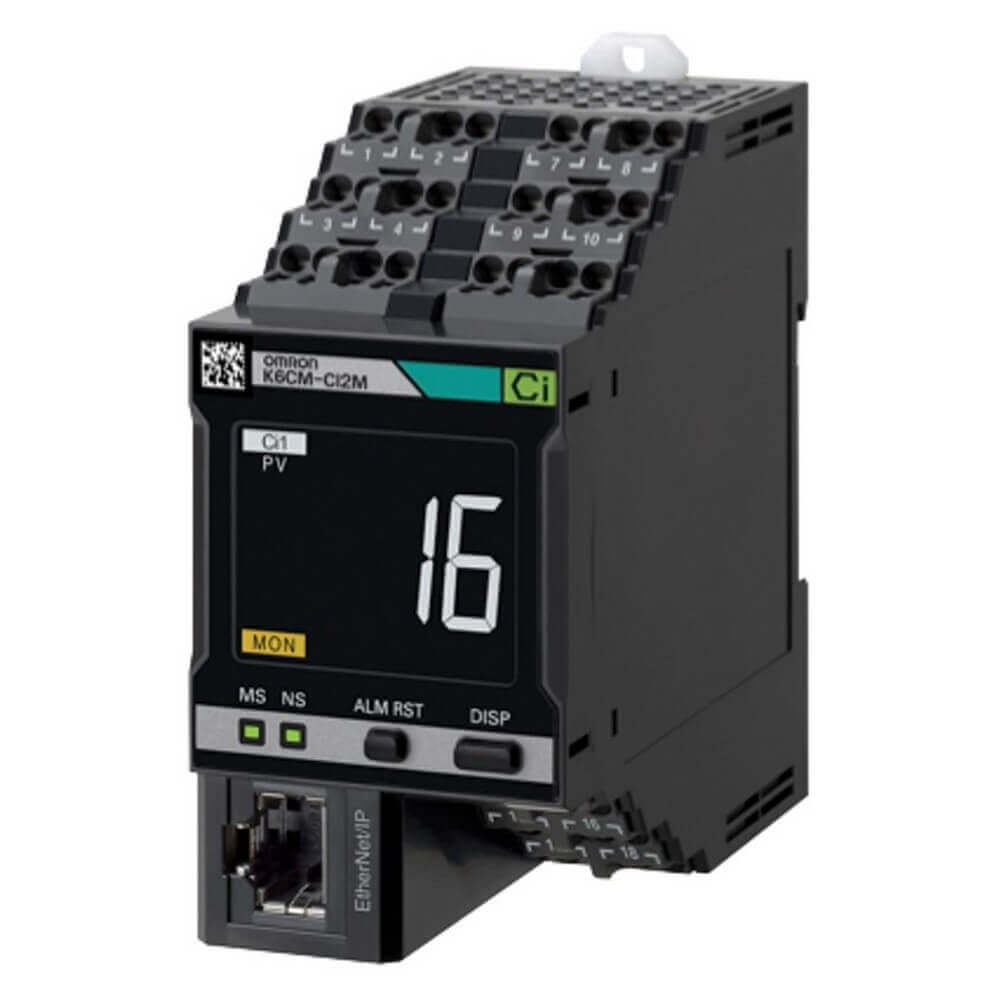
Omron K6CM-CI2MA-EIP Motor Condition Monitoring Device Guide
The Omron K6CM-CI2MA-EIP motor condition monitoring device is built for industrial users who want earlier visibility into motor degradation without relying only on reactive maintenance. In production environments, motor-related issues rarely appear as a single dramatic event. More often, electrical and load-side changes develop over time. A monitoring device that quantifies those changes can help maintenance teams act sooner and more confidently.
What the K6CM-CI2MA-EIP Is Designed to Monitor
This Omron model belongs to the K6CM-CI family for comprehensive current diagnosis. It is intended for three-phase induction motors and is designed to detect changes that may point to motor deterioration or abnormal load-side conditions. That wider diagnostic perspective is valuable because maintenance decisions are often more effective when they are based on trends instead of isolated alarms.
The K6CM-CI2MA-EIP uses a 100 to 240 VAC, 50/60 Hz power supply, making it suitable for many standard industrial cabinet designs where a broad AC supply range is already available.
Omron K6CM-CI2MA-EIP Key Technical Advantages
The device supports rated CT input currents of 5 A, 25 A, 100 A, 200 A, 400 A, and 600 A, allowing the monitoring system to match the motor application more precisely. It also offers three transistor outputs rated at 24 VDC, 50 mA max. for alarm handling. From a mechanical perspective, it is compact at 45 × 90 × 90 mm, mounts on DIN rail, and uses wiring sizes from 0.25 to 1.5 mm².
EtherNet/IP and Network Visibility
One of the strongest points of the Omron K6CM-CI2MA-EIP motor condition monitoring device is its communication capability. It supports EtherNet/IP and Modbus TCP over 100BASE-TX with an RJ45 Ethernet interface. That gives engineers a practical path to network-based monitoring, remote visibility, and integration into wider predictive maintenance architectures.
Settings can be handled through Omron’s condition monitoring configuration environment via EtherNet/IP, which is useful for standardizing commissioning across multiple assets.
Where This Model Adds Real Value
This model is especially relevant in plants where motor uptime affects throughput, material flow, or machine coordination. Examples include conveyor systems, packaging lines, pumps, fans, process equipment, and general machinery using three-phase induction motors. Because it can observe motor condition through current behavior, it helps teams detect shifts before they become disruptive failures.
For more information about Omron, it is useful to explore related monitoring and automation technologies that support condition-based maintenance strategies across the plant.
Omron K6CM-CI2MA-EIP FAQ
What is the Omron K6CM-CI2MA-EIP used for?
The Omron K6CM-CI2MA-EIP is used for condition monitoring of three-phase induction motors. It evaluates current-related behavior to help identify motor degradation and abnormal load-side conditions before they lead to unplanned stoppages.
What type of motor is compatible with this device?
This model is intended for three-phase induction motors. Omron specifically excludes synchronous motors, single-phase motors, servo motors, and stepping motors from this monitoring type.
Omron K6CM-CI2MA-EIP What power supply does the K6CM-CI2MA-EIP require?
The device operates on 100 to 240 VAC, 50/60 Hz. That makes it suitable for industrial panels using a standard AC supply architecture.
Does the K6CM-CI2MA-EIP support industrial Ethernet?
Yes. It supports EtherNet/IP and Modbus TCP over Ethernet. This is useful for centralized monitoring, system integration, and plant-wide visibility.
What current ranges can be monitored?
The device works with dedicated CT options covering 5 A through 600 A rated input current classes. Selecting the appropriate CT helps align the monitoring solution with the actual motor load.
Why is comprehensive current diagnosis useful?
Because it can reveal more than a simple overload condition. It helps maintenance teams observe patterns that may indicate early motor deterioration or abnormal load behavior, making service planning more informed and less reactive.