
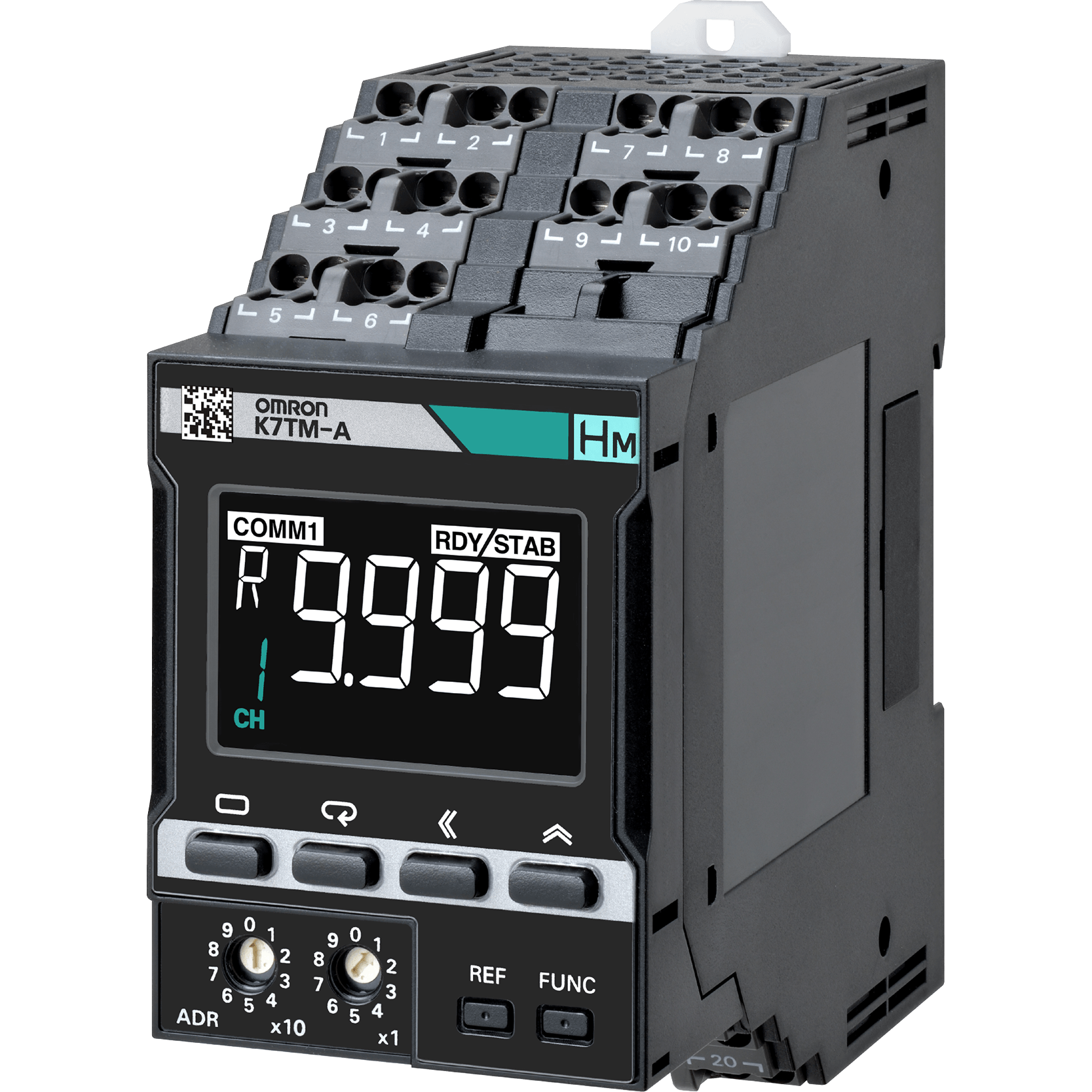
Omron K7TM-A2MD Heater Condition Monitoring Device Overview
The Omron K7TM-A2MD heater condition monitoring device is a practical choice for machine builders and maintenance teams that prefer a 24 VAC/DC power architecture while still needing accurate heater condition insight. In modern industrial systems, heater-related issues often develop gradually. A device that shows deterioration trends can be far more useful than a simple fault indication after failure has already happened.
Designed for Reliable Heater Monitoring
The K7TM-A2MD belongs to Omron’s heater condition monitoring family and focuses on tracking the resistance values of resistance heating heaters. This matters because heater performance is affected by operating temperature, controller behavior, and process conditions. A device that observes long-term resistance behavior gives maintenance teams a better understanding of whether a heater is stable, aging, or moving toward failure.
Because this version is powered by 24 V AC or 24 V DC, it fits naturally into many low-voltage industrial control systems. That makes it especially attractive for panels that are standardized around 24-volt control power.
Technical Characteristics That Support Daily Operations
The Omron K7TM-A2MD supports measurement inputs up to 600 V AC and 600 A AC when used with the appropriate CT. It uses a two-channel measurement structure, allowing users to monitor heater behavior in a structured and repeatable way. The device also supports RS-485 communications using Modbus RTU, which is useful for transmitting condition data to higher-level systems.
For local control integration, the unit includes NPN open collector transistor outputs for alarms and error outputs. This can help maintenance teams and control engineers build straightforward warning logic for early intervention.
Why the 24 V AC/DC Version Matters
Many control panels are designed around 24-volt power distribution for consistency, safety, and simplified maintenance. In those environments, the K7TM-A2MD offers a cleaner implementation path than a wider-range AC-only device. It lets teams bring heater trend monitoring into the panel without rethinking the power design.
Where the K7TM-A2MD Fits Best
This model is useful in applications where stable thermal performance is critical, such as sealing systems, food machinery, industrial packaging, and compact thermal processing units. In these settings, a heater that drifts out of expected condition can affect cycle stability, product appearance, or material performance. Monitoring the trend instead of reacting to failure can improve maintenance timing and reduce process surprises.
For more information about Omron, it helps to review related industrial automation solutions built around uptime, diagnostics, and preventive maintenance.
Omron K7TM-A2MD FAQ
What is the Omron K7TM-A2MD used for?
The Omron K7TM-A2MD is used to monitor the condition of resistance heating heaters by measuring resistance-related behavior over time. It supports predictive maintenance and helps identify deterioration trends before failure causes downtime.
What power supply does the K7TM-A2MD use?
This model is designed for 24 V AC or 24 V DC operation. That makes it well suited to modern control panels that rely on standardized 24-volt control power.
Does the K7TM-A2MD support communication with other systems?
Yes. It supports RS-485 with Modbus RTU, which allows heater condition data to be integrated into plant-level monitoring, maintenance, or control environments.
Omron K7TM-A2MD What makes heater resistance monitoring valuable?
Resistance can shift as a heater ages, and those shifts can point to deterioration long before a complete burnout occurs. Tracking that trend gives maintenance teams more time to plan service and reduce disruption.
Can the K7TM-A2MD work in existing equipment?
Yes. It is suitable for retrofit use because condition monitoring can be added by installing the required CT clamp on the heater power line and wiring the necessary voltage inputs. This makes it a practical option for upgrade projects as well as new installations.
What kind of environments benefit most from this device?
Any production environment that depends on stable and repeatable heating can benefit. This includes packaging, plastics, sealing, heating stations, and machinery where product quality depends on consistent heater performance.