
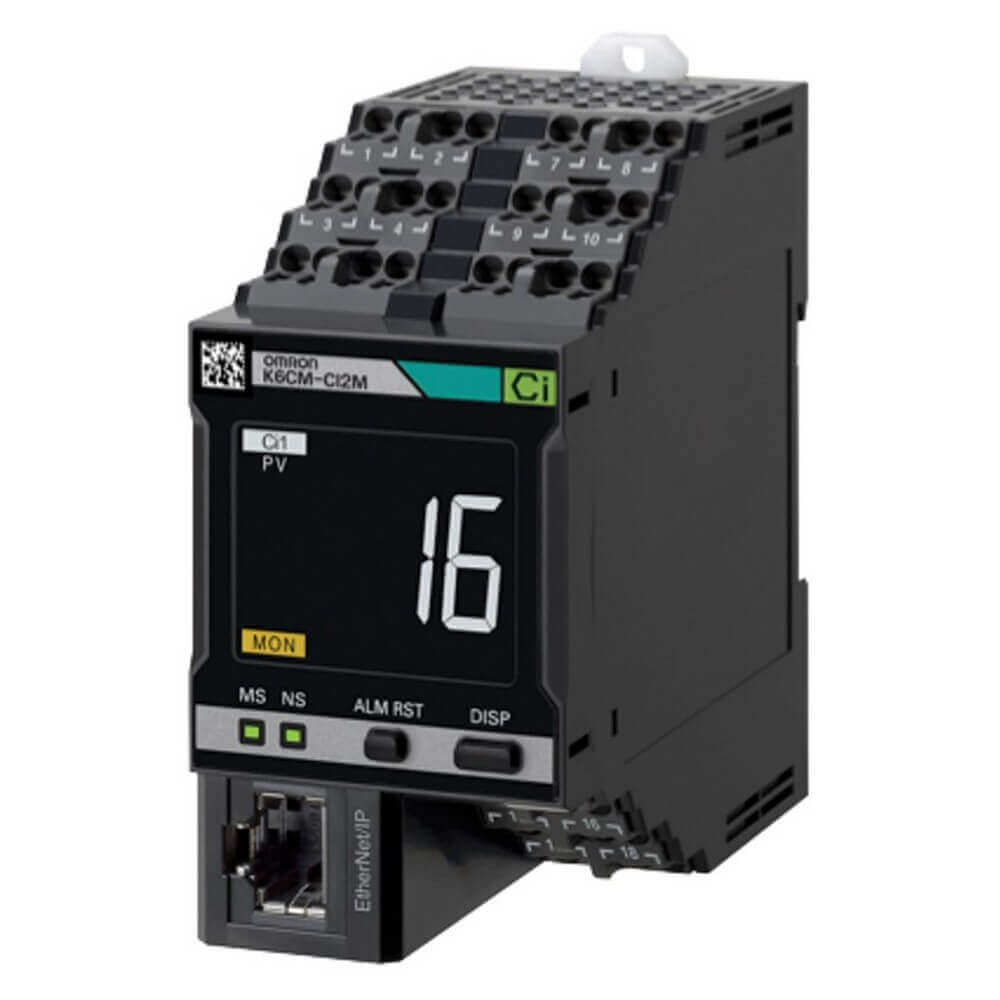
Omron K6CM-CI2MD-EIP Motor Condition Monitoring Device Overview
The Omron K6CM-CI2MD-EIP motor condition monitoring device is designed for plants that want a low-voltage powered monitoring solution for three-phase motor assets. In many industrial systems, maintenance teams are expected to reduce downtime, improve planning accuracy, and make better use of service windows. A dedicated current-based monitoring device supports that goal by turning gradual electrical changes into visible maintenance information.
Built for Three-Phase Induction Motor Monitoring
The K6CM-CI2MD-EIP is part of Omron’s comprehensive current diagnosis range. It is intended for three-phase induction motors and is used to quantify the status of the motor by analyzing current-related behavior over time. This approach is valuable because it can reveal deterioration patterns and abnormal load-side conditions before a conventional fault response would normally appear.
What separates this version from the MA model is the power supply. The Omron K6CM-CI2MD-EIP motor condition monitoring device runs on 24 VAC or 24 VDC, which makes it a natural fit for control panels standardized around 24-volt architecture.
Technical Features That Matter in Daily Use
The device accepts dedicated CT options for 5 A, 25 A, 100 A, 200 A, 400 A, and 600 A classes. It also includes three transistor outputs rated at 24 VDC, 50 mA max., helping users create external warning or shutdown logic where needed. Its compact dimensions of 45 × 90 × 90 mm and DIN rail mounting support efficient panel integration.
For monitoring behavior, the unit samples degradation level and current data on a repeating cycle and supports configuration through Omron’s condition monitoring software environment.
Network Connectivity and Plant Integration
The K6CM-CI2MD-EIP supports EtherNet/IP and Modbus TCP communications over 100BASE-TX Ethernet. That matters for operations teams that want maintenance data available beyond the local panel. With Ethernet connectivity, the device can fit into broader machine monitoring strategies and help maintenance planners review condition information from a supervisory level.
Where the K6CM-CI2MD-EIP Fits Best
This model is a strong option for conveyors, pumps, fans, compact process skids, and production equipment where 24-volt panel design is already standard. It supports a cleaner implementation path in those environments because the monitoring device aligns with the panel power structure while still delivering industrial network connectivity and current-based condition insight.
For more information about Omron, it is helpful to review complementary automation products that support stable, connected, and maintenance-aware production systems.
Omron K6CM-CI2MD-EIP FAQ
What is the Omron K6CM-CI2MD-EIP used for?
The Omron K6CM-CI2MD-EIP is used to monitor the condition of three-phase induction motors through comprehensive current diagnosis. It helps identify early signs of motor deterioration and abnormal load-side behavior.
What power supply does the K6CM-CI2MD-EIP require?
This model is designed for 24 VAC or 24 VDC operation. It is therefore well suited to control systems built around 24-volt power distribution.
Does this model support Ethernet-based industrial communication?
Yes. It supports EtherNet/IP and Modbus TCP using a 100BASE-TX Ethernet interface with RJ45 connectivity, which is useful for remote monitoring and system integration.
Can it be used on all motor types?
No. It is intended for three-phase induction motors. Other motor types, such as synchronous, single-phase, servo, and stepping motors, are outside the intended scope of this model.
What makes the 24 V version useful?
Many industrial panels are standardized around 24-volt control power. Choosing the MD version can simplify panel design, integration, and maintenance because the monitoring device aligns with the existing control power strategy.
Why is current-based motor monitoring important?
Current behavior can provide useful insight into the motor and the connected load. Watching those changes over time gives maintenance teams a better basis for intervention before a visible breakdown or process interruption occurs.