
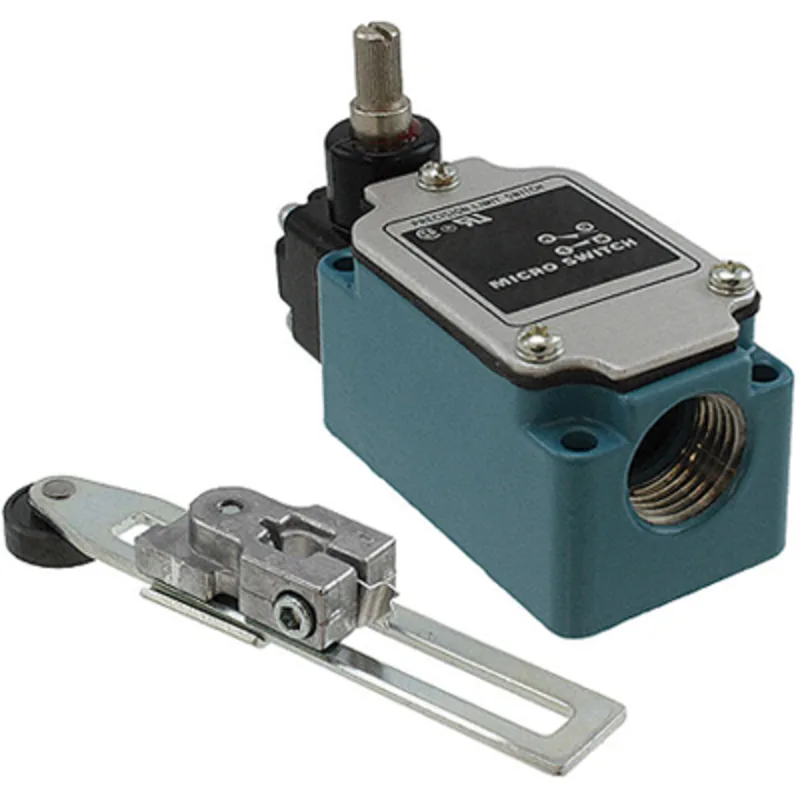
Honeywell 11LS3 Limit Switch Technical Guide
The Honeywell 11LS3 limit switch is part of the established Honeywell LS Series, a family developed for dependable position sensing in industrial environments where durability matters as much as switching accuracy. In many machine control systems, a limit switch is not simply a basic on-off device. It is a critical interface between motion and control logic, helping equipment respond at the correct time, in the correct position, and under real operating conditions rather than ideal lab conditions. That is why the Honeywell 11LS3 limit switch continues to be relevant in modern automation, heavy equipment, and maintenance-focused installations.
What the Honeywell 11LS3 Limit Switch Is
The Honeywell 11LS3 limit switch is commonly identified as a compact enclosed industrial limit switch with DPDT contact configuration. Current product references also associate this model with a side rotary actuator, making it suitable for machine movements that approach the switch from the side through cams, levers, arms, or rotating mechanisms. This actuator style can be especially useful where direct plunger motion is not practical and where a machine element needs to engage the switch through a controlled arc or sweep.
Technical Features of the Honeywell 11LS3 Limit Switch
From a technical standpoint, the Honeywell 11LS3 limit switch is typically listed with a 10 A rating and industrial-grade enclosed construction. The broader LS Series is known for a rugged die-cast housing design intended to resist challenging operating conditions, including environments where oil, dust, moisture, and repetitive mechanical cycling are common. Honeywell’s LS product literature also emphasizes consistent repeatability over millions of operations, which is one of the reasons this series remains well known in industrial automation and machine OEM applications.
Why the DPDT Configuration Matters
A major advantage of the Honeywell 11LS3 limit switch is its DPDT switching layout. This allows one switch body to control or signal two separate circuits at the same time. In practical applications, that can support interlocks, machine status indication, safety-related sequencing, or control logic that requires more than one electrical response from a single actuation point. In other words, the Honeywell 11LS3 limit switch can help simplify panel logic and reduce the number of components required in a control design.
Typical Application Areas
The Honeywell 11LS3 limit switch is a strong candidate for conveyors, material handling systems, packaging machinery, access mechanisms, industrial doors, machine tools, and equipment that requires repeatable end-of-travel detection. In these applications, a rugged side rotary industrial switch can be more practical than more delicate sensing solutions. It offers a direct mechanical response that technicians, maintenance teams, and engineers can easily understand and troubleshoot.
For more information about Honeywell, reviewing the wider LS switch portfolio can help compare actuator styles and contact arrangements across different industrial requirements.
FAQ
What type of switch is the Honeywell 11LS3?
The Honeywell 11LS3 is an industrial limit switch in the Honeywell LS Series. It is commonly referenced as a DPDT enclosed switch with side rotary actuation for machine position sensing.
Why is side rotary actuation useful on the Honeywell 11LS3 limit switch?
Side rotary actuation works well when a cam, lever, or moving machine surface approaches the switch laterally. This makes it practical in machinery where motion follows an arc, swing, or guided side contact path.
What does DPDT mean for the Honeywell 11LS3 limit switch?
DPDT means double-pole, double-throw. In practical terms, the switch can handle two circuits at once, which is useful for signaling, interlocking, or control functions that require multiple electrical outputs from one actuation event.
Where is the Honeywell 11LS3 limit switch commonly used?
It is commonly used in conveyors, machine tools, industrial access systems, automated equipment, packaging lines, and material handling systems where rugged position feedback is required.
What should be checked before specifying a Honeywell 11LS3 limit switch?
It is important to confirm the actuator path, mounting method, electrical load, enclosure requirements, contact arrangement, and environmental exposure. Mechanical compatibility is just as important as electrical suitability when selecting an industrial limit switch.