
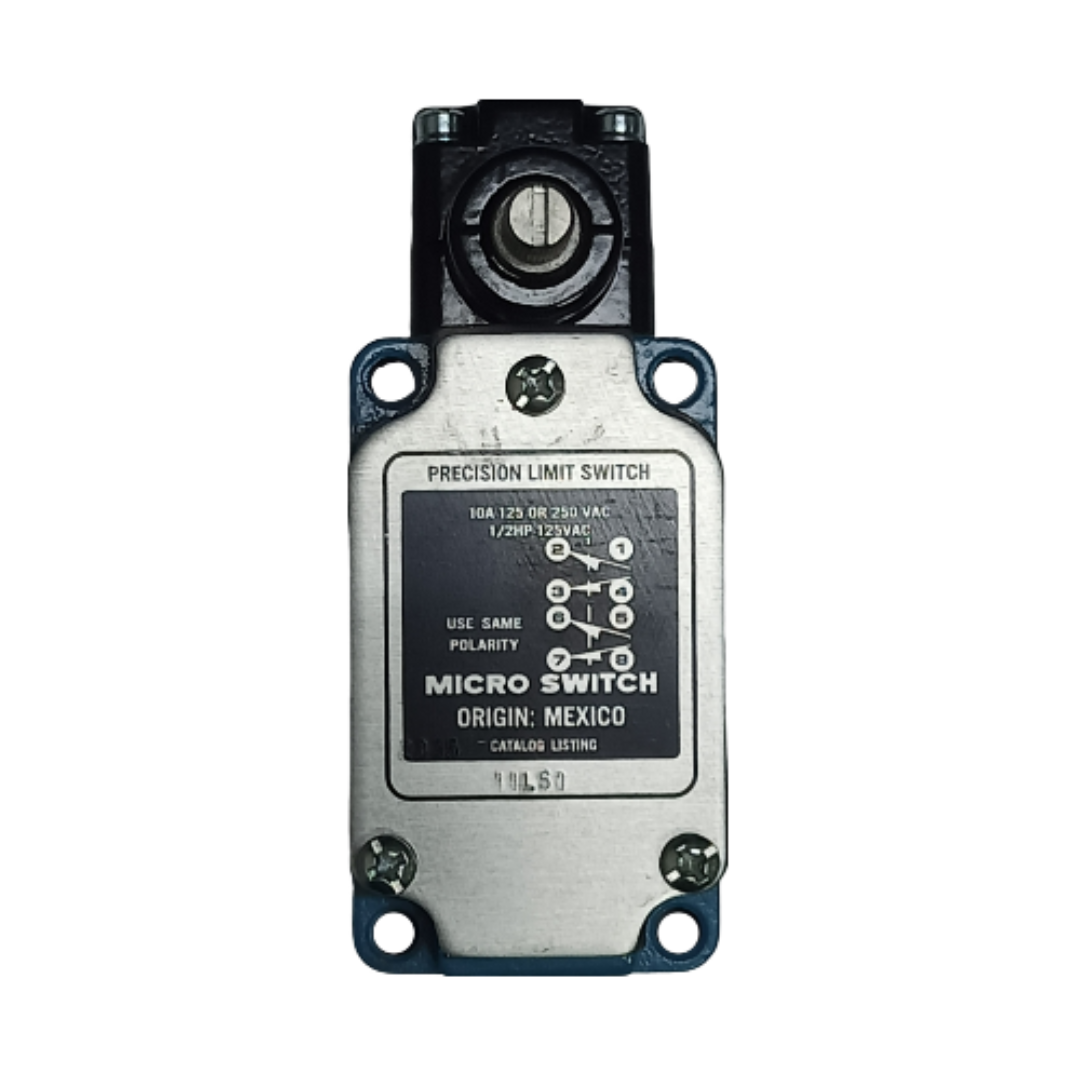
Honeywell 11LS1 Limit Switch Technical Guide
The Honeywell 11LS1 limit switch is part of Honeywell’s LS series of general purpose limit switches, a product family widely used in industrial motion, machine positioning, material handling, and equipment status sensing. Unlike miniature sealed snap-action devices that focus on compact packaging, the Honeywell 11LS1 limit switch is designed as a rugged enclosed industrial switch with a more robust external form, making it suitable for machinery and plant environments where durability and environmental protection are essential.
What the Honeywell 11LS1 Limit Switch Is
Current references identify the Honeywell 11LS1 limit switch as a side rotary, enclosed, DPDT switch with 2NC and 2NO contacts. It is commonly described with a 1.5 inch fixed-length lever and steel roller. This side rotary format is useful when machine movement naturally engages the lever from the side, allowing the switch to respond to cams, moving gates, machine slides, doors, or rotating mechanical elements. Because it is a DPDT design, the Honeywell 11LS1 limit switch can control two circuits in one housing, which is often helpful in interlock, signaling, and control logic applications.
Technical Characteristics That Define the Product
The LS series documentation highlights durable die-cast housing construction, oil-tight, water-tight, and dust-tight design intent, and ratings that include NEMA and IP67 options across the series. Product references for the Honeywell 11LS1 limit switch commonly show a 10 A rating, compact non-plug-in construction, and conduit entry suited to industrial installation practice. Honeywell’s LS documentation also emphasizes long service life, repeatability over millions of operations, and suitability for constrained spaces without giving up mechanical reliability.
Where the 11LS1 Limit Switch Fits Best
The Honeywell 11LS1 limit switch is well suited to machine tools, conveyors, access systems, valve actuation feedback, packaging equipment, and material handling lines. In these settings, engineers often need a switch that can withstand repetitive actuation, contamination exposure, and routine industrial vibration. The Honeywell 11LS1 limit switch addresses those priorities with a mature electromechanical design that remains highly relevant in automation and plant maintenance environments.
Why This Style of Limit Switch Remains Important
Modern automation includes many sensor types, but enclosed rotary limit switches still matter because they provide direct physical feedback, predictable mechanical behavior, and easy interpretation during troubleshooting. The Honeywell 11LS1 limit switch is a strong example of this enduring value. It gives technicians and designers a well-understood switching device that can integrate into legacy systems and new industrial builds alike.
For more information about Honeywell, comparing LS-series actuator formats can help narrow down the most suitable industrial switch configuration.
FAQ
What type of product is the Honeywell 11LS1?
The Honeywell 11LS1 is an enclosed industrial limit switch in the LS series, commonly identified as a side rotary DPDT model with 2NC and 2NO contacts.
Why is the side rotary design useful on the Honeywell 11LS1 limit switch?
It works well when machine motion approaches the switch laterally. This makes it practical for cams, doors, slides, levers, and other moving parts that can rotate or deflect the actuator arm.
What rating is commonly associated with the Honeywell 11LS1 limit switch?
Current references commonly show a 10 A electrical rating, which aligns with the LS series’ industrial positioning for machinery and control circuits.
Where is the Honeywell 11LS1 limit switch typically used?
It is commonly relevant in machine tools, conveyors, packaging systems, valve feedback, material handling equipment, and general industrial automation applications that need rugged position sensing.
What should be checked before using this switch as a replacement?
Confirm lever geometry, conduit style, contact arrangement, circuit requirements, environmental exposure, and the mechanical path of actuation. Correct fit depends on both electrical and mechanical compatibility.