
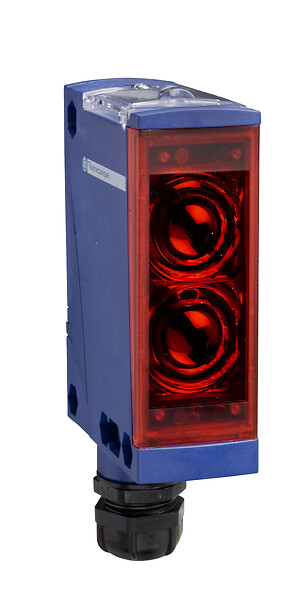
Telemecanique XUX9APANT16 Photoelectric Sensor Technical Guide
The Telemecanique XUX9APANT16 photoelectric sensor is an industrial sensing device developed for dependable object detection in automated production environments. It belongs to the Telemecanique XUX sensor family and is widely associated with packaging machinery, conveyor systems, material handling equipment, and factory automation processes where stable detection is essential.
Photoelectric sensors play a major role in modern industrial automation because they allow machines to identify the presence, movement, and positioning of products without physical contact. The XUX9APANT16 is designed to support this process while maintaining compact installation dimensions and practical setup flexibility.
What Is the Telemecanique XUX9APANT16 Photoelectric Sensor?
The Telemecanique XUX9APANT16 photoelectric sensor is generally associated with diffuse sensing technology and background suppression. The sensor emits light toward a target and evaluates the reflected signal to determine whether an object is present within the defined sensing zone.
Background suppression technology is particularly important in industrial environments because nearby surfaces can interfere with standard diffuse sensing. Conveyor frames, machine guards, metal supports, and reflective panels can all influence optical detection if the sensor is not properly designed. Background suppression helps reduce these unwanted reactions by improving focus on the intended target area.
Main Technical Characteristics
The Telemecanique XUX9APANT16 is commonly referenced with a sensing range up to 2 meters depending on target characteristics and installation conditions. It is designed for DC automation circuits and is frequently associated with 12 to 24 VDC operation. The sensor is typically integrated into PLC-controlled systems where fast and repeatable switching signals are required.
Its compact industrial housing supports installation in machinery where available mounting space is limited. In many automated systems, engineers must place sensors close to moving mechanical parts, transfer stations, or product guides. Compact dimensions simplify integration while helping maintain accessibility for maintenance and alignment adjustments.
The sensor family is also known for practical industrial durability. Stable mounting, clean wiring, and proper environmental protection contribute significantly to long-term sensing reliability in production facilities.
Industrial Applications
The Telemecanique XUX9APANT16 photoelectric sensor can be used in packaging systems, conveyor monitoring, object presence verification, counting applications, transfer stations, and automated handling equipment. In these environments, the sensor helps the control system determine whether products are moving correctly through the process.
For example, in a packaging line, the sensor may confirm that a carton has reached a filling position before the machine begins the next operation. In conveyor systems, it may be used to count products, monitor spacing, or verify that an item has passed a checkpoint successfully.
Because modern production environments demand higher throughput and reduced downtime, reliable sensing devices help improve operational consistency and reduce unwanted machine interruptions.
Installation Considerations
Correct installation is essential for achieving stable photoelectric sensing performance. The sensor should be mounted securely using a rigid bracket to prevent movement caused by vibration. Alignment should be tested using the actual target object rather than relying solely on nominal catalogue values.
Target characteristics influence sensing behavior. Dark surfaces absorb more light, while reflective surfaces may create stronger return signals. Transparent or glossy materials may require additional adjustment and testing to optimize performance. In many cases, changing the mounting angle slightly can improve stability.
Electrical installation should follow industrial automation standards. Sensor cables should be routed away from high-voltage motor cables and variable frequency drives to reduce electrical interference. Stable DC power improves signal consistency and long-term reliability.
Why Compact Photoelectric Sensors Matter
Compact sensors provide important advantages in automated machinery. Modern production equipment is becoming smaller, faster, and more integrated. Engineers often need to install sensing devices in areas with limited mechanical clearance. A compact photoelectric sensor like the Telemecanique XUX9APANT16 allows reliable detection without adding unnecessary installation complexity.
For additional Telemecanique-related information, visit Telemecanique information.
Frequently Asked Questions
What type of sensor is the Telemecanique XUX9APANT16?
It is a compact industrial photoelectric sensor commonly associated with diffuse sensing and background suppression technology.
What is the main purpose of the XUX9APANT16?
The sensor is used for object detection in industrial automation systems such as conveyors, packaging machines, and material handling equipment.
What is background suppression?
Background suppression is a sensing method that helps the sensor detect the intended target while reducing unwanted switching caused by nearby background surfaces.
What supply voltage does the Telemecanique XUX9APANT16 use?
This sensor is generally associated with 12 to 24 VDC industrial automation supply systems.
Can the XUX9APANT16 detect reflective objects?
Yes, but reflective or transparent objects should always be tested under actual operating conditions because surface properties influence optical sensing performance.
Where is this sensor commonly installed?
It is commonly installed on conveyors, packaging lines, transfer systems, counting stations, and automated assembly equipment.
Why is stable mounting important for photoelectric sensors?
Stable mounting reduces vibration-related misalignment and helps maintain consistent sensing accuracy during machine operation.