
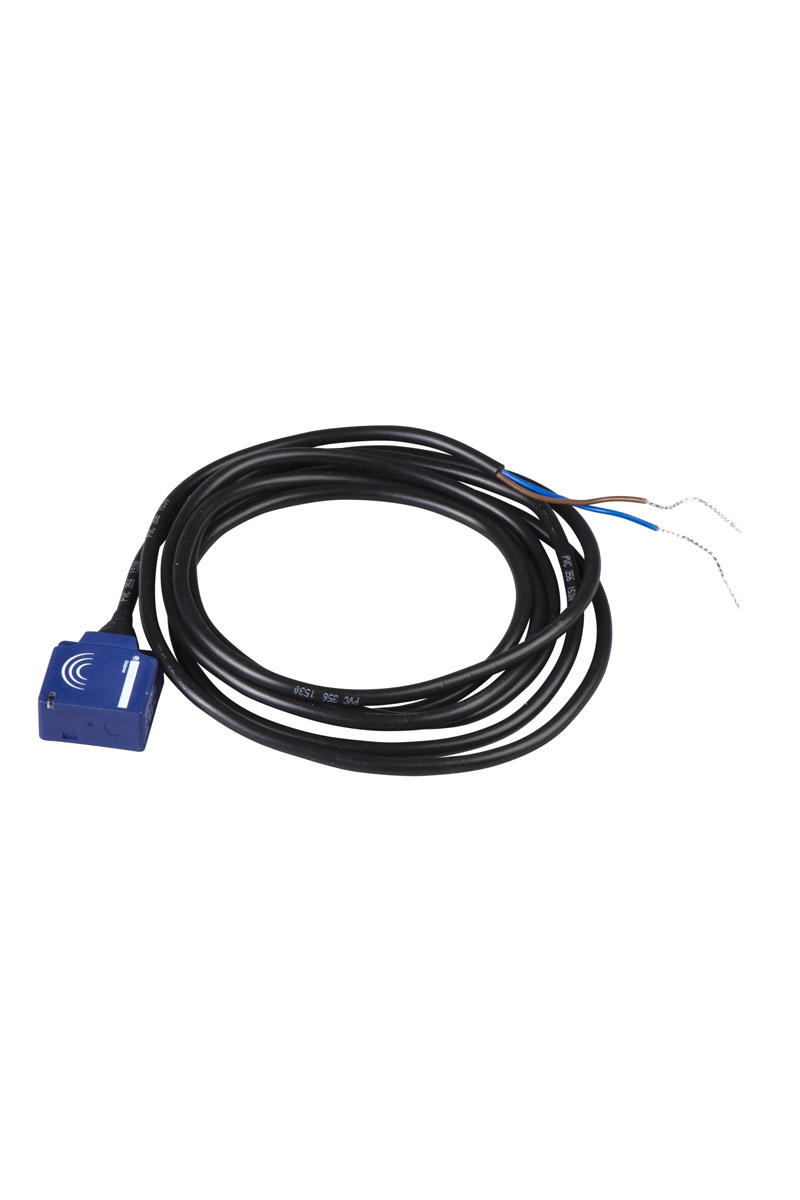
Telemecanique XS7E1A1NAL2 Inductive Proximity Sensor Overview
The Telemecanique XS7E1A1NAL2 inductive proximity sensor is a compact flat-form device developed for reliable non-contact detection of metal targets. It is part of the Telemecanique XS inductive sensor range and is commonly applied in automation systems where space, repeatability, and dependable switching performance are important.
Unlike mechanical switches, this inductive proximity sensor does not require physical contact with the target. It detects metal through an electromagnetic field, which helps reduce wear and supports consistent operation in repetitive industrial processes. For machine builders and maintenance teams, this can mean fewer mechanical adjustments and improved long-term reliability.
Technical Profile of the Telemecanique XS7E1A1NAL2
The Telemecanique XS7E1A1NAL2 is designed with a flat 26 x 26 x 13 mm body. Its compact shape allows installation in machinery where a cylindrical sensor may not be the best fit. The sensor uses a plastic PBT enclosure, a material widely valued in industrial sensor housings for its balance of strength, dimensional stability, and resistance to many common operating conditions.
This model has a 10 mm nominal sensing distance and is designed for flush mounting. It operates with a 12 to 24 VDC supply and uses a 3-wire connection. The output is NPN with a normally open switching function, making it suitable for control systems configured for that signal type.
Common Industrial Uses
The Telemecanique XS7E1A1NAL2 inductive proximity sensor is often selected for detecting metal parts, confirming component presence, checking machine position, or monitoring movement in compact equipment layouts. Its 10 mm sensing distance gives it a practical balance between compact body size and usable detection range.
Typical application areas include small conveyor systems, light assembly machines, packaging equipment, handling units, indexing tables, and metal part feeding mechanisms. Because the sensor is contactless, it can operate repeatedly without the same type of wear associated with lever arms, plungers, or roller-actuated switches.
Selection Considerations
Before specifying this model, users should confirm the electrical requirements of the control panel. Since the sensor has an NPN normally open output, it must match the PLC or controller input configuration. The supply voltage should also be within the required 12 to 24 VDC range.
Mechanical fit is equally important. The 26 x 26 x 13 mm flat housing can be advantageous when mounting space is limited, but the sensor face must still be aligned with the metallic target. The target size, material, and approach direction can influence detection consistency.
For broader product family details, visit Telemecanique industrial sensor information.
Why Engineers Use Flat Inductive Sensors
Flat inductive sensors are useful when mounting geometry is more important than threaded cylindrical installation. The Telemecanique XS7E1A1NAL2 inductive proximity sensor provides a compact sensing face that can be integrated into machine surfaces, brackets, and constrained installation areas.
Its combination of 10 mm sensing distance, DC operation, PBT housing, flush mountability, and NPN normally open output makes it suitable for many general-purpose automation systems. It is especially relevant when a compact proximity sensor must detect metal reliably without physical contact.
Frequently Asked Questions
What is the Telemecanique XS7E1A1NAL2 used for?
It is used for non-contact detection of metallic objects in industrial automation. Common uses include part presence detection, position confirmation, machine cycle monitoring, and metal object sensing in compact equipment.
What is the sensing distance of the XS7E1A1NAL2?
The nominal sensing distance is 10 mm. Real-world detection may depend on the metal type, target dimensions, installation style, and surrounding materials.
What output type does this sensor have?
The sensor uses an NPN normally open output. This means the output changes state when a suitable metal target is detected, but compatibility with the controller input must be verified.
Is the XS7E1A1NAL2 flush mountable?
Yes, it is designed for flush mounting. This can simplify installation in machine panels or brackets when the proper mounting guidelines are followed.
Why choose this model instead of a mechanical switch?
This model provides contactless operation, which reduces mechanical wear and can improve reliability in repetitive sensing applications. It is a practical choice when the target is metallic and the control system supports the sensor output.