
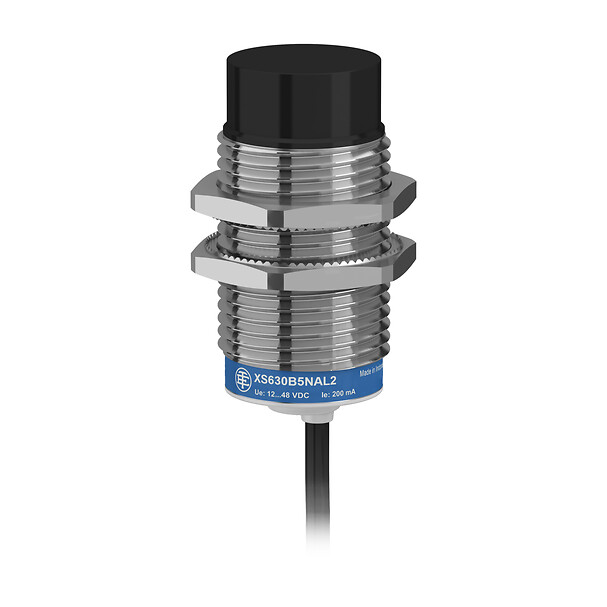
Telemecanique XS630B5PAL2 Inductive Proximity Sensor Guide
The Telemecanique XS630B5PAL2 inductive proximity sensor is designed for reliable metal object detection in demanding industrial automation environments. As part of the Telemecanique XS inductive sensor family, this model is commonly used where non-contact detection, repeatable switching, and mechanical durability are required.
This sensor uses inductive sensing technology, meaning it detects metallic targets without physical contact. That makes it suitable for machine positioning, mobile equipment, conveyor systems, handling machinery, packaging equipment, and general factory automation where contact-based switches may wear out over time.
Key Technical Profile
The Telemecanique XS630B5PAL2 features a cylindrical M30 metal body and a nominal sensing distance of 30 mm. Its non-flush mounting design gives it an extended detection range compared with many flush-mounted sensors. The sensor operates on a 12 to 48 VDC supply and uses a 3-wire discrete output configuration with PNP output and normally open switching.
The cable connection makes this version practical for installations where a fixed wired connection is preferred. In environments with vibration, movement, dust, oil mist, or repeated washdown exposure, the robust metal housing and industrial protection ratings help support stable operation.
Where This Sensor Fits Best
The Telemecanique XS630B5PAL2 inductive proximity sensor is well suited for detecting steel parts, machine stops, rotating metal components, actuator positions, pallet locations, and mechanical end positions. Because it works without touching the target, it reduces mechanical wear and helps improve uptime in continuous production environments.
Engineers often choose M30 inductive sensors when longer detection distance is needed. The 30 mm sensing range provides a useful margin in applications where the target cannot pass very close to the sensor face. However, correct mounting remains important because non-flush inductive sensors require clearance from surrounding metal to avoid false triggering.
Installation and Mounting Notes
During installation, the sensing face should be aligned with the expected path of the metallic target. The target material, size, shape, and approach direction can affect the real operating distance. Standard steel normally provides the reference sensing performance, while stainless steel, aluminum, brass, and copper may reduce the effective sensing distance.
For best performance, avoid mounting the sensor too close to nearby metal surfaces unless the manufacturer clearance recommendations are followed. Secure cable routing is also important. Cables should be protected from sharp edges, moving machine parts, excessive pulling force, and high electromagnetic noise sources.
Telemecanique XS630B5PAL2 Industrial Value
The XS630B5PAL2 is not just a simple detection component. It supports process consistency by giving controllers reliable information about metal part presence or position. In automated systems, this helps reduce misfeeds, positioning errors, unexpected stops, and unnecessary manual checks.
For additional information about Telemecanique products, visit Telemecanique sensor solutions.
Telemecanique XS630B5PAL2 FAQ
What type of sensor is the Telemecanique XS630B5PAL2?
It is an inductive proximity sensor used for non-contact detection of metallic objects. It is especially useful in automation systems where mechanical contact should be avoided.
What is the sensing distance of XS630B5PAL2?
The nominal sensing distance is 30 mm. Actual detection distance may vary depending on the target material, target size, installation position, and surrounding metal conditions.
Is XS630B5PAL2 suitable for flush mounting?
No. This model is non-flush mountable. It requires proper clearance around the sensing face to avoid unwanted switching caused by nearby metal.
What power supply does this sensor use?
The sensor is designed for 12 to 48 VDC operation, making it compatible with many industrial control systems and mobile equipment applications.
Where is this sensor commonly used?
Common applications include machine automation, metal part detection, conveyor position sensing, actuator monitoring, equipment guarding logic, and mobile machinery position feedback.