
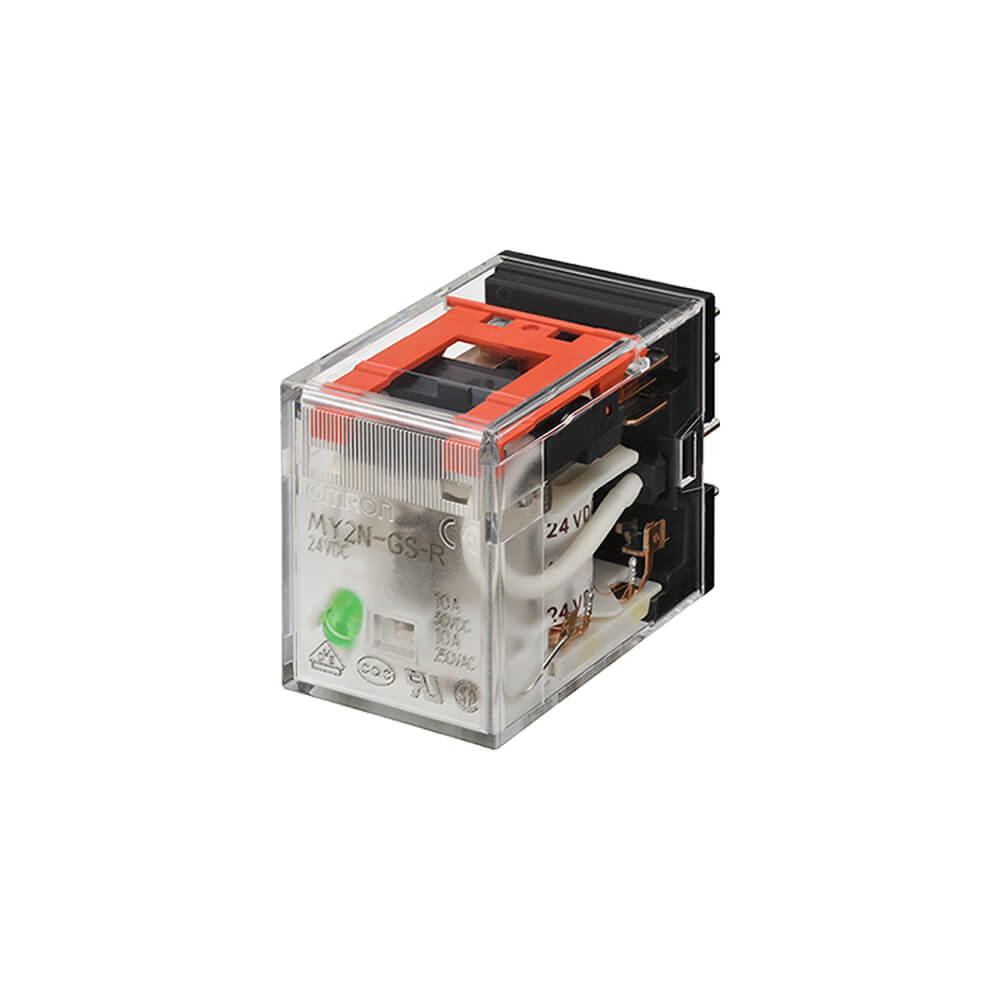
Omron MY2IN-GS 12VDC Miniature Power Relay Guide
The Omron MY2IN-GS 12VDC miniature power relay is a compact electromechanical relay intended for control circuits that operate with a 12 VDC coil supply. It is part of Omron’s MY relay family, which is widely recognized in industrial automation for plug-in installation, practical diagnostics, and dependable circuit switching in control panels.
Overview of the Omron MY2IN-GS 12VDC
This relay is commonly used when a direct-current control signal must operate one or more load circuits. With its DPDT contact structure, the relay can switch two independent circuits at the same time. This makes it useful in automation panels, machine control systems, auxiliary control logic, alarm systems, and interface circuits between controllers and field devices.
The 12 VDC coil version is frequently selected for systems using DC control power, battery-supported circuits, PLC outputs, low-voltage control boards, and compact automation assemblies. Since many modern control architectures rely on DC power distribution, a 12 VDC relay can provide a simple and serviceable isolation point between electronic control signals and switched loads.
Technical Features
The Omron MY2IN-GS 12VDC is generally associated with an 8-pin plug-in body, DPDT contacts, mechanical indication, LED indication, and a lockable push-to-test function. The relay is designed for socket mounting, allowing simple replacement and organized wiring. The contact rating must be checked against the actual load type, because resistive, inductive, AC, and DC loads can place different demands on relay contacts.
The LED indicator is especially helpful in DC control panels because it gives technicians a fast visual reference for coil status. The mechanical indicator provides another layer of confirmation by showing physical relay operation. Together, these features reduce diagnostic time when investigating wiring faults, control signal problems, or load-side issues.
How It Works
When the 12 VDC coil is energized, the relay creates a magnetic field that moves the internal armature. This action changes the state of the DPDT contacts. Normally open contacts close, and normally closed contacts open. When the coil is de-energized, the spring mechanism returns the contacts to their original state.
Typical Applications
The relay can be used for control signal isolation, panel interface circuits, alarm switching, indicator lamp circuits, small load control, PLC output expansion, and machine safety-related auxiliary signaling where the final design allows electromechanical relay use. It is also useful when a removable relay is preferred over a fixed PCB-mounted component.
Selection and Installation Guidance
Before installation, confirm coil voltage, contact rating, socket compatibility, ambient temperature, load type, and required approvals. The relay should be mounted in a suitable 8-pin socket and installed according to proper panel wiring practice. For inductive loads, suppression components may be required to reduce contact wear and electrical noise.
For more industrial relay references, see Omron relay solutions.
FAQ
What is the Omron MY2IN-GS 12VDC used for?
It is used to switch electrical circuits from a 12 VDC control signal. Typical applications include automation panels, PLC interface circuits, alarm outputs, control logic, and auxiliary switching.
Is this relay suitable for PLC outputs?
Yes, it can be suitable when the PLC output voltage and current capacity match the relay coil requirements. The relay can help isolate the PLC output from the controlled circuit.
What does the LED indicator show?
The LED indicator shows whether the relay coil is energized. This makes troubleshooting faster because the technician can see whether the control signal is reaching the relay.
Why choose a DC coil relay?
A DC coil relay is preferred when the control system uses direct-current power. It is common in modern panels, embedded controls, battery systems, and PLC-based automation.
Can the relay switch high-current loads?
It can switch loads within its approved contact rating. The final allowable current depends on voltage, load category, contact material, and installation conditions.
Does the relay require a socket?
It is designed as a plug-in relay, so a compatible socket is normally used. Socket mounting improves wiring organization and simplifies future replacement.