
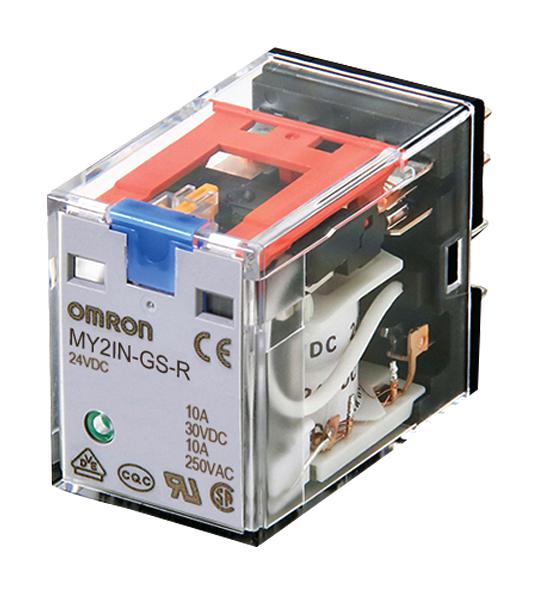
Omron MY2IN-GS 12VAC Miniature Power Relay Guide
The Omron MY2IN-GS 12VAC miniature power relay is designed for control circuits that require a compact plug-in relay with a 12 VAC coil, DPDT switching structure, visual status indication, and practical maintenance features. It belongs to the widely used Omron MY relay family, a range known for panel-friendly installation, dependable switching, and compatibility with socket-based wiring systems.
What Is the Omron MY2IN-GS 12VAC?
This relay is typically used where a low-voltage AC control signal needs to switch separate electrical paths. Its DPDT contact arrangement allows two independent circuits to be controlled at the same time. The 8-pin plug-in design makes it suitable for control panels, automation cabinets, machine interfaces, auxiliary switching circuits, and serviceable industrial wiring layouts.
The 12 VAC coil rating is especially relevant in systems where alternating-current control voltage is already available. Instead of redesigning the control supply, engineers can use the relay as an interface between the control side and the load side. The mechanical and LED indicators help technicians identify relay status quickly during commissioning or troubleshooting.
Technical Characteristics
The Omron MY2IN-GS 12VAC relay is generally associated with a plug-in 8-pin structure, DPDT contact configuration, 12 VAC coil operation, mechanical indication, LED indication, and a lockable push-to-test function. Depending on the exact regional listing and load category, current ratings can vary in documentation, so the relay should always be matched with the approved socket, wiring method, load type, and operating voltage.
Its plug-in format supports fast replacement without disturbing the complete wiring arrangement. This is valuable in production environments where downtime must be minimized. The transparent case also helps with visual inspection, allowing maintenance teams to observe relay condition without removing the component from the panel.
Common Applications
The relay is suitable for interface circuits, signal conversion, small motor control, lighting control, heater control, alarm circuits, auxiliary contact expansion, and machine control panels. Because it provides two changeover contacts, it can switch both normally open and normally closed circuits in one compact device.
Installation Notes
For reliable operation, the coil voltage must match the control supply. The relay should be installed in a compatible Omron socket, and load current must remain within the approved rating for the selected contact type. Good panel practice includes correct wire sizing, suitable overcurrent protection, clear labeling, and adequate spacing around the relay for heat dissipation.
For related industrial relay options, visit Omron automation components.
FAQ
What type of relay is the Omron MY2IN-GS 12VAC?
It is a miniature plug-in power relay with a 12 VAC coil and DPDT contact configuration. It is used to switch control or load circuits through an electromechanical contact mechanism.
What does DPDT mean on this relay?
DPDT means double pole double throw. In practical terms, the relay can control two separate circuits, and each circuit can change between normally open and normally closed contact paths.
Where is the 12 VAC coil version most useful?
It is useful in panels where 12 VAC control power is already present. This may include machine control systems, test equipment, signaling circuits, and low-voltage AC automation layouts.
Does the Omron MY2IN-GS 12VAC have visual indication?
Common listings describe this model with mechanical and LED indication. These features help users confirm coil energization and contact movement during maintenance.
Why is the plug-in design important?
A plug-in relay can be replaced faster than a hardwired relay. The socket remains wired in the panel, while the relay body can be removed and replaced during service.
Can this relay be used for both AC and DC loads?
The contacts may switch suitable AC or DC loads, but the allowed voltage and current depend on the load type. Inductive loads require extra attention because they create higher switching stress than resistive loads.