
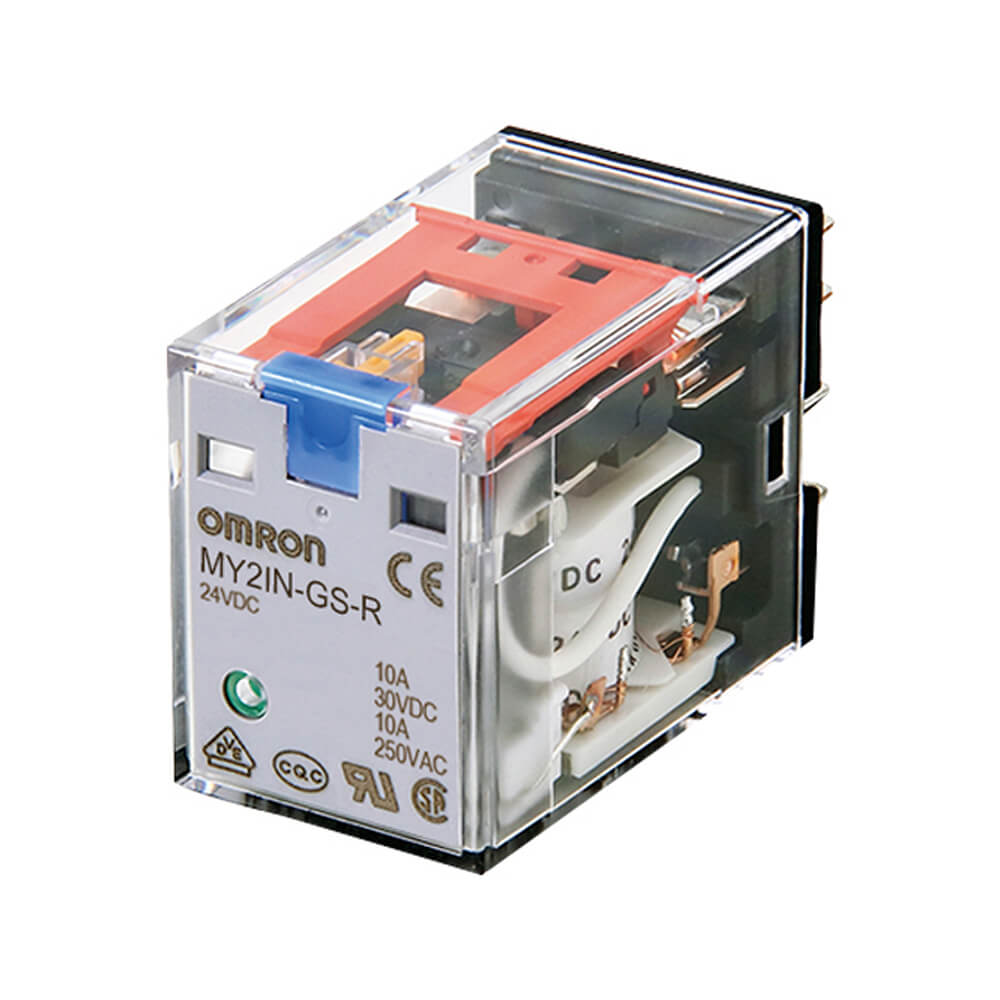
Omron MY2IN 6VDC (S) Miniature Power Relay
The Omron MY2IN 6VDC (S) Miniature Power Relay is a compact plug-in relay designed for low-voltage DC control applications where reliable two-pole switching is required. As part of the Omron MY relay family, it is commonly used in automation panels, machine control systems, test equipment, low-voltage signal circuits, and interface applications where a 6 VDC coil must control separate electrical paths.
This relay belongs to the miniature power relay category and uses a DPDT contact arrangement. DPDT, also known as double pole double throw, allows two independent circuits to be switched from one coil command. That makes the relay useful for control logic, signal isolation, auxiliary feedback, alarm circuits, and electrical interlocking. For more details about Omron components, visit Omron relay information.
Technical Profile
The Omron MY2IN 6VDC (S) is built for plug-in socket mounting, which makes replacement and maintenance easier inside control cabinets. Instead of rewiring the complete relay circuit, technicians can remove the relay from a compatible socket and install a matching unit. This is one of the key reasons MY series relays are widely used in industrial panels and service-friendly machine designs.
The 6 VDC coil makes this version suitable for low-voltage electronic control systems, battery-supported control circuits, embedded control equipment, and compact automation devices. Because coil voltage is a critical selection factor, this relay should only be used where the control supply is designed for 6 VDC operation.
Application Areas
The Omron MY2IN 6VDC (S) Miniature Power Relay can be used in small control panels, electronic test benches, signal switching equipment, interface boards, monitoring circuits, and compact machinery. It is especially relevant where a controller, sensor interface, or low-voltage DC supply needs to operate an electromechanical switching device.
Its two-pole contact structure provides practical flexibility. One contact may switch a control signal while the second contact provides confirmation, alarm output, or circuit separation. In panel design, this helps reduce component count while keeping the circuit layout clear and serviceable.
Important Selection Notes
Before using this relay, engineers should verify coil voltage, contact load, terminal arrangement, socket compatibility, load type, operating temperature, and replacement requirements. Resistive loads and inductive loads behave differently, especially when contacts open under current. Inductive loads such as solenoids, small motors, or coils may require additional protection depending on the circuit design.
The relay should not be selected only by part number similarity. The exact voltage, contact form, indicator configuration, and internal circuit features must match the application. This is especially important when replacing relays in existing equipment.
FAQ
What is the Omron MY2IN 6VDC (S) Miniature Power Relay used for?
It is used for low-voltage DC control switching in automation equipment, interface circuits, monitoring systems, signal control panels, and compact industrial machines.
What does the 6VDC coil rating mean?
It means the relay coil is designed to operate from a 6 VDC control supply. Using a higher or incorrect voltage may damage the relay or cause unsafe operation.
Is this relay suitable for PLC systems?
It can be suitable when the PLC output circuit and power supply match the 6 VDC coil requirement. The full electrical design should always be checked before installation.
Omron MY2IN 6VDC (S) What does DPDT mean?
DPDT means double pole double throw. The relay can switch two separate circuits using one coil input, which is useful for auxiliary control and signal separation.
Can this relay switch high-power loads?
It is intended for control and auxiliary switching. For high-power loads, the load rating must be checked carefully, and a contactor may be more appropriate.
Why is plug-in mounting useful?
Plug-in mounting allows faster replacement, cleaner panel maintenance, and reduced wiring work during service operations.
What should be checked before replacement?
Check the coil voltage, contact configuration, socket type, internal indicator features, contact rating, and wiring diagram to ensure the replacement is technically equivalent.