
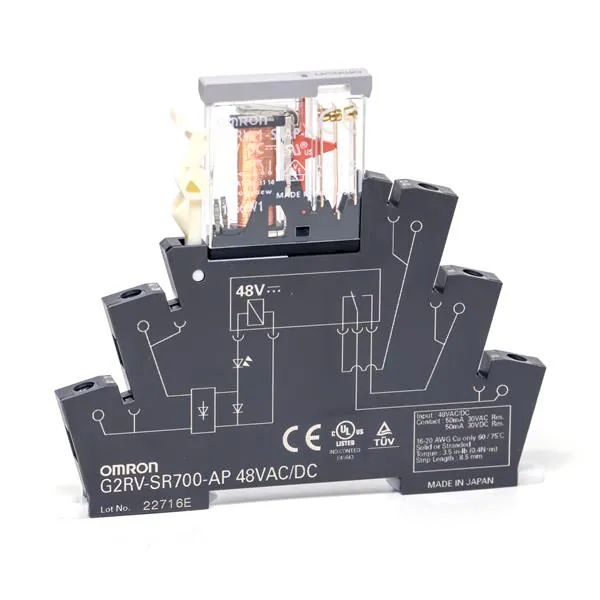
Omron G2RV-SR500-AP 12VDC Relay Socket Guide
The Omron G2RV-SR500-AP 12VDC relay socket is a compact slim I/O relay for low-voltage DC control circuits. It is well suited for automation panels where 12VDC signals must be isolated, transferred, or switched with dependable contact behavior. The AP version is designed for micro-load applications, making it useful in sensitive signal circuits rather than heavy power switching.
Core Technical Specifications
This model is rated for 12VDC input. The rated current is approximately 27.9 mA, and DC power consumption is approximately 300 mW. The relay uses an SPDT contact configuration, allowing one common terminal to switch between normally open and normally closed contacts. The AP contact version uses Ag alloy with Au plating, which supports more stable low-level signal switching.
Best-Fit Applications
The Omron G2RV-SR500-AP 12VDC relay socket is commonly used in compact machine automation, low-voltage control systems, signal isolation circuits, test benches, small PLC panels, and interface wiring where 12VDC logic is present. Its narrow body helps reduce panel footprint, while Push-In Plus wiring supports efficient assembly.
Engineering Considerations
Because this relay is designed for micro-load use, it should be selected when the load current is very low. It is not intended as a substitute for a power relay in motor, heater, or high-current switching circuits. In a properly designed control panel, it can help separate controller outputs from field wiring and provide a clear, maintainable interface point.
For additional Omron references, visit Omron automation components.
FAQ
Is the Omron G2RV-SR500-AP 12VDC relay socket suitable for battery-powered control circuits?
It can be used in 12VDC control environments if the circuit design matches the relay input and load ratings.
What does AP mean in this model?
AP indicates the micro-load contact version, using gold-plated contact material for low-current switching reliability.
Can it switch AC loads?
The input is 12VDC, but the contact side must always be evaluated according to the approved micro-load switching ratings.
Why use a slim relay socket instead of a larger relay?
Slim relay sockets save DIN rail space, simplify wiring, and make panel maintenance easier in dense automation systems.