
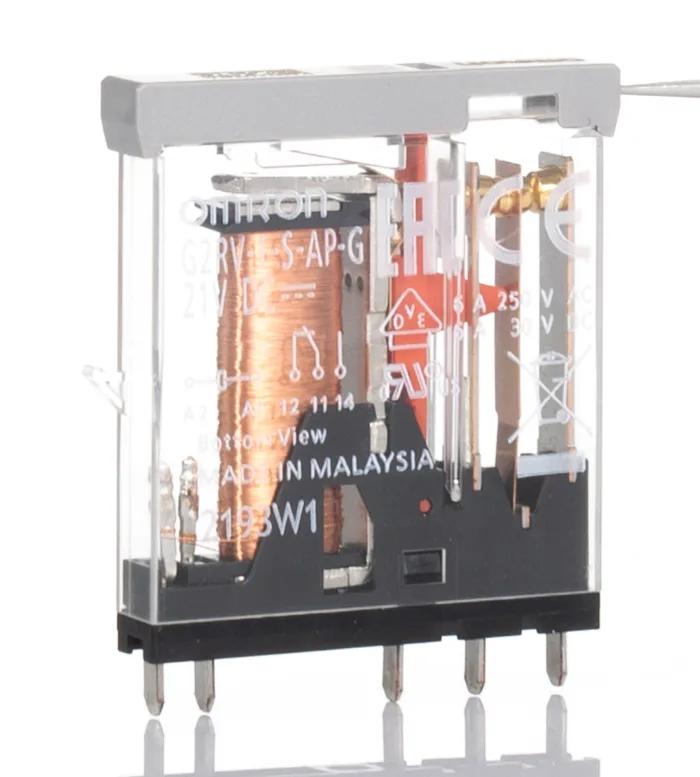
Omron G2RV-1-S-AP-G 21VDC Slim I/O Relay Guide
The Omron G2RV-1-S-AP-G 21VDC slim I/O relay is designed for compact control panels where space-saving installation and reliable signal switching are important. As part of the G2RV series, this relay is commonly used in PLC interface circuits, machine automation, signal isolation, and control cabinet applications.
Technical Features
This model uses a 21 VDC coil voltage and has an SPDT contact configuration. It is a slim plug-in relay with a narrow profile, making it suitable for high-density panel layouts. The relay is designed for signal-level switching and is associated with a 50 mA switching current, with switching voltage values commonly listed around 30 VAC and 36 VDC.
The G2RV-1-S-AP-G 21VDC also features 300 mW coil power, silver alloy contact material, and approximately 100 mΩ contact resistance. These characteristics make it suitable for interface applications where stable signal handling is more important than heavy load switching.
Application Areas
This relay is used in narrow control cabinets, PLC I/O modules, sensor interface circuits, automation panels, and machine signal conversion systems. Its plug-in design allows the relay unit to be replaced efficiently, which supports easier service planning in industrial environments.
Why Slim I/O Relays Are Important
Modern control panels often require more components in less space. A slim relay such as the Omron G2RV-1-S-AP-G 21VDC helps engineers maintain organized wiring while reducing cabinet footprint. For more details about Omron components, visit Omron product information.
FAQ
What is the Omron G2RV-1-S-AP-G 21VDC used for?
It is mainly used for slim I/O interface applications in automation panels and PLC control circuits.
Is this relay suitable for high-current load switching?
No. This version is mainly intended for signal-level switching rather than heavy power switching.
What contact configuration does it have?
It uses an SPDT contact configuration, allowing one input circuit to switch between two output paths.
Why is the slim design useful?
The slim design helps reduce panel space, making it suitable for compact automation cabinets with dense wiring.