
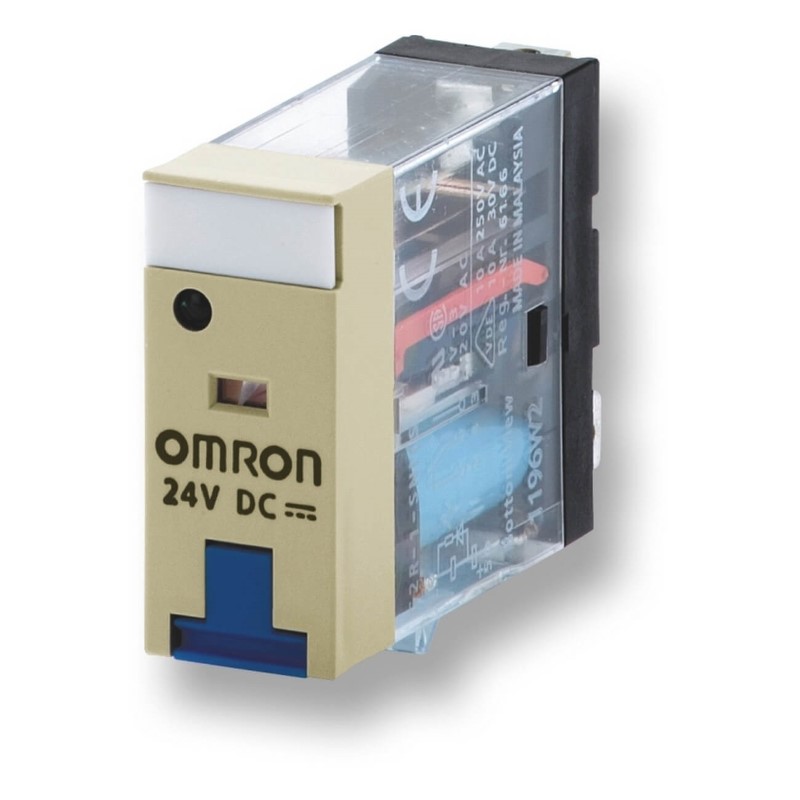
Omron G2R-1-SNI-AP3 230VAC (S) Relay Socket Guide
The Omron G2R-1-SNI-AP3 230VAC (S) relay socket is a plug-in general-purpose relay designed for industrial control panels and automation systems. It is especially useful where dependable switching, clear relay status indication, and service-friendly installation are required.
Technical Structure
This relay operates with a 230 VAC coil voltage and features an SPDT contact configuration. SPDT relays are widely used because they can switch one common circuit between two output states. This makes the relay suitable for control logic, alarm circuits, interlocking systems, and auxiliary switching inside electrical panels.
The contact rating is 10 A, giving the relay strong flexibility for control-level applications. The AP3 version uses gold-plated contacts, which can support more reliable performance in low-level signal switching. The relay also includes a mechanical indicator, LED indicator, and test button, helping maintenance teams confirm operation quickly.
Where It Fits Best
The Omron G2R-1-SNI-AP3 230VAC (S) relay socket can be used in PLC output interfaces, automation cabinets, machine control panels, HVAC systems, and monitoring circuits. Its plug-in construction helps reduce maintenance time because replacement can be done without changing the wiring layout.
Panel Maintenance Benefits
Visual diagnostics are one of the strongest practical advantages of this relay. The LED indicator shows energized status, while the mechanical indicator gives a physical confirmation of operation. For further Omron relay information, visit Omron technical resources.
Omron G2R-1-SNI-AP3 230VAC (S) FAQ
What is the coil voltage of this relay?
The Omron G2R-1-SNI-AP3 230VAC (S) relay uses a 230 VAC coil.
What does SPDT mean?
SPDT means single pole double throw. It lets one circuit switch between normally open and normally closed contacts.
Does this relay have gold-plated contacts?
Yes. The AP3 version includes gold-plated contacts, useful for stable signal-level switching.
Is the test button useful?
Yes. The test button allows manual relay actuation during commissioning, inspection, or troubleshooting.