
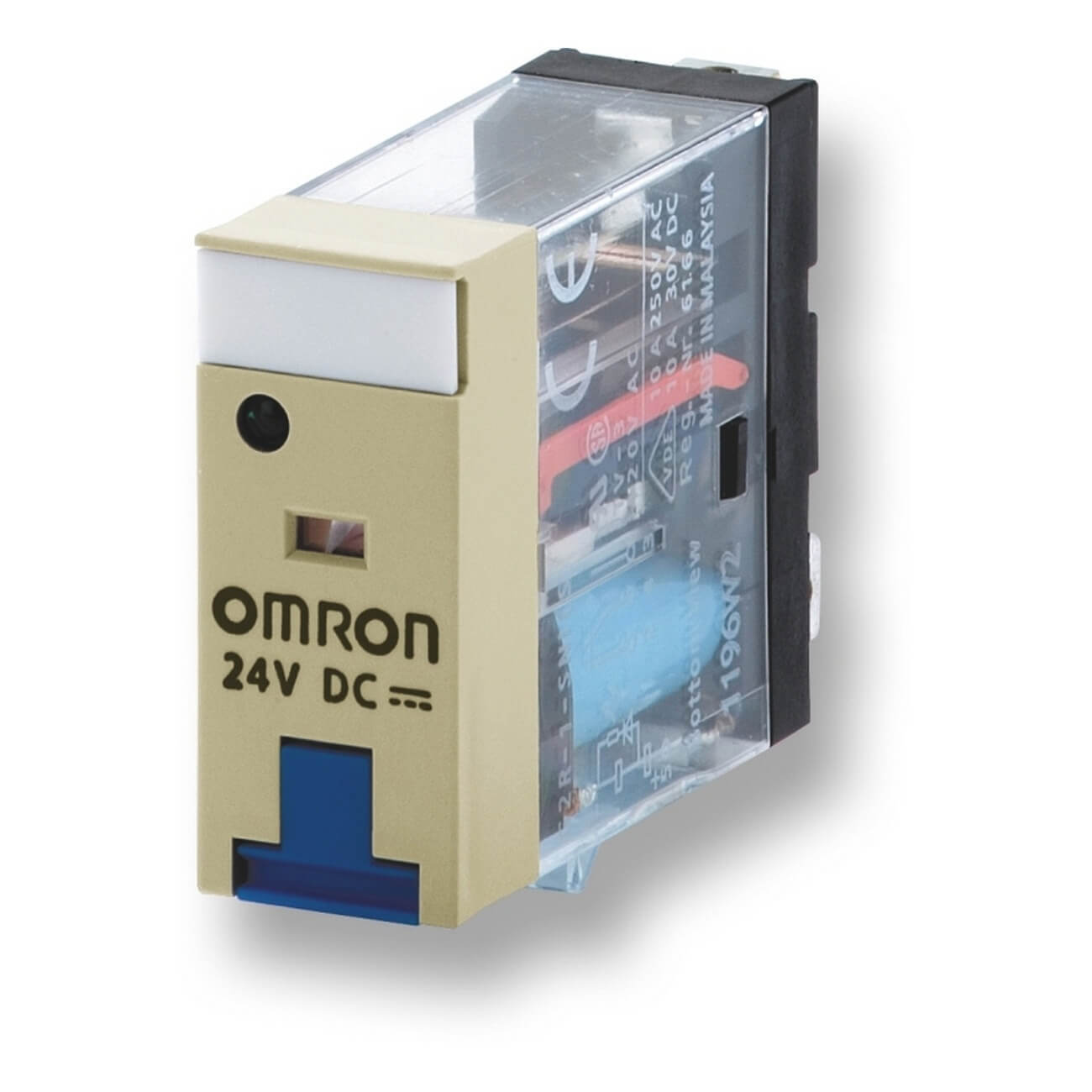
Omron G2R-2-SN 240VAC (S) Relay Socket
The Omron G2R-2-SN 240VAC (S) Relay Socket is a general purpose plug-in relay designed for AC control systems operating with a 240 VAC coil. It is commonly used in industrial panels, machine automation cabinets and auxiliary control circuits where a reliable DPDT relay is needed.
Key Technical Features
This model has a 2-pole DPDT contact structure and a rated carry current of 5 A. Its plug-in terminal format supports practical installation with compatible sockets. The relay also includes LED indication, a mechanical operation indicator and a transparent case, making it easier to monitor relay status during operation.
Why 240 VAC Coil Voltage Is Important
In many industrial environments, 230 to 240 VAC control circuits are still widely used. The Omron G2R-2-SN 240VAC (S) fits naturally into these systems and allows switching logic to be implemented without redesigning the voltage architecture of the panel.
Use in Automation and Control Panels
This relay can be used for control signal transfer, auxiliary contact expansion, electrical isolation and switching of compatible loads. Its DPDT structure gives panel builders flexibility, especially when two circuits must change state at the same time. The LED and mechanical indicators also make troubleshooting more straightforward.
For more about Omron, you can explore additional automation and relay component references.
FAQ
What is Omron G2R-2-SN 240VAC (S)?
It is a plug-in electromechanical relay with a 240 VAC coil, DPDT contacts and 5 A rated carry current.
Is it suitable for 240 VAC control circuits?
Yes. This model is specifically designed with a 240 VAC coil for AC control systems.
What does the LED indicator show?
The LED indicator helps show when the relay coil is energized.
Can it be used in DIN rail panels?
Yes, when paired with a compatible socket, it can be installed in DIN rail or surface-mounted control panels.
What is the benefit of DPDT contacts?
DPDT contacts allow two separate circuits to be switched simultaneously, improving control flexibility.