
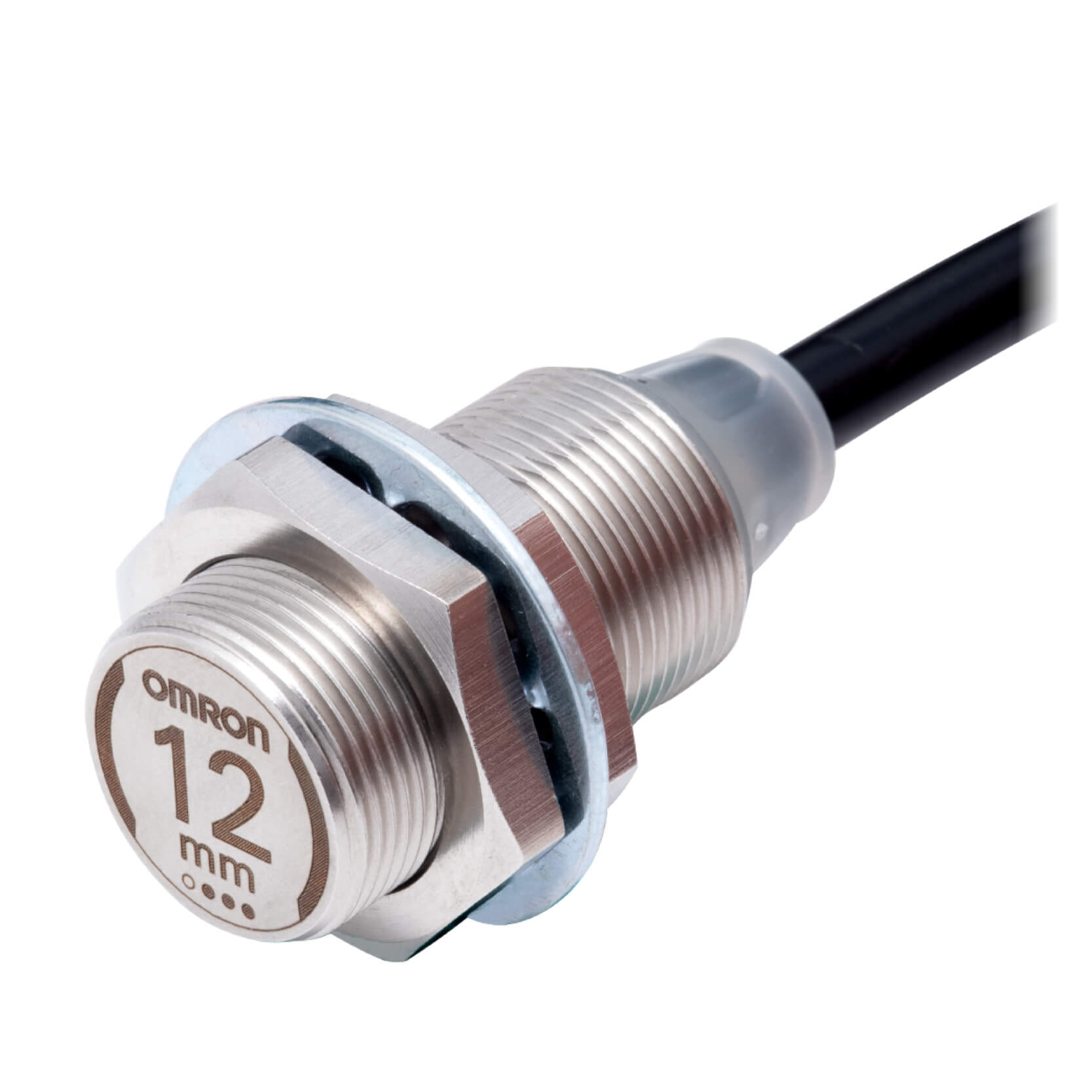
Omron E2EW-QX10B230 Inductive Proximity Sensor
| Feature | Value |
|---|---|
| Manufacturer | Omron |
| Series | E2EW |
| Sensor Type | Inductive Proximity Sensor |
| Housing Size | M18 |
| Mounting Type | Flush (Shielded) |
| Sensing Distance | 10 mm |
| Output Type | PNP Normally Open (NO) |
| Supply Voltage | 10 to 30 VDC |
| Connection Method | Pre-wired Cable |
| Cable Length | 2 m |
| Protection Rating | IP67 |
| Housing Material | SUS303 Stainless Steel |
| Overall Length | 54 mm Class |
Accurate metal object detection plays an essential role in modern automation systems. The Omron E2EW-QX10B230 Inductive Proximity Sensor is engineered to provide stable sensing performance in manufacturing environments where equipment reliability, repeatability, and resistance to contamination are important operational requirements. Its integrated 2-meter cable allows direct installation in machinery without requiring additional connector assemblies.
Technical Description
The Omron E2EW-QX10B230 Inductive Proximity Sensor is part of the E2EW series, which incorporates advanced sensing technology for reliable metal target detection. The sensor features an M18 cylindrical housing with a flush-mount design and a nominal sensing distance of 10 mm.
This model utilizes a PNP normally open output configuration, making it compatible with a wide range of industrial PLCs, controllers, and automation devices. The stainless-steel construction and fluororesin-coated sensing surface help support long-term operation in challenging industrial environments.
Working Principle
The sensor operates using electromagnetic induction. An oscillator inside the sensing head generates a high-frequency electromagnetic field around the sensing surface.
When a metallic object enters this field, eddy currents are induced within the target. These currents reduce the oscillator amplitude, which is continuously monitored by the sensor circuitry. Once the detection threshold is reached, the output switches to indicate target presence.
The Omron E2EW-QX10B230 Inductive Proximity Sensor employs Factor 1 sensing technology, helping reduce sensing distance variations between different metal materials and improving application consistency.
Key Advantages
- 10 mm sensing distance with compact dimensions
- PNP normally open output configuration
- Flush mounting capability
- Integrated 2-meter cable connection
- IP67 environmental protection
- Robust stainless-steel housing
- Resistance to oils and industrial contaminants
- Stable detection across multiple metal types
Common Usage Areas
The Omron E2EW-QX10B230 Inductive Proximity Sensor can be integrated into various industrial applications requiring reliable metallic object detection.
- Automated assembly equipment
- Industrial conveyor systems
- Packaging machinery
- Material transfer equipment
- Automotive production lines
- Machine tool monitoring systems
- Industrial handling systems
- Metal processing equipment
Engineers seeking additional sensor technologies may review Omron sensor products for related automation applications.
Industrial Application Examples
Production Line Position Detection
Manufacturing systems often require accurate monitoring of moving metal carriers and tooling positions. Inductive sensors provide reliable feedback without physical contact.
Conveyor System Automation
Conveyor installations use metal detection sensors to monitor pallet locations, indexing positions, and transfer sequences throughout automated material flow systems.
Assembly Equipment Monitoring
Assembly stations frequently verify the presence of metallic components before initiating process cycles. Consistent sensing helps maintain production quality and process continuity.
Machining Equipment Integration
Machine tools can utilize proximity sensors to detect fixture positions, actuator movements, and mechanical travel limits while maintaining resistance to coolant exposure.
Advantages in Industrial Environments
The Omron E2EW-QX10B230 Inductive Proximity Sensor is designed for environments where contamination, vibration, and continuous operation are common conditions.
- Non-contact detection eliminates mechanical wear
- Stable operation in demanding production environments
- Reduced maintenance requirements
- Compatibility with modern automation platforms
- Durable mechanical construction
- Flexible installation options
Important Selection Criteria
Before selecting an inductive proximity sensor, engineers should evaluate the application’s electrical and mechanical requirements.
- Required sensing range
- Available installation space
- Output configuration requirements
- Environmental exposure conditions
- Target material characteristics
- Cable routing requirements
- Protection rating expectations
- Control system compatibility
The Omron E2EW-QX10B230 Inductive Proximity Sensor is particularly suitable for installations requiring direct cable connection and PNP normally open switching behavior.
Frequently Asked Questions
1. What type of sensing technology does this model use?
It uses inductive sensing technology for non-contact detection of metallic objects.
2. What is the nominal sensing distance?
The sensor provides a sensing distance of 10 mm.
3. Which output configuration is included?
This model features a PNP normally open output.
4. Is the sensor suitable for flush mounting?
Yes. The shielded design supports flush installation in metal structures.
5. What connection method is provided?
The sensor includes a factory-attached 2-meter cable.
6. What environmental protection rating is available?
The sensor is rated IP67.
7. Can the Omron E2EW-QX10B230 Inductive Proximity Sensor detect different metal types?
Yes. Its sensing design helps provide stable detection performance across various metallic materials.
8. What industries commonly use this sensor?
Automotive manufacturing, logistics, packaging, machine building, and metalworking industries commonly apply this sensor.
9. What supply voltage range is supported?
The operating voltage range is 10 to 30 VDC.
10. Why is non-contact sensing beneficial?
Non-contact operation eliminates mechanical wear, improves reliability, and reduces maintenance requirements.