
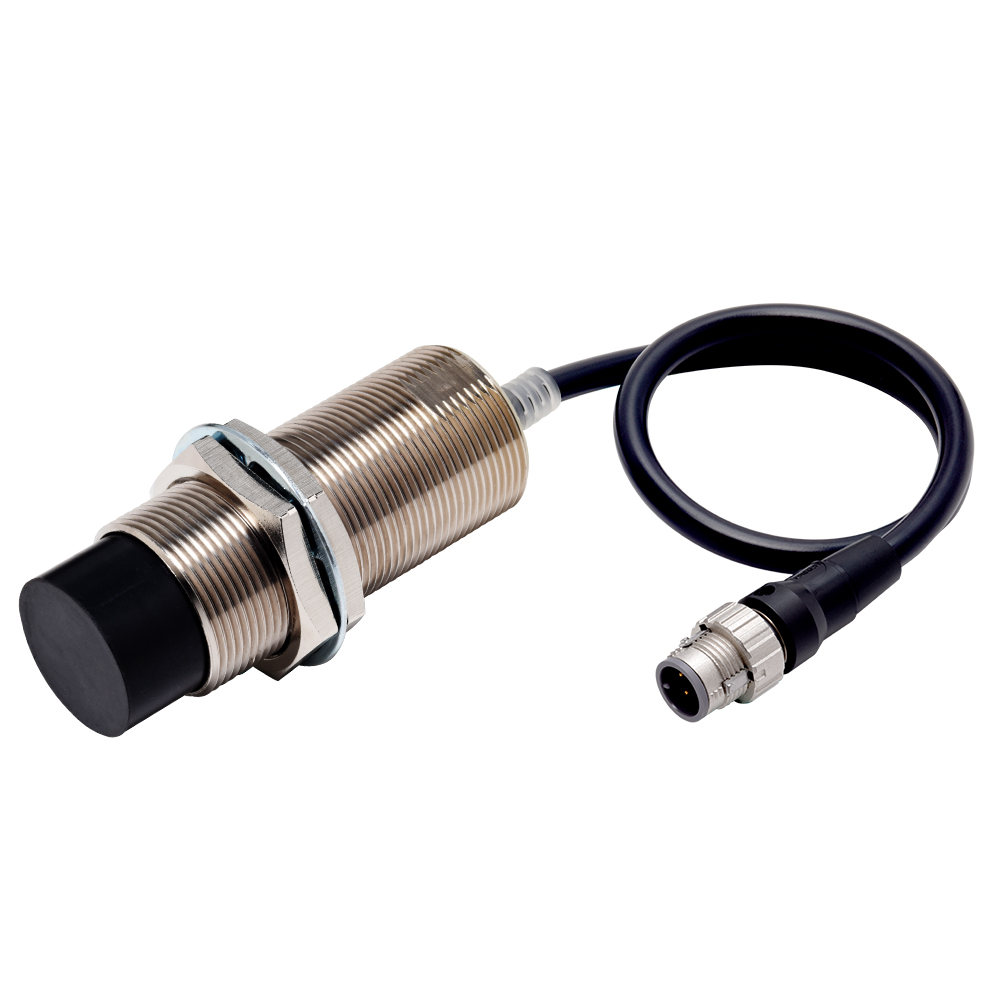
Omron E2E-X50MB1TL30-M1TJ 0.3M Inductive Proximity Sensor
| Feature | Value |
|---|---|
| Manufacturer | Omron |
| Series | E2E |
| Product Type | Inductive Proximity Sensor |
| Sensing Distance | 50 mm |
| Housing Diameter | M30 |
| Sensing Technology | Inductive |
| Connection Style | M12 Connector with 0.3 m Pigtail Cable |
| Housing Construction | Metal Cylindrical Body |
| Installation Type | Extended Range Detection |
| Application Category | Industrial Automation |
| Target Material | Metallic Objects |
Industrial equipment frequently requires reliable sensing solutions capable of detecting metallic objects from greater distances while maintaining installation flexibility. The Omron E2E-X50MB1TL30-M1TJ 0.3M Inductive Proximity Sensor is designed for such applications, combining extended sensing performance with a practical connector and pigtail cable configuration suitable for modern automation systems.
By utilizing inductive sensing technology, the sensor performs target detection without physical contact. This operating method reduces mechanical wear, supports continuous machine operation, and enables dependable monitoring of metallic components throughout automated manufacturing and material handling processes.
Technical Description
The Omron E2E-X50MB1TL30-M1TJ 0.3M Inductive Proximity Sensor belongs to the E2E family of cylindrical proximity sensors and features a nominal sensing distance of 50 mm. The sensor incorporates an M30 housing, making it suitable for installations where larger sensing areas and increased detection distances are required.
A distinguishing feature of this version is the integrated 0.3-meter pigtail cable combined with an M12 connector interface. This arrangement can simplify installation in equipment where direct connector access may be restricted or where routing flexibility is beneficial.
The Omron E2E-X50MB1TL30-M1TJ 0.3M Inductive Proximity Sensor is commonly integrated into machine automation systems, logistics equipment, production machinery, and industrial transport systems requiring dependable metallic target detection.
Working Principle
The sensor operates through electromagnetic induction. An oscillator inside the sensor generates a high-frequency electromagnetic field that extends from the sensing surface.
When a conductive metallic object enters the sensing zone, eddy currents are induced within the target. These currents draw energy from the electromagnetic field, causing a detectable change in the oscillator circuit.
The internal electronics continuously monitor these variations. Once the detected change exceeds a predefined threshold, the sensor output switches state and sends a signal to the connected control system.
Detection Characteristics
- Non-contact sensing operation
- Reliable metallic target detection
- Extended sensing capability
- Consistent switching behavior
- Suitable for repetitive automation cycles
Areas of Application
The Omron E2E-X50MB1TL30-M1TJ 0.3M Inductive Proximity Sensor is intended for industrial environments where larger detection distances support machine design and operational efficiency.
- Automated storage systems
- Material transport equipment
- Heavy-duty conveyor installations
- Industrial lifting machinery
- Steel processing facilities
- Automated transfer stations
- Machine positioning systems
- Production line automation
The sensor’s long sensing range allows equipment designers to place detection devices farther from moving components while maintaining dependable object recognition.
Industrial Applications
Automated Warehousing
Warehouse automation systems frequently use inductive sensors to monitor metallic carriers, transfer mechanisms, and automated transport structures.
Metal Fabrication Facilities
The sensor can detect large metal workpieces moving through production stages where standard sensing distances may be insufficient.
Bulk Material Handling
Industrial conveying systems often benefit from long-range sensing when monitoring machine components and transport equipment.
Omron E2E-X50MB1TL30-M1TJ 0.3M Machine Manufacturing
OEM machine builders can integrate the sensor into custom equipment requiring reliable metal detection over extended distances.
Advantages
- 50 mm sensing distance
- Non-contact detection method
- Reduced mechanical wear
- M12 connector compatibility
- 0.3-meter pigtail cable flexibility
- Suitable for large industrial machinery
- Reliable metallic target sensing
- Durable cylindrical housing construction
The Omron E2E-X50MB1TL30-M1TJ 0.3M Inductive Proximity Sensor can support efficient machine layouts by reducing mounting constraints and providing greater flexibility during system integration.
Sector-Specific Examples
Logistics and Distribution
Automated sorting and transfer systems can utilize the sensor to monitor metallic transport mechanisms throughout material flow operations.
Automotive Production
Large assembly fixtures and transfer systems may employ long-range inductive sensing to confirm equipment positioning.
Omron E2E-X50MB1TL30-M1TJ 0.3M Steel Processing
Detection of large metallic components during automated transport and handling processes is a common application area.
Industrial Manufacturing
Production machinery requiring extended sensing distances can benefit from the sensor’s detection capabilities and installation flexibility.
Factors to Consider When Selecting the Sensor
- Required sensing range
- Target dimensions
- Target material composition
- Machine installation space
- Cable routing requirements
- Environmental conditions
- Control system compatibility
- Maintenance accessibility
Proper installation and adherence to manufacturer recommendations help ensure stable long-term operation.
For additional industrial sensing technologies, engineers can explore Omron sensor products and related automation solutions.
Frequently Asked Questions
What is the sensing distance of this sensor?
The nominal sensing distance is 50 mm.
What does the 0.3M designation indicate?
It refers to the integrated 0.3-meter pigtail cable used with the connector configuration.
Omron E2E-X50MB1TL30-M1TJ 0.3M What type of objects can the sensor detect?
The sensor is designed for conductive metallic targets.
Does the sensor require contact with the object?
No. Detection is achieved through an electromagnetic field.
Where is this sensor commonly used?
It is often installed in logistics systems, industrial machinery, steel processing equipment, and automation systems.
Can it be connected to PLC-based systems?
Yes. The sensor can be integrated into PLC-controlled industrial automation architectures.
Why choose a long-range inductive sensor?
Extended sensing distance can simplify machine design and provide greater installation flexibility.
What should engineers verify before installation?
Important considerations include target characteristics, sensing distance requirements, mounting conditions, and electrical compatibility.