
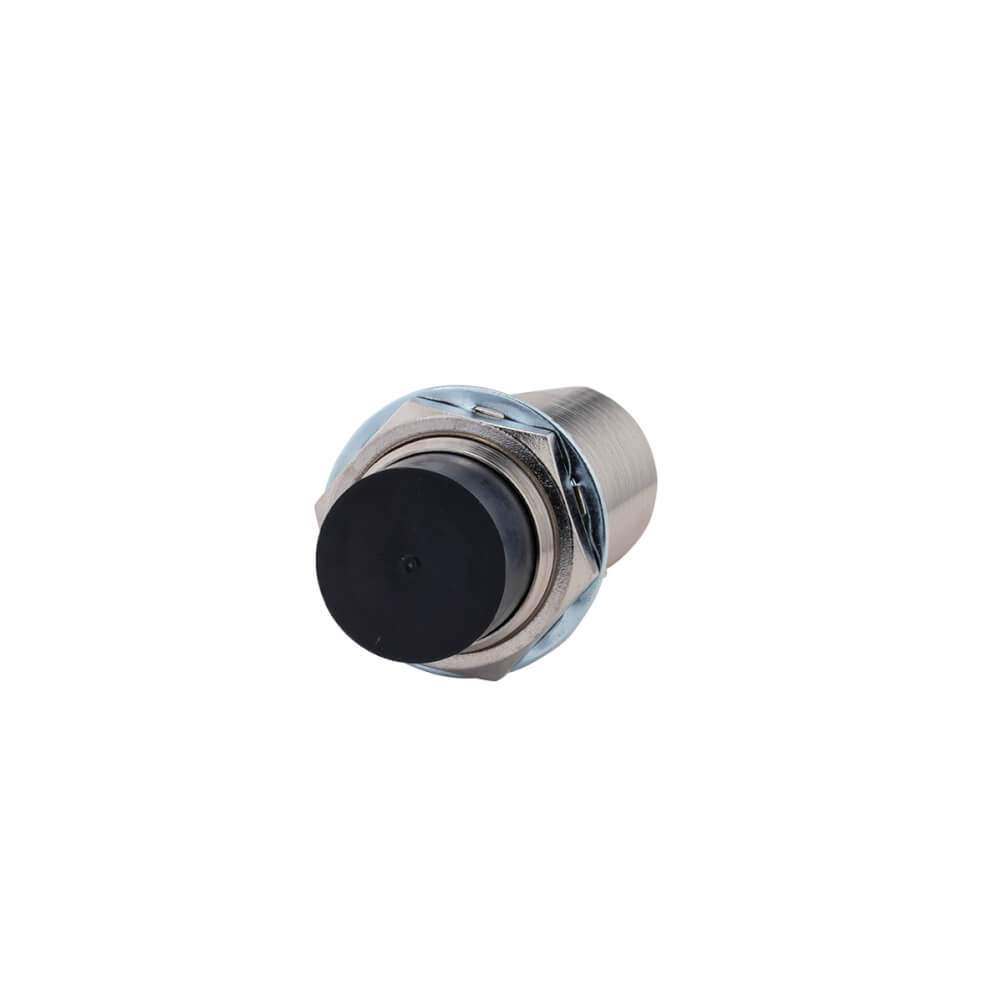
Omron E2E-X50MB1TL30-M1 Inductive Proximity Sensor
| Feature | Value |
|---|---|
| Manufacturer | Omron |
| Series | E2E |
| Product Type | Inductive Proximity Sensor |
| Sensing Distance | 50 mm |
| Housing Shape | Cylindrical |
| Thread Size | M30 |
| Connection Type | M12 Connector |
| Sensing Method | Inductive |
| Housing Material | Metal Housing |
| Protection Rating | Industrial Protection Design |
| Installation Style | Extended Sensing Range Type |
Long-distance metal detection can simplify machine design by reducing mechanical constraints and providing greater flexibility during equipment installation. The Omron E2E-X50MB1TL30-M1 Inductive Proximity Sensor is developed for applications where a larger sensing range is required compared to conventional proximity sensors. Its extended detection capability allows reliable monitoring of metallic targets in industrial automation environments.
As part of the E2E family, this sensor utilizes inductive sensing technology to detect conductive metallic objects without physical contact. Such an approach supports consistent operation in automated systems while minimizing wear-related maintenance concerns commonly associated with mechanical switches.
Technical Description
The Omron E2E-X50MB1TL30-M1 Inductive Proximity Sensor features a large M30 cylindrical housing and a nominal sensing distance of 50 mm. This extended sensing capability makes it suitable for applications where increased installation clearance or larger target detection zones are necessary.
The sensor incorporates a robust industrial housing intended for use in manufacturing facilities, processing equipment, and automated handling systems. The M12 connector interface supports straightforward installation and replacement procedures while maintaining compatibility with common industrial cabling practices.
The Omron E2E-X50MB1TL30-M1 Inductive Proximity Sensor is frequently selected for automation projects where long sensing distances contribute to machine reliability and design flexibility.
Working Principle
The sensor operates using an electromagnetic oscillator located behind the sensing face. This oscillator generates a controlled electromagnetic field extending outward from the sensor.
When a metallic object enters the sensing area, eddy currents are generated within the target material. These currents absorb energy from the electromagnetic field, producing measurable changes in the oscillator circuit.
The sensor electronics evaluate these changes continuously. Once the signal exceeds the switching threshold, the output changes state and communicates target presence to the control system.
Key Detection Characteristics
- Non-contact metallic target detection
- Extended sensing capability
- Stable switching operation
- High suitability for repetitive processes
- Reduced mechanical wear
Applications and Usage Areas
The Omron E2E-X50MB1TL30-M1 Inductive Proximity Sensor is particularly useful where greater sensing distances are required to accommodate machine layouts or larger equipment structures.
- Heavy-duty conveyor systems
- Steel processing equipment
- Material transfer stations
- Automated storage systems
- Industrial lifting equipment
- Bulk handling machinery
- Large assembly fixtures
- Machine positioning systems
Its extended sensing range can reduce installation limitations and simplify sensor mounting arrangements in complex industrial equipment.
Industrial Applications
Steel and Metal Processing
Metal production facilities often require reliable detection of large workpieces moving through automated processes. Extended sensing distance can improve detection reliability where physical access is limited.
Logistics Automation
Warehouse automation systems may use long-range inductive sensors to monitor metallic transport equipment, pallet carriers, and transfer mechanisms.
Mining and Bulk Material Handling
Heavy-duty conveying equipment can benefit from increased sensing distances when monitoring moving machine components and metallic structures.
Industrial Machinery
Machine builders frequently integrate extended-range sensors into large equipment where conventional sensing distances may not be sufficient.
Advantages
- Long sensing distance
- Non-contact operation
- Reduced maintenance requirements
- Mechanical durability
- Suitable for large industrial equipment
- Reliable metal detection
- Connector-based installation
- Compatibility with automation systems
The Omron E2E-X50MB1TL30-M1 Inductive Proximity Sensor offers installation flexibility in applications where sensor positioning is constrained by machine dimensions or environmental considerations.
Sector-Specific Examples
Automotive Manufacturing Plants
The sensor can monitor large fixtures and metallic carriers used throughout vehicle assembly processes.
Distribution Centers
Automated transport systems may use long-range inductive sensing for equipment positioning and transfer verification.
Packaging Equipment Manufacturing
Machine builders can implement the sensor for monitoring larger machine assemblies where additional sensing clearance is beneficial.
Industrial Material Processing
Metal handling systems often require reliable detection of large workpieces moving between production stages.
Omron E2E-X50MB1TL30-M1 Factors to Consider During Selection
- Required sensing distance
- Target size and material
- Available mounting location
- Environmental exposure
- Machine vibration levels
- Connector compatibility
- Control system requirements
- Maintenance accessibility
Correct sensor placement and adherence to installation recommendations help achieve reliable detection performance throughout the equipment lifecycle.
Additional industrial sensing technologies can be explored through Omron sensor solutions for broader automation applications.
Frequently Asked Questions
What type of sensor is the E2E-X50MB1TL30-M1?
It is an inductive proximity sensor designed for non-contact detection of metallic objects.
What is the sensing distance?
The nominal sensing distance is 50 mm.
Omron E2E-X50MB1TL30-M1 Why would a long sensing distance be beneficial?
It provides greater installation flexibility and can simplify machine design in large equipment.
Can this sensor detect non-metallic materials?
Inductive sensors are primarily intended for conductive metallic targets.
Omron E2E-X50MB1TL30-M1 Where is this model commonly used?
It is frequently applied in heavy-duty automation systems, logistics equipment, and industrial machinery.
Does the sensor require contact with the target?
No. Detection is achieved through an electromagnetic field.
Can it be connected to PLC systems?
Yes. It is suitable for integration into PLC-based automation architectures.
What should engineers evaluate before selecting this model?
Important factors include sensing distance requirements, mounting conditions, target characteristics, and environmental conditions.