
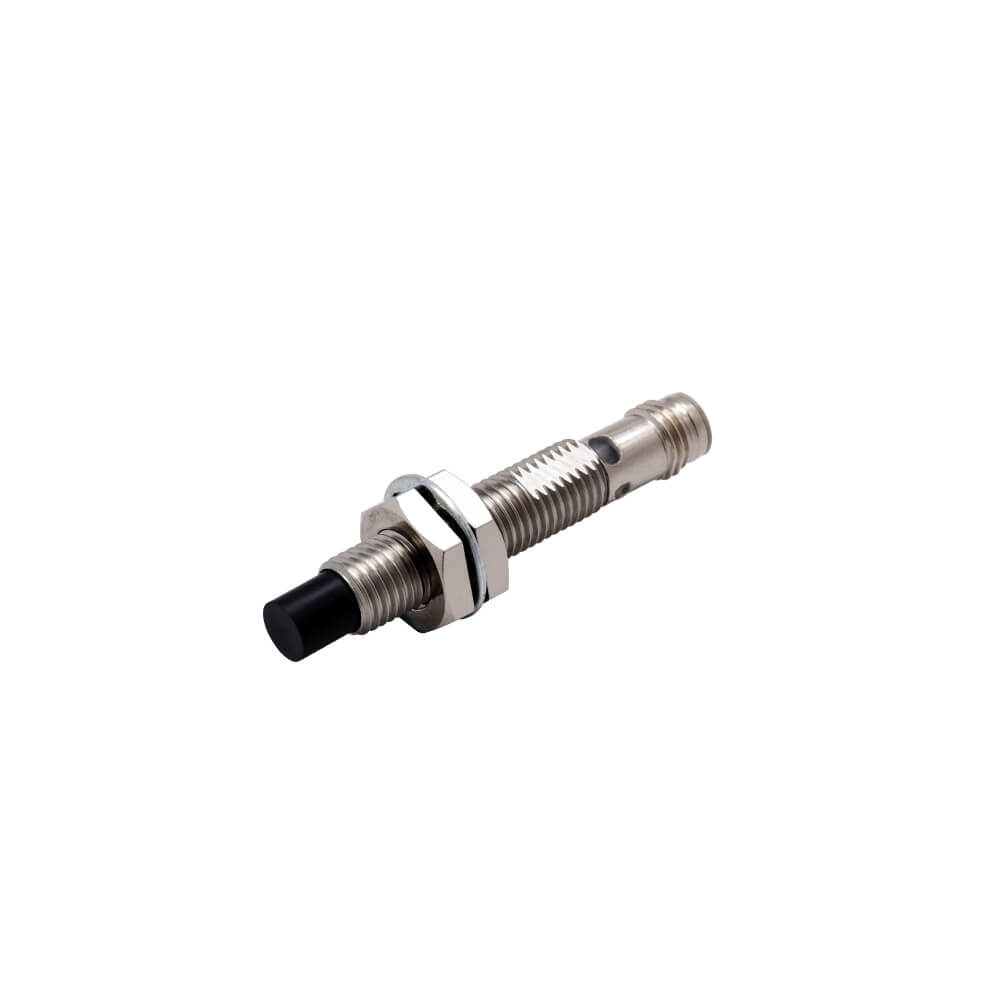
Omron E2E-X4MC2L8-M5 Inductive Proximity Sensor
| Feature | Value |
|---|---|
| Manufacturer | Omron |
| Series | E2E |
| Product Type | Inductive Proximity Sensor |
| Sensing Distance | 4 mm |
| Housing Shape | Cylindrical |
| Mounting Style | Non-Flush |
| Connection Type | M12 Connector |
| Cable Length Equivalent | M12 Connector Version |
| Housing Material | Nickel-Plated Brass |
| Protection Rating | IP67 / IP69K Series Protection |
| Detection Method | Electromagnetic Induction |
Omron E2E-X4MC2L8-M5 Inductive Proximity Sensor
Industrial machinery often requires dependable position verification and object detection methods that can withstand repetitive operating cycles. The Omron E2E-X4MC2L8-M5 Inductive Proximity Sensor is designed to address these requirements through contactless metallic target detection. As part of Omron’s E2E sensor family, this model supports machine automation processes by providing repeatable switching performance without relying on mechanical contact.
Inductive sensing technology has become a standard component in automation systems where metallic objects must be monitored accurately. By eliminating moving detection elements, the sensor helps reduce maintenance concerns associated with conventional mechanical switches while maintaining consistent operation in demanding industrial environments.
Omron E2E-X4MC2L8-M5 Technical Description
The Omron E2E-X4MC2L8-M5 Inductive Proximity Sensor is a cylindrical proximity sensor featuring a 4 mm sensing distance and M12 connector interface. The sensor is intended for non-contact detection of metallic targets and is commonly integrated into machine control architectures, automated production lines, and industrial handling systems.
Its rugged nickel-plated brass housing provides mechanical durability while supporting installation in equipment exposed to vibration, dust, and industrial contaminants. The connector-based configuration also allows simplified replacement procedures during maintenance operations.
The Omron E2E-X4MC2L8-M5 Inductive Proximity Sensor can be incorporated into PLC-controlled systems, machine safety monitoring arrangements, and automated positioning applications where reliable metal detection is required.
How the Sensor Operates
The operating principle is based on electromagnetic induction. An internal oscillator generates a high-frequency electromagnetic field at the active sensing surface.
When a metallic object enters the sensing zone, eddy currents are induced in the target. These currents absorb energy from the oscillating field, causing measurable changes within the sensor circuitry.
The electronics continuously monitor these changes. Once a predefined threshold is reached, the output state changes and the control system receives a detection signal.
Core Functional Characteristics
- Detection without physical contact
- Continuous monitoring capability
- Reliable response to metallic objects
- Stable operation during repetitive machine cycles
- Reduced mechanical wear compared to contact switches
Omron E2E-X4MC2L8-M5 Applications in Automation Systems
The sensor is frequently installed in production environments where machine components, tooling elements, or workpieces require precise position confirmation.
- Assembly line automation
- Packaging machinery
- Conveyor systems
- Robotic handling cells
- Machine tool equipment
- Material transport systems
- Sorting and inspection stations
- Industrial lifting mechanisms
Its ability to detect metal independently of color, markings, or surface appearance makes it suitable for a broad range of industrial processes.
Industrial Application Examples
Automated Assembly Operations
Manufacturing systems can utilize the sensor to verify the position of metallic fixtures and ensure that production stages occur in the correct sequence.
Packaging Equipment
Machine builders often integrate inductive sensors to monitor guide mechanisms, indexing systems, and actuator positions.
Metal Processing Facilities
The sensor can be used to detect workpiece presence during machining, forming, or handling operations.
Warehouse Automation
Automated transfer equipment may rely on proximity sensors to confirm carrier positioning and transport mechanism status.
Advantages of the Sensor Design
- Contactless operation
- Reduced maintenance requirements
- Suitable for high-cycle applications
- Consistent switching performance
- Compact cylindrical construction
- Industrial-grade environmental protection
- Mechanical durability
- Compatibility with modern automation systems
These characteristics contribute to stable machine operation and support long-term automation strategies across multiple industries.
Sector-Specific Use Cases
Automotive Manufacturing
Detection of metal carriers, fixtures, and positioning mechanisms throughout assembly processes.
Logistics Facilities
Monitoring of conveyor transfer systems and automated transport equipment.
Machine Building Industry
Integration into OEM equipment requiring dependable metallic target sensing.
Electromechanical Production
Verification of component presence before assembly or testing procedures begin.
Selection Considerations
Several engineering factors should be evaluated before implementing an inductive proximity sensor.
- Required sensing range
- Available installation space
- Target dimensions and material
- Environmental conditions
- Connector requirements
- Machine electrical architecture
- Maintenance accessibility
- Mounting configuration
Following manufacturer installation recommendations helps ensure predictable detection performance and long-term reliability.
Engineers interested in additional sensing technologies can review Omron sensor series and related industrial automation solutions.
Frequently Asked Questions
What type of objects can this sensor detect?
The sensor is designed primarily for metallic target detection using inductive sensing technology.
What is the nominal sensing distance?
The specified sensing distance is 4 mm.
Is the sensor suitable for conveyor systems?
Yes. It is commonly used for position monitoring and object detection in conveyor applications.
Does the sensor require physical contact with the target?
No. Detection occurs through an electromagnetic field without touching the object.
Can it be integrated with PLC systems?
Yes. Inductive proximity sensors are commonly incorporated into PLC-controlled automation systems.
Why is inductive sensing used in industrial automation?
It provides reliable metallic object detection while reducing mechanical wear associated with contact-based devices.
What industries commonly use this sensor?
Automotive manufacturing, packaging, logistics, machine building, and material handling industries frequently use inductive sensors.
What should be checked before selecting this model?
Engineers should verify sensing distance requirements, mounting conditions, target characteristics, and system compatibility.