
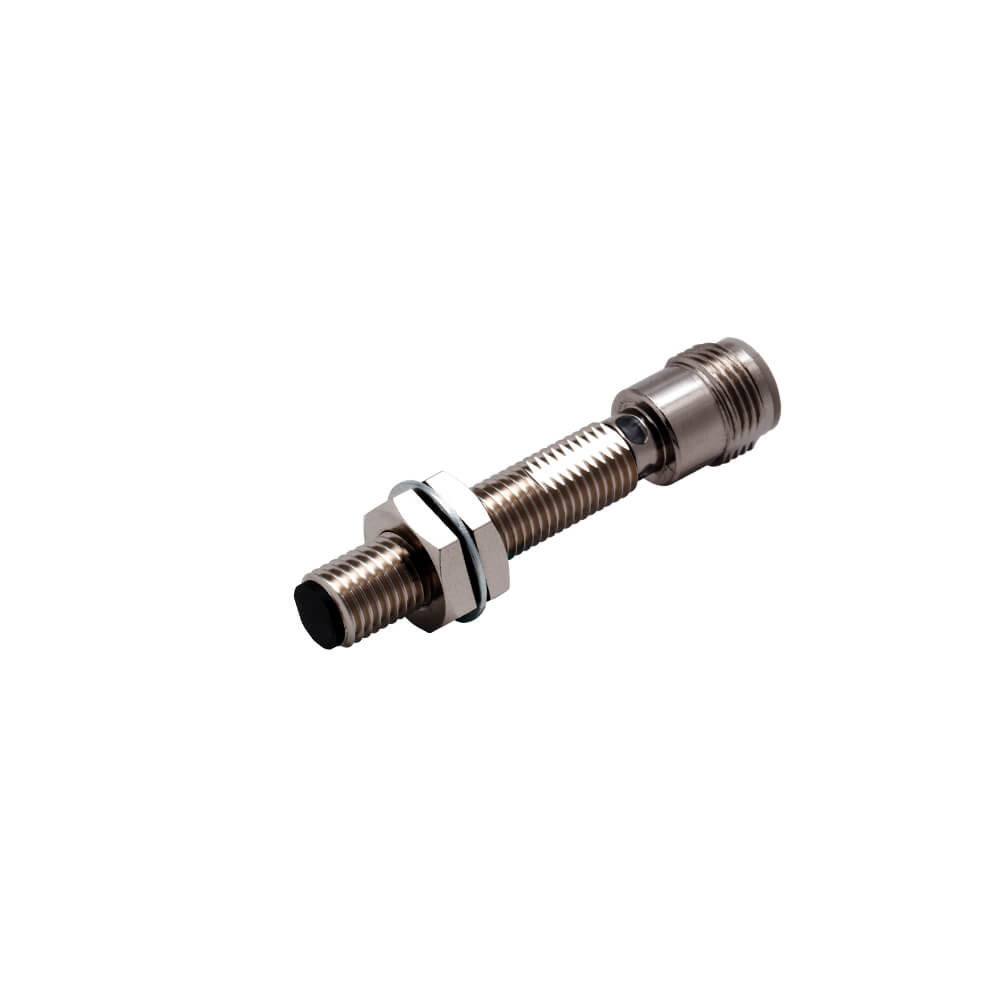
Omron E2E-X4C2L8-M1 Inductive Proximity Sensor
| Feature | Value |
|---|---|
| Product Type | Inductive Proximity Sensor |
| Series | E2E |
| Sensing Distance | 4 mm |
| Housing Diameter | M12 |
| Installation Type | Shielded |
| Output Type | NPN Normally Open |
| Supply Voltage | 10 to 30 VDC |
| Connection Method | M12 Connector |
| Housing Material | Nickel-Plated Brass |
| Protection Rating | IP67 / IP67G / IP69K |
| Operating Temperature | -25°C to +70°C |
Technical Description
The Omron E2E-X4C2L8-M1 Inductive Proximity Sensor is engineered for industrial automation applications that require dependable detection of metallic objects and flexible field wiring. This model combines the compact dimensions of an M12 cylindrical housing with an M12 connector interface, making it suitable for installations where simplified maintenance and quick sensor replacement are important.
As a member of the E2E sensor family, the device utilizes inductive sensing technology to detect metal targets without physical contact. This operating method helps reduce mechanical wear while maintaining stable detection performance during continuous operation.
The Omron E2E-X4C2L8-M1 Inductive Proximity Sensor is frequently integrated into production equipment, material handling systems, and automated machinery that require consistent position monitoring and object detection.
Working Principle
The sensor generates a high-frequency electromagnetic field at its sensing surface. When a metallic object enters the detection area, eddy currents are induced within the target. These currents absorb energy from the oscillator circuit, causing a measurable change in the electromagnetic field.
The internal electronic circuitry monitors these changes and switches the NPN output once the target reaches the specified sensing distance. Because the process is entirely contactless, the sensor can perform repeated switching operations without physical degradation.
The Omron E2E-X4C2L8-M1 Inductive Proximity Sensor is designed to provide stable performance even in demanding industrial environments where vibration, dust, and frequent machine cycles are present.
Typical Applications
- Industrial automation systems
- Machine position monitoring
- Automated assembly stations
- Conveyor and transport equipment
- Packaging machinery
- Robotic handling systems
- Machine tool applications
- Metal component detection
Industrial Application Examples
Automated Production Lines
Production equipment utilizes inductive sensors to verify the position of metallic components before processing steps are initiated. This helps maintain process consistency and operational control.
Robotic Systems
Robots and automated manipulators often use proximity sensors to confirm fixture positions, detect metallic workpieces, and monitor actuator movement.
Packaging Equipment
Packaging machines integrate sensors to verify mechanical positions and monitor moving assemblies during production cycles.
Material Handling Systems
Automated logistics installations use inductive sensors to identify metallic carriers, transfer devices, and conveyor components.
Advantages
- Reliable non-contact metal detection
- Connector-based installation simplifies maintenance
- Compact M12 cylindrical housing
- Flush mounting capability
- Durable nickel-plated brass construction
- Suitable for demanding industrial environments
- Wide operating temperature range
- Compatibility with industrial PLC systems
Omron E2E-X4C2L8-M1 Sector-Specific Use Cases
In machine manufacturing facilities, the sensor can be used to verify actuator positions and moving mechanical assemblies. Automated warehouses may utilize inductive sensing technology to monitor transport mechanisms and carrier movements. In metal processing operations, sensors can detect workpiece positioning before machining procedures begin. Packaging facilities often incorporate proximity sensors to monitor machine status and production sequences.
Factors to Consider During Selection
When selecting an inductive proximity sensor, engineers should review mounting conditions, sensing distance requirements, output type, environmental protection levels, and connection preferences. Connector-based models are particularly useful when maintenance efficiency and simplified wiring are important considerations.
Omron E2E-X4C2L8-M1 Additional industrial sensing technologies can be explored through Omron sensor products, which include a wide range of proximity, photoelectric, and measurement solutions.
System Integration
The Omron E2E-X4C2L8-M1 Inductive Proximity Sensor can be connected to PLC inputs, industrial controllers, distributed I/O modules, and machine automation platforms. The NPN normally open output configuration allows integration into control systems that require sinking input architecture.
The Omron E2E-X4C2L8-M1 Inductive Proximity Sensor is commonly installed alongside servo drives, relays, pneumatic actuators, operator interfaces, and industrial communication devices to support machine feedback and process monitoring functions.
Frequently Asked Questions
What is the sensing distance of the sensor?
The nominal sensing distance is 4 mm.
What output configuration does this model provide?
The sensor uses an NPN normally open output.
What connection method is used?
The sensor is equipped with an M12 connector interface.
Can it detect non-metallic objects?
No. The sensor is designed specifically for metallic target detection.
Can the sensor be mounted flush in metal?
Yes. The shielded construction supports flush mounting installations.
What industries commonly use this sensor?
Manufacturing, packaging, robotics, logistics, machine building, and metalworking industries commonly utilize this type of sensor.
Does the sensor require physical contact with the target?
No. Detection is achieved through electromagnetic induction.
Why choose the connector version?
Connector-based models simplify installation, troubleshooting, maintenance, and replacement procedures within industrial automation systems.