
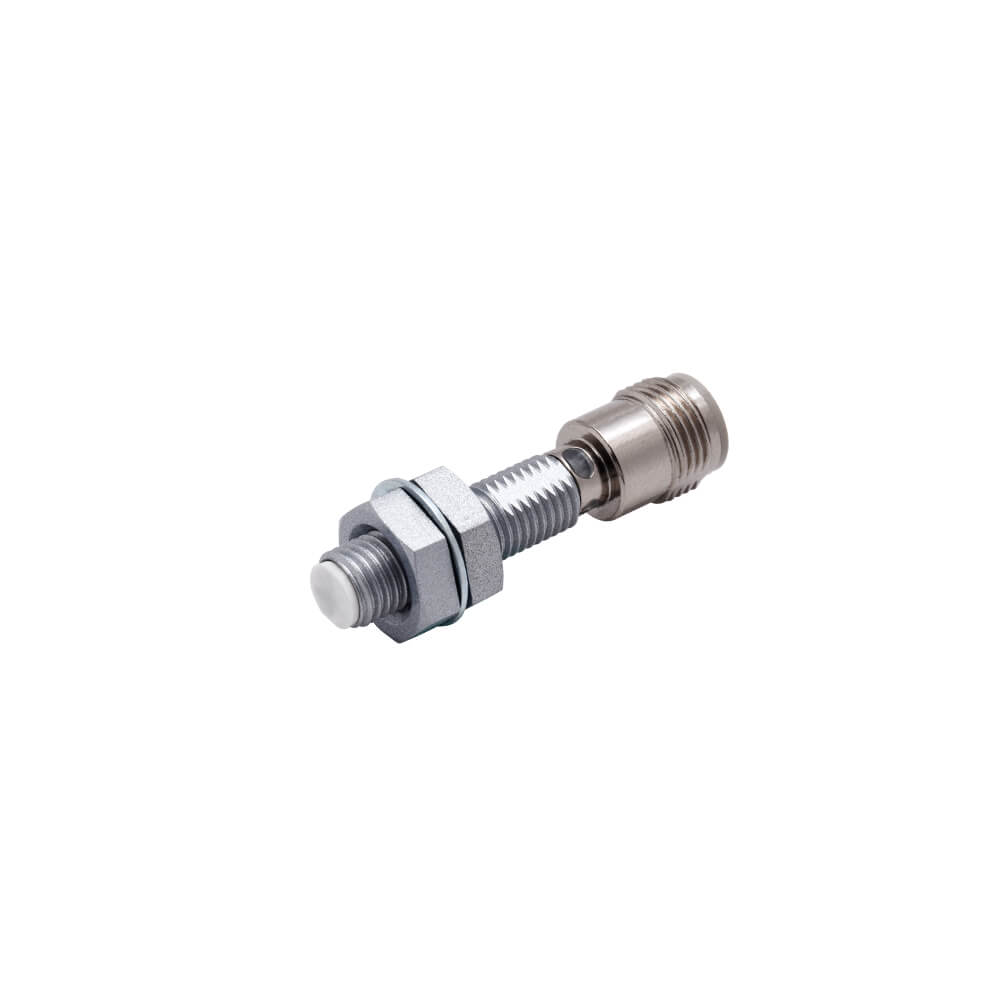
Omron E2E-X3C18-M1 Inductive Proximity Sensor
| Feature | Value |
|---|---|
| Sensor Type | Inductive Proximity Sensor |
| Series | E2E |
| Housing Diameter | M18 |
| Sensing Distance | 3 mm |
| Mounting Type | Shielded |
| Output Type | NPN |
| Operation Mode | Normally Open (NO) |
| Supply Voltage | 12 to 24 VDC |
| Connection Type | M12 Connector |
| Connector Configuration | 4-Pin |
| Housing Material | Nickel-Plated Brass |
| Protection Rating | IP67 |
| Response Frequency | 500 Hz |
| Operating Temperature | -25°C to +70°C |
| Indicator | Operation Indicator LED |
Reliable position monitoring is a key requirement in automated manufacturing and machine control systems. The Omron E2E-X3C18-M1 Inductive Proximity Sensor is designed to detect metallic targets without physical contact, enabling accurate position feedback and object verification across a wide range of industrial applications.
Featuring a shielded M18 cylindrical housing and a standard M12 connector interface, this sensor offers installation flexibility while maintaining dependable sensing performance. The design is suitable for automation systems that require repeatable detection of moving metallic components under varying environmental conditions.
Technical Description
The Omron E2E-X3C18-M1 Inductive Proximity Sensor belongs to the established E2E series of inductive sensors. It provides a nominal sensing distance of 3 mm and uses an NPN normally open output configuration. The sensor is intended for integration into PLC-controlled machinery, manufacturing systems, and industrial equipment.
The nickel-plated brass housing provides mechanical durability and resistance to common industrial contaminants. An integrated operation indicator allows operators and maintenance personnel to confirm sensor status during commissioning and troubleshooting activities.
The Omron E2E-X3C18-M1 Inductive Proximity Sensor is particularly suitable for applications requiring stable metal object detection in environments where mechanical contact switches may be subject to wear.
Working Principle
The sensor operates by generating a high-frequency electromagnetic field from the sensing surface. When a conductive metallic object enters the sensing zone, eddy currents are induced within the target material.
The presence of these currents alters the oscillator characteristics inside the sensor. Internal electronic circuitry detects this change and switches the output state accordingly. This process occurs without direct physical contact, reducing mechanical stress and extending operational service life.
Inductive sensing technology is commonly used for detecting steel, iron, aluminum, and other conductive metallic materials in automated equipment.
Application Areas
- Industrial automation systems
- Machine tool positioning
- Assembly line monitoring
- Conveyor automation
- Material transfer systems
- Packaging machinery
- Robotic work cells
- Manufacturing equipment
The M12 connector design simplifies sensor replacement and maintenance while supporting secure electrical connections in industrial installations.
Industrial Applications
Automated Manufacturing Equipment
Manufacturing machinery frequently requires confirmation of component position before initiating process sequences. The sensor can monitor metallic machine elements and provide status information to control systems.
Robotic Handling Systems
Industrial robots often rely on proximity sensors to verify fixture positions, gripper locations, and transfer mechanisms. Accurate detection helps ensure process consistency during automated operations.
Conveyor and Transport Systems
Material handling systems use inductive sensors to identify carrier positions, detect metallic pallets, and monitor transfer equipment throughout production facilities.
Metalworking Machinery
Machining centers and fabrication equipment frequently require non-contact sensing for positioning verification, machine sequencing, and process monitoring.
Advantages
- Reliable non-contact metal detection
- Standard M12 connector interface
- Compact M18 cylindrical housing
- Integrated operation indicator
- Reduced mechanical wear
- Durable metal construction
- IP67 environmental protection
- Simple integration into automation systems
Omron E2E-X3C18-M1 Factors to Consider During Selection
When selecting an inductive sensor, engineers should evaluate the sensing distance, output type, mounting requirements, environmental conditions, and electrical compatibility with the control system.
The Omron E2E-X3C18-M1 Inductive Proximity Sensor utilizes an NPN output configuration and is optimized for metallic target detection. Applications involving non-metallic materials may require alternative sensing technologies.
For projects requiring different sensing ranges, housing dimensions, or output configurations, reviewing additional Omron sensor products may assist in identifying the most appropriate solution.
Sector-Specific Examples
- Automotive component assembly lines
- Industrial packaging facilities
- Warehouse conveyor systems
- Metal fabrication plants
- Electromechanical assembly stations
- Machine-building operations
Omron E2E-X3C18-M1 Frequently Asked Questions
1. What is the sensing distance of this sensor?
The nominal sensing distance is 3 mm.
2. Which output configuration does it use?
The sensor provides an NPN normally open output.
3. Can the sensor detect non-metallic objects?
No. The sensing technology is intended for conductive metallic targets.
4. What connection method is used?
The sensor uses a standard 4-pin M12 connector.
5. Is the sensor suitable for industrial environments?
Yes. The IP67-rated housing supports operation in demanding industrial conditions.
6. What materials can be detected?
The sensor can detect conductive metals such as steel, iron, aluminum, and similar materials.
7. How does the operation indicator help?
The LED indicator provides visual feedback regarding sensor status and target detection.
8. Where is the Omron E2E-X3C18-M1 Inductive Proximity Sensor commonly used?
The Omron E2E-X3C18-M1 Inductive Proximity Sensor is commonly used in conveyors, robotic systems, manufacturing equipment, and machine automation applications.
9. Why is non-contact detection beneficial?
Non-contact sensing reduces wear, minimizes maintenance requirements, and improves long-term reliability.
10. What supply voltage is required?
The sensor operates within a DC voltage range of 12 to 24 VDC.