
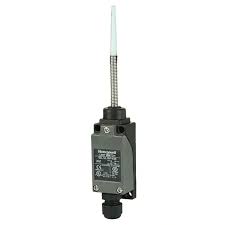
Honeywell SZL-VL-S-F-N-M Limit Switch Product Guide
The Honeywell SZL-VL-S-F-N-M limit switch belongs to Honeywell’s miniature industrial limit switch range, a category designed for compact automation equipment where space is limited but mechanical switching reliability still matters. It is commonly referenced as an SPDT industrial limit switch and is part of the SZL-VL-S family, a series developed for industrial machine position detection in smaller installation envelopes.
Why Miniature Limit Switches Matter
As machinery becomes more compact, designers often face a trade-off between installation space and field durability. That is where a product like the Honeywell SZL-VL-S-F-N-M miniature limit switch becomes useful. It allows engineers to retain the familiar behavior of a mechanical switch while using a smaller housing format suited to tighter assemblies.
Miniature does not mean minor. In many automated systems, the switch responsible for confirming position can affect the entire sequence. A compact switch that performs consistently can have a direct effect on uptime and troubleshooting efficiency.
Technical Positioning of Honeywell SZL-VL-S-F-N-M
The Honeywell SZL-VL-S-F-N-M industrial limit switch is commonly listed with an SPDT switching configuration. This is useful in control logic because it gives flexibility for normally open and normally closed signaling paths within the same device. In automation practice, that can support status monitoring, interlocks, and redundant logic strategies.
The broader SZL-VL-S series is positioned by Honeywell as a miniature limit switch solution for industrial use. That makes the product relevant where standard-size limit switches would be too bulky or mechanically intrusive.
Where This Switch Fits Best
The Honeywell SZL-VL-S-F-N-M limit switch can be a good fit for compact handling systems, assembly stations, enclosures, guided slides, and machine modules where available mounting area is restricted. It may also suit OEM designs that need standardized switching behavior without moving to more expensive sensing architectures.
In many factories, maintenance teams appreciate mechanical switches because they are visually understandable. A technician can observe the actuator, test continuity, and verify operation quickly. That is still a major advantage during production downtime.
Selection Considerations
When selecting the Honeywell SZL-VL-S-F-N-M SPDT limit switch, the most important factors are actuator compatibility, travel profile, environmental exposure, and mounting geometry. A compact switch should not be chosen on size alone. It must also survive the way the machine actually moves.
That is why search terms such as miniature limit switch, SPDT limit switch, and Honeywell compact limit switch continue to attract strong interest. Buyers are usually balancing footprint, electrical logic, and mechanical durability at the same time.
For more information about Honeywell, it helps to compare the miniature switch range with larger industrial limit switch families before final design freeze.
FAQ
What kind of switch is Honeywell SZL-VL-S-F-N-M?
It is commonly identified as a miniature industrial limit switch within the Honeywell SZL-VL-S family.
Does Honeywell SZL-VL-S-F-N-M use SPDT contacts?
Yes. It is commonly listed as an SPDT limit switch, which supports flexible control logic design.
Why choose a miniature limit switch?
Miniature limit switches are useful when machine space is restricted but direct mechanical position detection is still required.
Is this product suitable for OEM machine builders?
Yes. Compact Honeywell limit switches are often relevant for OEM designs where standardized switching and small packaging are both important.
What should be reviewed before installation?
Review actuator approach angle, overtravel, mounting position, wiring space, and the surrounding environment. These factors strongly influence service life and reliability.
Can a miniature switch replace a full-size industrial limit switch?
Sometimes, but only if the mechanical and electrical demands match the smaller switch’s design limits. Size alone should never be the deciding factor.