
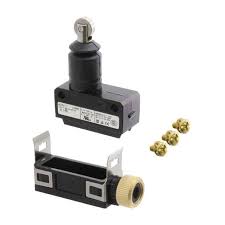
Honeywell SL1-BK Limit Switch Guide for Sealed Compact Machine Detection
The Honeywell SL1-BK limit switch is a compact industrial switch used in equipment where sealed construction, repeatable snap-action switching, and a roller plunger actuator are important. As a Honeywell SL1-BK limit switch, this model is generally associated with SPDT switching, chassis mounting, and a roller plunger design that supports consistent actuation in compact mechanical environments.
In industrial systems, compact switches like the Honeywell SL1-BK limit switch often play a critical role in confirming motion, detecting position, or triggering sequence logic. Even though they are small components, they can directly affect machine reliability, safety logic, and maintenance simplicity. That is one reason why exact part-code searches remain common for this type of product.
Technical Characteristics of the Honeywell SL1-BK Limit Switch
Available distributor data describes the Honeywell SL1-BK limit switch as an SPDT snap-action switch with a roller plunger actuator, screw terminal termination, and IP67 protection. Those features matter in real installations because they support both mechanical precision and environmental resilience. IP67 sealing is especially useful in industrial environments where dust, moisture, or splash exposure would make unsealed switches less suitable.
Another relevant detail is the lower electrical rating associated with this model compared with heavier-duty limit switches. This typically positions the Honeywell SL1-BK limit switch in compact sensing and control functions rather than high-current power switching. In many machine designs, that is exactly what is needed: a reliable, precise signal rather than a large load-carrying device.
Practical Uses for the Honeywell SL1-BK Limit Switch
A Honeywell SL1-BK limit switch is commonly relevant in compact automation equipment, imported machinery, packaging systems, access mechanisms, and assemblies where precise travel detection is needed within a small footprint. The roller plunger format is particularly useful when a moving surface contacts the actuator repeatedly and smooth motion transfer matters.
Because the SL1 family is intended for total machinery miniaturization, models like the Honeywell SL1-BK limit switch are often chosen when a traditional full-size enclosed switch would create integration problems. That makes this product appealing in both OEM design and maintenance replacement work.
For broader manufacturer-related information and additional product context, see more information about Honeywell.
Why the Honeywell SL1-BK Limit Switch Continues to Be Searched
Most searches for the Honeywell SL1-BK limit switch come from users who need exact confirmation of the actuator type, contact format, sealing level, and installation style. In industrial maintenance, those details are not optional. A switch with the wrong actuator profile or protection class may not perform correctly even if it looks similar on paper.
That is why exact-code content matters. Readers are usually comparing this model against a real machine requirement, not simply reading general information about limit switches. The Honeywell SL1-BK limit switch remains relevant because it solves a precise technical need in compact industrial systems.
FAQ: Honeywell SL1-BK Limit Switch
What type of switch is the Honeywell SL1-BK?
The SL1-BK is a compact snap-action limit switch in the SL1 family, generally associated with SPDT contacts and a roller plunger actuator.
Does the SL1-BK limit switch have environmental sealing?
Yes. Available product listings identify it with IP67 ingress protection, which supports use in dusty and wet industrial environments.
Why is a roller plunger useful in this kind of switch?
A roller plunger helps the actuator follow moving machine surfaces with less friction, which can improve actuation consistency in repetitive motion systems.
Where is the SL1-BK limit switch commonly used?
It is commonly suited to compact industrial equipment, travel detection systems, machinery miniaturization projects, and exact replacement installations.
Why do technicians search for this exact product code?
Because actuator type, mounting style, and sealing level must often match the original installation closely in order to avoid redesign and downtime.