
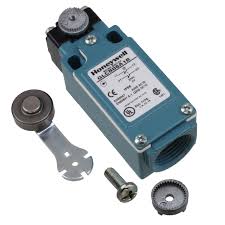
Honeywell GLCB06A1B Limit Switch: Technical Overview, Uses, and Key Considerations
The Honeywell GLCB06A1B limit switch is a compact industrial switching solution designed for applications where reliable position detection matters. As part of Honeywell’s GLS family, this model uses a rotary actuator format and is built for environments where dust, moisture, vibration, and repetitive motion are part of normal operating conditions. For engineers, maintenance teams, and system designers, the value of the Honeywell GLCB06A1B limit switch lies in its combination of durable sealing, long mechanical life, and straightforward screw-terminal wiring.
What type of switch is the Honeywell GLCB06A1B?
The Honeywell GLCB06A1B limit switch is a rotary-actuated industrial limit switch intended for machine position sensing and end-of-travel detection. Published product information describes it as a chassis-mount switch with screw termination, right-angle orientation, and environmental ratings including IP67 and IP66. It is also associated with a mechanical life of up to 10,000,000 cycles and an operating temperature range from -40°C to 85°C, making it suitable for harsh industrial duty. :contentReference[oaicite:1]{index=1}
Key technical characteristics
From a technical standpoint, the Honeywell GLCB06A1B rotary limit switch is designed to balance compact packaging with dependable field performance. Datasheet summaries list approvals including UL, CSA, CE, and CCC. The switch is commonly referenced with a current rating of 10 A, maximum voltage ratings up to 600 V AC and 250 V DC, and screw-terminal connection for secure installation in control systems. The actuator format is rotary, while the switch function is noted as momentary operation. These specifications are especially relevant in automated machinery, conveyors, material handling systems, and guarded motion assemblies. :contentReference[oaicite:2]{index=2}
Why sealing matters in real applications
One of the strongest advantages of the Honeywell GLCB06A1B industrial limit switch is its sealing performance. In production environments, airborne dust, splashing water, coolant mist, and process contamination often reduce the service life of standard switches. IP67 and IP66 ratings indicate that this model is engineered for resistance against dust ingress and water exposure in demanding operating conditions. That matters not just for survival in a harsh enclosure, but also for more stable switching performance over time and fewer nuisance failures during routine operation. :contentReference[oaicite:3]{index=3}
Typical use cases for the Honeywell GLCB06A1B limit switch
The Honeywell GLCB06A1B limit switch is often relevant where a machine needs clear confirmation that a moving mechanism has reached a defined point. Typical examples include gate monitoring, conveyor positioning, lift and transfer systems, packaging machinery, and other automated equipment using rotary or lever-driven motion. Because the actuator works through mechanical contact, it is a practical choice where a simple, direct, and visible switching method is preferred over more abstract sensing technologies.
Another reason the Honeywell GLCB06A1B Honeywell limit switch remains useful is maintainability. Screw terminals support field wiring changes without specialized tooling, and the chassis-mount format fits established industrial design practices. In retrofit projects, this can make replacement planning easier when facilities want to preserve existing control logic while improving environmental durability.
Installation and maintenance considerations
For best performance, the Honeywell GLCB06A1B limit switch should be mounted so the actuator path matches the intended motion profile of the machine. Excessive side loading, misalignment, or repeated overtravel beyond recommended design practice can shorten service life, even on rugged models. The published operating force is low, which helps when designers want responsive actuation with minimal mechanical resistance. Routine inspection should focus on mounting integrity, terminal tightness, actuator wear, and environmental sealing condition. :contentReference[oaicite:4]{index=4}
It is also worth checking local compliance requirements before specifying the switch in a new panel or machine export project. Since the model is linked with multiple approvals, it can support broader deployment strategies across different geographies and machine categories. For more information about Honeywell, reviewing the broader product ecosystem is useful when comparing related industrial switch families.
How this model fits into equipment reliability planning
In modern maintenance strategy, a limit switch is rarely viewed as an isolated component. It is part of a wider reliability chain that includes mounting hardware, cable routing, control input quality, and actuator geometry. The Honeywell GLCB06A1B limit switch supports predictable operation because it combines industrial sealing with long mechanical endurance. For equipment managers, that means a component choice that can help reduce unplanned downtime when installed correctly and matched to the correct duty cycle.
FAQ
What is the Honeywell GLCB06A1B used for?
The Honeywell GLCB06A1B limit switch is used for position sensing, end-of-travel detection, and motion confirmation in industrial machinery. It helps a control system know when a mechanism has reached a specific point in its movement.
Is Honeywell GLCB06A1B suitable for harsh environments?
Yes. The model is associated with IP66 and IP67 sealing, which indicates strong resistance to dust and water exposure. That makes it well suited to factories, outdoor machinery enclosures, and process areas where contamination is a concern. :contentReference[oaicite:5]{index=5}
What actuator style does the Honeywell GLCB06A1B limit switch use?
This model is described as a rotary-actuated limit switch with right-angle orientation. That design is often chosen when the machine motion is better transferred through rotational contact rather than direct linear plunger action. :contentReference[oaicite:6]{index=6}
What is the operating temperature range?
Published specifications list an operating temperature range of -40°C to 85°C. This supports use in cold storage, outdoor installations, and warm industrial process areas, provided the overall application remains within the product’s full design limits. :contentReference[oaicite:7]{index=7}
Why do engineers choose a Honeywell GLCB06A1B Honeywell limit switch instead of a basic switch?
Because a dedicated industrial limit switch generally offers better sealing, stronger housing construction, and more application-specific actuator geometry than a standard light-duty switch. In environments with vibration, washdown, or repetitive mechanical contact, those differences become very important over time.
How long can the switch last in service?
Datasheet summaries associate the Honeywell GLCB06A1B limit switch with a mechanical life of 10,000,000 cycles. Actual field life depends on mounting alignment, environmental exposure, load conditions, and maintenance quality. :contentReference[oaicite:8]{index=8}