
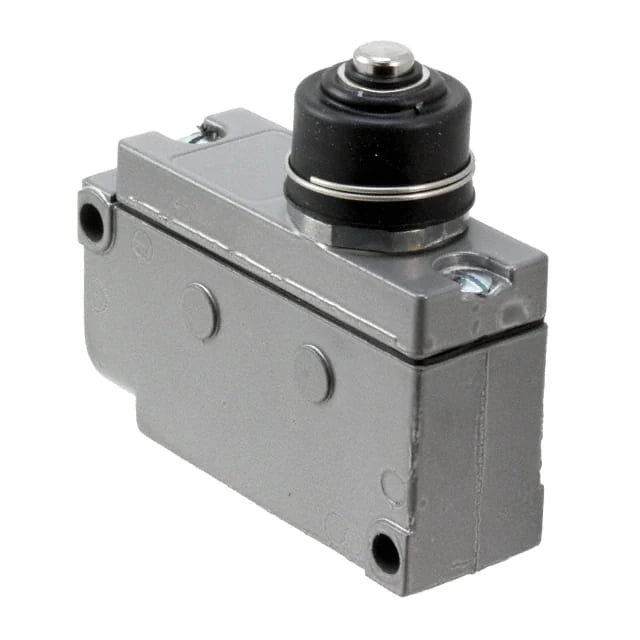
Honeywell BZE7-2RN-C Limit Switch: Enclosed Design, Ratings, and Industrial Use
The Honeywell BZE7-2RN-C limit switch is an enclosed industrial switch designed for machine sensing tasks that require repeatable mechanical actuation and dependable electrical response. In product listings and datasheet summaries, this model is associated with a top pin plunger actuator, SPDT switching, conduit-style connection format, and industrial mounting capability. For many users, the appeal of the Honeywell BZE7-2RN-C limit switch comes from its ability to combine classic mechanical sensing with the protection needed for more demanding duty cycles.
What kind of switch is Honeywell BZE7-2RN-C?
The Honeywell BZE7-2RN-C Honeywell industrial switch is generally referenced as an enclosed basic or limit switch with SPDT contacts. Available product summaries describe it as a switch with normally open and normally closed functionality, a top pin plunger actuator, conduit connection, 6 A at 240 VAC, 250 VDC capability, and a linear form factor using screw mounting. One source also cites an operating force near 6.67 N. This makes it suitable for controlled actuation in equipment where enclosure strength and simple mechanical triggering are required.
Technical profile and design intent
The Honeywell BZE7-2RN-C limit switch is particularly relevant where designers want a rugged enclosed body rather than an open-frame snap-action component. The enclosed design can help reduce the impact of contamination and incidental contact, while the plunger actuator supports direct interaction with cams, guards, stops, or moving machine members. In many industrial machines, this arrangement remains a practical and serviceable solution because it is easy to understand, easy to diagnose, and mechanically intuitive.
Why SPDT configuration matters
Because the Honeywell BZE7-2RN-C limit switch uses SPDT contacts, one device can support both make and break logic in the same actuation event. That is valuable in control panels where one signal is used for machine confirmation and another for interlock or alarm logic. This flexibility is especially useful in packaging equipment, conveyor lines, guarded access points, and transfer systems that rely on mechanical proof of position.
Application areas
Typical use cases for the Honeywell BZE7-2RN-C industrial limit switch include end-of-stroke detection, door and cover monitoring, machine carriage position sensing, and process equipment feedback. A top pin plunger actuator is often selected when the design calls for straightforward vertical or in-line mechanical actuation. In older equipment as well as retrofit work, this style remains popular because it integrates well into traditional industrial motion systems.
In practice, the Honeywell BZE7-2RN-C limit switch can be a sound choice where non-contact sensing is unnecessary or where operators prefer visible, mechanically verifiable switching action. Mechanical switches still hold an important place in maintenance strategy because they allow technicians to inspect motion paths, wear patterns, and actuation points directly.
Installation guidance
For best long-term performance, the Honeywell BZE7-2RN-C Honeywell limit switch should be mounted on a rigid surface, with the actuator aligned precisely to the expected motion path. Designers should avoid shock loading that exceeds intended actuation behavior and should verify that plunger travel remains within the useful range. Conduit-style connection can also be an advantage in facilities that require orderly cable management and robust wiring protection.
As with any electromechanical component, electrical load type matters. Contact life can vary depending on whether the circuit is resistive, inductive, or associated with motor loads. That means good engineering practice includes reviewing the full load profile rather than only matching the headline current rating. For more information about Honeywell, comparing related enclosed switch families can help clarify whether this model is the best fit for a given machine architecture.
Why this product still matters
The industrial market continues to adopt advanced sensing technologies, but mechanical limit switches remain relevant because they are direct, reliable, and understandable in the field. The Honeywell BZE7-2RN-C limit switch fits that category well. It serves applications that need physical proof of movement, straightforward replacement procedures, and a switch format that plant teams already know how to maintain.
FAQ
What is Honeywell BZE7-2RN-C used for?
The Honeywell BZE7-2RN-C limit switch is used for machine position sensing, end-of-travel detection, and mechanical interlock functions in industrial equipment.
What contact arrangement does the Honeywell BZE7-2RN-C limit switch have?
Available product information identifies this model as an SPDT switch, which provides both normally open and normally closed contact options in one unit.
What actuator style is used on Honeywell BZE7-2RN-C?
This model is commonly described with a top pin plunger actuator. That makes it well suited to direct mechanical triggering from cams, guides, stops, and machine parts moving in a linear path.
What are the published ratings?
One datasheet summary lists 6 A at 240 VAC and up to 250 VDC, along with screw-mount installation and conduit connection. As always, the full application load should be checked against the official datasheet before final specification.
Is the Honeywell BZE7-2RN-C an enclosed switch?
Yes. Product listings describe it as an enclosed basic or limit switch, which generally improves mechanical protection versus open-frame basic switch formats.
Why choose a mechanical limit switch instead of a sensor?
Mechanical limit switches can provide direct physical confirmation of movement, simple diagnostics, and easy field service. In many plants, that practical visibility is still a major advantage.