
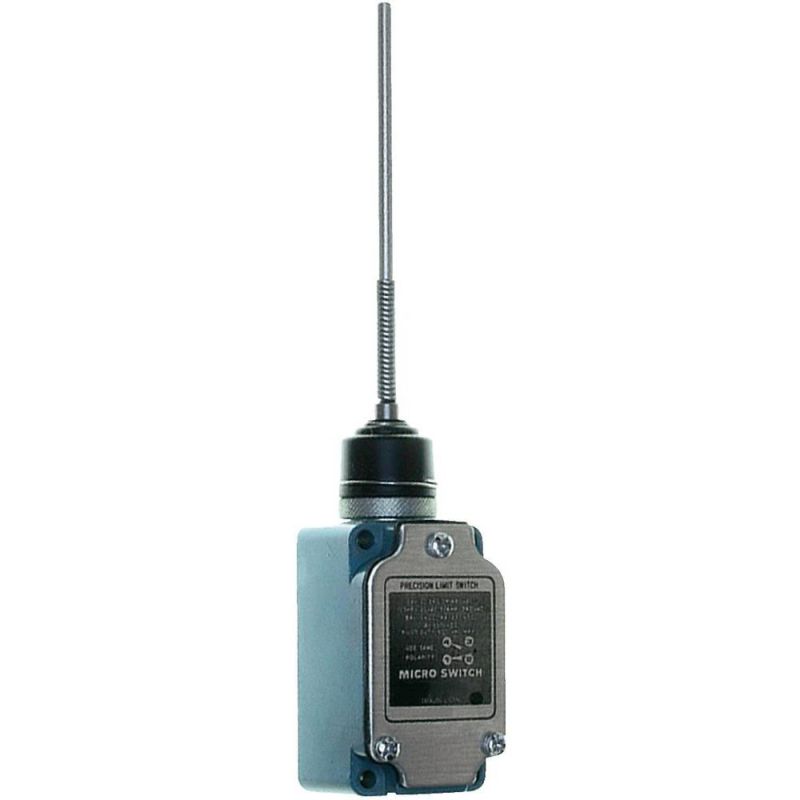
Honeywell 15LS1-4PG Limit Switch: A DPDT Option for Demanding Machine Control
The Honeywell 15LS1-4PG limit switch is part of Honeywell’s LS series and is typically associated with a top roller plunger actuator and 2NC/2NO DPDT snap-action, double-break switching. For engineers who need more circuit flexibility than a standard SPDT device can offer, the Honeywell 15LS1-4PG industrial limit switch can be a highly practical solution.
What Makes the Honeywell 15LS1-4PG Different?
The most important distinction is its DPDT contact arrangement. That means the Honeywell 15LS1-4PG limit switch can manage more than one control path at the same time. In industrial design, that can support separate status, interlock, alarm, or control logic functions without adding another mechanical sensing device.
Reference listings also associate this model with a 0.5 in – 14 NPT conduit format, which is relevant when specifying cable protection and installation compatibility in industrial enclosures and machine frames.
How the Roller Plunger Actuator Helps
The Honeywell 15LS1-4PG top roller plunger limit switch is well suited to applications where a moving part engages the switch in a linear motion. The roller can reduce friction at the point of contact and improve wear characteristics over time. In repetitive motion systems, that matters for service life and repeatability.
Typical Use Cases
The Honeywell 15LS1-4PG industrial limit switch is commonly relevant in conveyors, machine tools, transfer equipment, packaging lines, indexing systems, and automation cells. It is especially useful when one switch needs to participate in multiple control functions because the DPDT format supports more complex logic architectures.
Selection and Maintenance Notes
When choosing the Honeywell 15LS1-4PG limit switch, engineers should verify actuation path, mounting envelope, conduit compatibility, and control circuit requirements. Because it is a mechanically actuated device, actuator alignment is critical. Poor geometry can shorten service life or create inconsistent switching behavior.
The LS family remains attractive because it offers a straightforward maintenance model. Technicians already familiar with industrial limit switches can usually inspect and validate operation quickly, which helps during plant downtime events.
For more information about Honeywell, reviewing the LS portfolio alongside compact and heavy-duty alternatives can clarify whether this DPDT model is the best fit for the project.
FAQ
What is the Honeywell 15LS1-4PG?
It is an industrial limit switch in the Honeywell LS series, typically described with a top roller plunger actuator and DPDT snap-action contacts.
Why choose DPDT instead of SPDT?
DPDT allows more than one control path to be handled by the same mechanical actuation event, which is useful in more advanced machine logic.
Is the Honeywell 15LS1-4PG suitable for factory automation?
Yes. It is well suited to industrial automation systems that require dependable position feedback and mechanical travel confirmation.
What should be checked before installation?
Check actuator alignment, conduit requirements, contact logic, and the environmental conditions around the mounting location.
What kind of actuator does the Honeywell 15LS1-4PG use?
It is commonly listed with a top roller plunger actuator, a format often used in direct linear contact applications.