
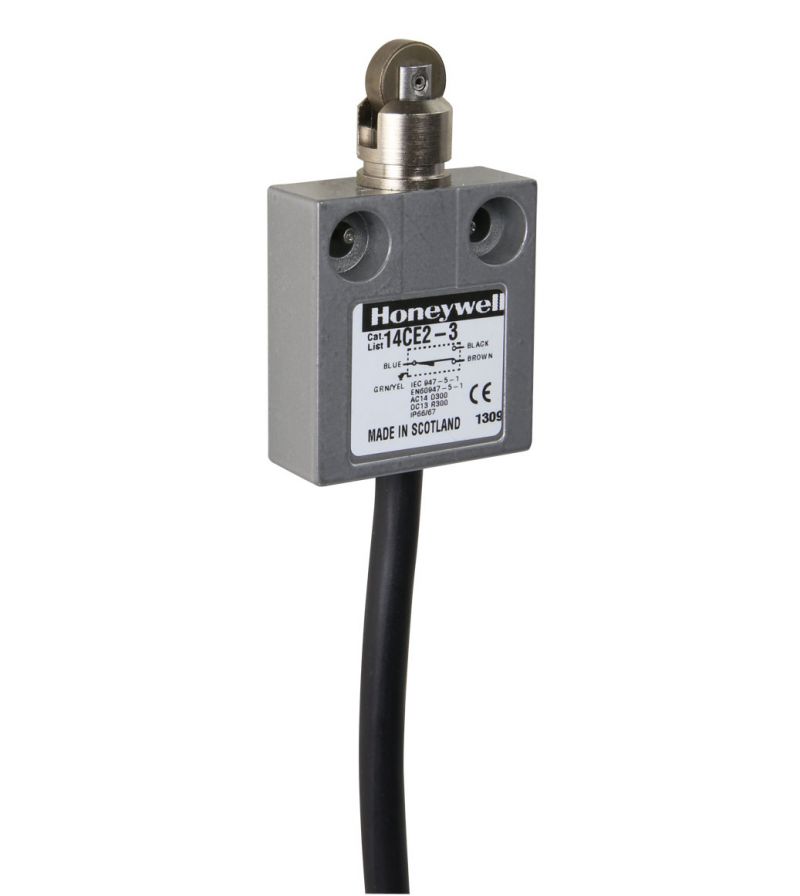
Honeywell 12SE3-3 Sealed Switch: A Practical Guide for Harsh Environments
The Honeywell 12SE3-3 sealed switch is a compact electromechanical component designed for applications where moisture, dust, and mechanical stress can affect switching reliability. As part of Honeywell’s SE Series, this model is built for demanding environments that call for dependable position detection in a small package. The Honeywell 12SE3-3 sealed switch is typically specified as a single pole normally open configuration with a stainless steel pin plunger and long lead wire termination, making it suitable for equipment layouts that need flexible routing during installation.
What Makes the Honeywell 12SE3-3 Sealed Switch Distinctive?
One of the most useful aspects of the Honeywell 12SE3-3 sealed switch is its environmental protection. In real operating conditions, contamination is often the reason a switching assembly fails long before its expected service life. A sealed housing helps reduce that risk. The switch is also associated with a 5 A at 250 Vac rating and a temperature range suitable for severe operating conditions, which makes it relevant in transportation, aerospace support equipment, industrial machinery, and rugged control systems.
The lead wire format is especially valuable in assemblies where solder posts are not the most efficient option. Engineers and maintenance teams often prefer leaded sealed switch configurations when routing space is limited or when the installation must tolerate vibration and movement over time.
Typical Use Cases
The Honeywell 12SE3-3 sealed switch is often considered for panel monitoring, mechanical position detection, actuator status feedback, and door or hatch indication. Because it belongs to the Honeywell sealed switch family, it fits applications where a compact body and stable actuation matter more than visual complexity. In practice, this can include mobile equipment, outdoor enclosures, aviation ground systems, and industrial mechanisms exposed to particulate contamination.
Designers also look for part-number-specific combinations such as Honeywell 12SE3-3 pin plunger sealed switch, Honeywell 12SE3-3 basic switch, and Honeywell 12SE3-3 electromechanical switch when comparing fit, wiring style, and lifecycle expectations across similar sealed devices.
Why It Matters in Real-World Maintenance
A switch like this is not only about electrical continuity. It also supports repeatable machine behavior. Consistent actuation helps prevent false feedback, ambiguous open/close signals, and unnecessary troubleshooting. In field service environments, a reliable sealed switch can reduce inspection time because technicians are dealing with a proven form factor rather than an exposed contact design.
For more information about Honeywell, it is worth reviewing broader product families and compatibility options for sealed switching applications.
FAQ
What type of switch is the Honeywell 12SE3-3?
The Honeywell 12SE3-3 sealed switch is generally identified as a sealed basic switch with a pin plunger actuator and a normally open switching arrangement. It is intended for precise position sensing in compact mechanical systems.
Where is the Honeywell 12SE3-3 commonly used?
This model is commonly relevant in industrial equipment, transportation systems, aerospace-related support hardware, and machinery that may be exposed to dust, moisture, or broad temperature variation.
Why does lead wire termination matter on the Honeywell 12SE3-3 sealed switch?
Lead wire termination can simplify routing, reduce assembly complexity, and support installations where direct terminal access is restricted. It is especially practical in enclosed mechanical layouts.
Is the Honeywell 12SE3-3 suitable for harsh environments?
Yes. The sealed construction is one of its key strengths. It is intended for applications where environmental exposure would make an unsealed switch less dependable over time.
How should engineers evaluate the Honeywell 12SE3-3 before integration?
Engineers should review actuator travel, mounting geometry, electrical rating, temperature exposure, wiring requirements, and the expected duty cycle of the equipment. Matching the switch to the actual mechanical system is always more important than relying on category-level similarity alone.