
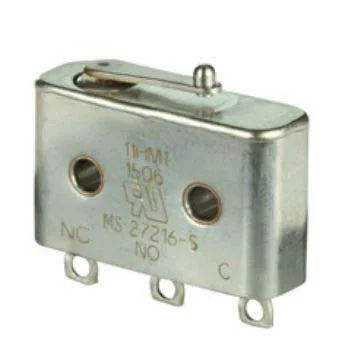
Honeywell 11HM41 Sealed Switch Technical Overview
The Honeywell 11HM41 sealed switch is part of Honeywell’s HM hermetically sealed switch range, a product family known for combining compact form factors with durable switching behavior in demanding environments. For engineers searching for a roller lever SPDT switch that can support reliable actuation where contamination control and environmental resilience matter, the Honeywell 11HM41 sealed switch stands out as a practical and technically familiar option.
Core Design of the Honeywell 11HM41 Sealed Switch
Current part references describe the Honeywell 11HM41 sealed switch as an SPDT switch with a roller lever actuator. Listings also identify quick-connect termination, which can be an advantage in assemblies where faster service access or standardized terminal attachment is preferred. This combination of roller lever actuation and quick-connect wiring makes the switch relevant in designs where both mechanical consistency and maintainability are important.
Technical Characteristics That Matter
The Honeywell 11HM41 sealed switch is commonly listed with a 3 A rating, and the HM series overall is built around hermetic sealing intended to resist contaminants such as dust, moisture, and corrosive atmospheres. Honeywell’s HM documentation also highlights stainless steel housing construction and suitability for wide temperature ranges across the family. That matters because a switch may perform well electrically in a clean lab, but the real test is whether it can keep that performance in the field over time.
Why the Roller Lever Configuration Is Valuable
The roller lever arrangement on the Honeywell 11HM41 sealed switch helps support smooth interaction with moving parts such as cams, guides, and rotating mechanisms. Instead of a purely sliding contact point, the roller can help reduce wear at the interface and encourage more consistent actuation. This is useful in motion-heavy equipment where repeatability is important to cycle control, sequencing, or position confirmation.
Common Application Logic
In practical system design, the Honeywell 11HM41 sealed switch may be considered for mechanism status sensing, travel detection, actuator feedback, and equipment interlock signaling. It is especially relevant in installations where a sealed electromechanical device remains preferable to more complex sensing methods. The reason is simple: direct physical actuation still offers a clear, proven, and easily understood switching method.
For more information about Honeywell, it helps to compare related HM switch variants to confirm the best actuator and termination format.
FAQ
What type of switch is the Honeywell 11HM41?
The Honeywell 11HM41 is commonly listed as an SPDT sealed snap-action switch with a roller lever actuator.
What is notable about the Honeywell 11HM41 sealed switch termination style?
Part listings identify quick-connect termination, which can simplify wiring and service access in certain equipment layouts.
Why would an engineer choose a roller lever version like the Honeywell 11HM41?
Roller lever actuation is useful where a moving mechanical surface repeatedly engages the switch. It can provide smoother contact and dependable switching across repeated cycles.
Is the Honeywell 11HM41 sealed switch only for extreme environments?
No. It is especially valuable in harsh settings, but it can also be selected simply because the application needs compact, repeatable, and mechanically direct switching.
What should be checked before specifying this switch?
Review the actuator path, terminal preference, switching load, expected duty cycle, mounting arrangement, and the environmental conditions around the installation. Those details determine whether a specific HM variant is the best fit.