
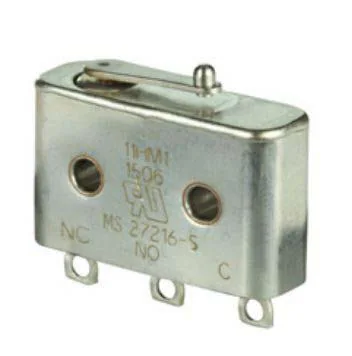
Honeywell 11HM30-REL-PGM Sealed Switch Explained
The Honeywell 11HM30-REL-PGM sealed switch is a compact electromechanical switching component that belongs to Honeywell’s HM hermetically sealed switch family. This product family is recognized for reliable operation in environments where ordinary snap-action switches may be exposed to moisture, contaminants, corrosive gases, or significant temperature variation. That makes the Honeywell 11HM30-REL-PGM sealed switch especially relevant for engineers and maintenance teams looking for durable position sensing in compact mechanical systems.
What Makes the Honeywell 11HM30-REL-PGM Different
One of the defining details of the Honeywell 11HM30-REL-PGM sealed switch is its roller lever style. A roller lever can be valuable when the actuating surface is moving across the switch repeatedly, because it can help reduce friction at the point of contact and support smoother mechanical interaction. In real-world design terms, this often improves consistency when the switch is used for motion detection, travel limits, cam-driven systems, or mechanism status monitoring.
Technical Profile of the Honeywell 11HM30-REL-PGM Sealed Switch
Current part listings commonly describe the Honeywell 11HM30-REL-PGM sealed switch as an SPDT basic or snap-action switch rated at 3 A, with 115 VAC and 28 VDC references. It is also associated with a roller lever actuator and solder-style termination. Because it is part of the HM line, the model benefits from the broader platform design philosophy that emphasizes hermetic sealing, compact dimensions, and durability across demanding environments. That is why engineers searching for Honeywell sealed switches, aerospace snap-action switches, or compact SPDT roller lever switches often encounter this exact product code.
Where This Switch Fits Best
The Honeywell 11HM30-REL-PGM sealed switch is well suited to applications that need physical end-of-travel detection or dependable state change in enclosed or contamination-prone systems. Typical examples may include access mechanism monitoring, actuator confirmation, machine sequence control, and transport-related equipment. In sectors where reliability is strongly tied to environmental resistance, a sealed switch architecture remains a practical and proven choice.
Why Mechanical Switching Still Matters
Even in systems filled with advanced electronics, mechanical sealed switches continue to play a valuable role because they offer straightforward integration, direct actuation, and repeatable switching behavior. The Honeywell 11HM30-REL-PGM sealed switch is a good example of that continuing relevance. It is compact, technically familiar to engineers, and built around a design approach that prioritizes dependable function rather than unnecessary complexity.
For more information about Honeywell, reviewing the broader sealed and limit switch portfolio can help clarify actuator and mounting choices.
FAQ
What product type is the Honeywell 11HM30-REL-PGM?
It is generally listed as a sealed snap-action switch in the Honeywell HM family, with SPDT switching and a roller lever actuator.
Why is a roller lever useful on the Honeywell 11HM30-REL-PGM sealed switch?
A roller lever helps the switch interact more smoothly with moving cams, slides, or mechanical surfaces. This can improve actuation consistency and reduce abrasive contact at the actuator point.
What ratings are commonly associated with this switch?
Catalog references typically show 3 A switching capability, along with 115 VAC and 28 VDC references. Engineers should still check the final approved datasheet and application conditions before design release.
Is the Honeywell 11HM30-REL-PGM mainly for aerospace use?
It is strongly aligned with harsh-environment expectations seen in aerospace-style applications, but that does not limit it to aircraft systems. Industrial machinery, transport platforms, and specialized equipment can also benefit from this type of switch construction.
What should be reviewed before replacement or specification?
It is important to confirm actuator geometry, operating force, electrical load, wiring method, mounting orientation, and environmental conditions. Even similar-looking switch codes can differ in termination or actuator details.