
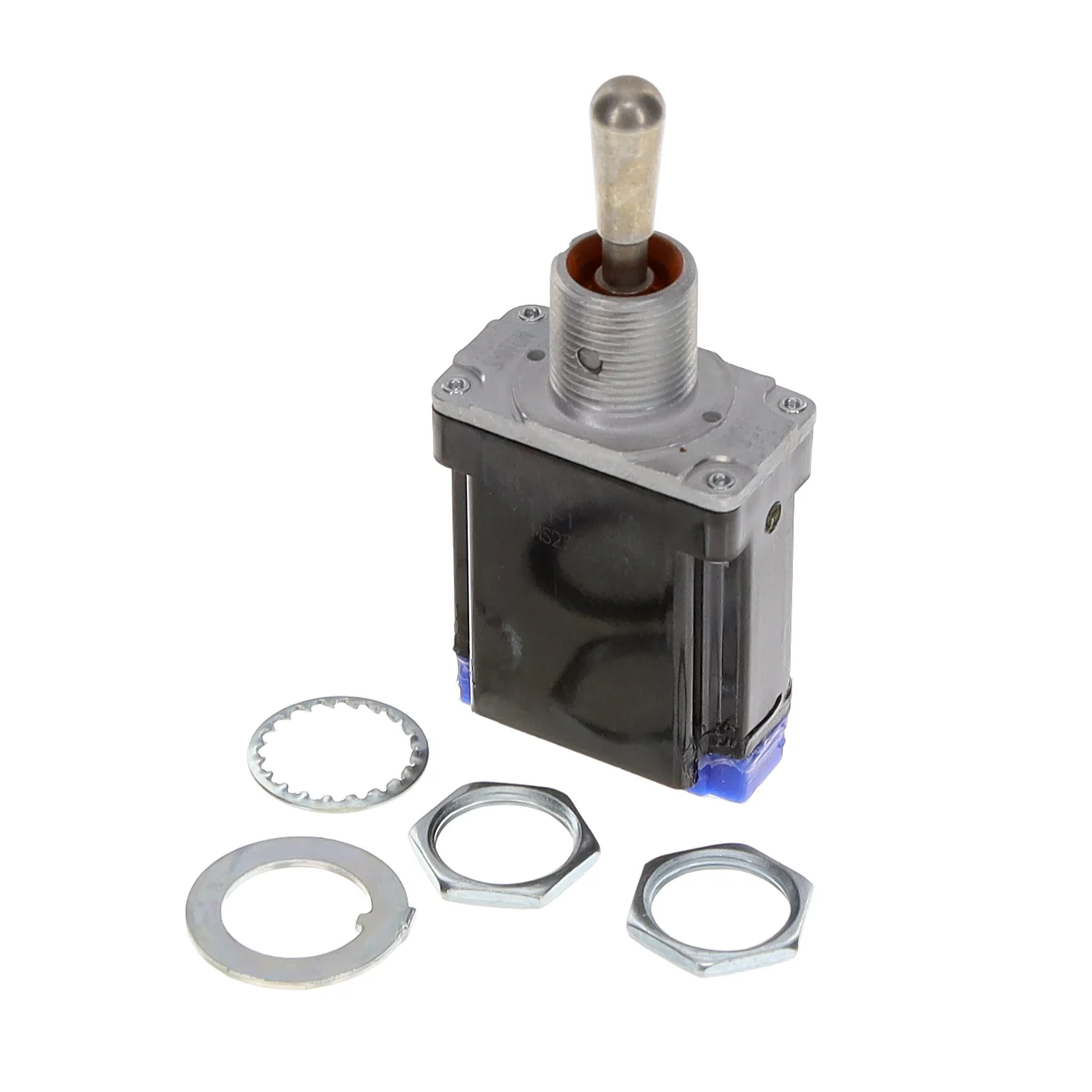
Honeywell 101TL1-1 Operator Controls Toggle Switch Guide
The Honeywell 101TL1-1 Operator Controls toggle switch is a well-known sealed toggle solution designed for demanding applications where manual switching reliability matters just as much as electrical performance. In control panels, industrial machines, support vehicles, and rugged equipment housings, a toggle switch is often expected to do far more than simply open and close a circuit. It must provide a precise feel, dependable switching action, resistance to contamination, and stable performance in environments that include vibration, temperature swings, and repeated operator use.
That is exactly why the Honeywell 101TL1-1 Operator Controls part continues to attract attention among engineers, technicians, and buyers looking for a durable panel mount toggle switch. Honeywell’s TL Series is described as environmentally sealed, with a bonded seal between the toggle lever and bushing as well as between the cover and case. The series is also positioned for military, aerospace, and other demanding installations. For users researching the broader brand portfolio, more information about Honeywell is available here.
Technical Overview of Honeywell 101TL1-1 Operator Controls
The Honeywell 101TL1-1 Operator Controls toggle switch is generally identified as an SPDT on-off-on toggle switch with panel mount construction and integrated wire termination style. In practical terms, this means the switch can route a common connection between two selectable outputs with a center off position, giving operators a clear and familiar three-position control scheme. That makes it highly useful in equipment requiring directional control, mode selection, or dual-function switching where a neutral center state is important.
Based on currently available product listings, the part is associated with a standard round actuator, a 15/32-32 bushing thread, and an actuator length around 17.27 mm. The TL Series platform is also associated with an operating temperature range of approximately -65°C to 71°C, which is highly relevant for industrial and field-mounted equipment.
Why the Honeywell 101TL1-1 Toggle Format Is So Useful
The strength of the Honeywell 101TL1-1 Operator Controls SPDT toggle switch lies in its versatility. An on-off-on configuration gives system designers a very intuitive control path. One side can activate one output, the opposite side can activate another, and the center off position provides a clear rest or safe state. This makes the switch a practical fit for motor direction selection, local control override, auxiliary function switching, lighting mode selection, and control transfer logic.
Another important advantage is the sealed TL Series construction. In many real installations, panel components are exposed to dust, splashing water, mechanical shock, and frequent human contact. A sealed toggle switch is valuable because it helps maintain consistency over time, especially where basic commercial-grade switches may degrade or feel unreliable after long service periods.
Common Applications for Honeywell 101TL1-1 Operator Controls
The Honeywell 101TL1-1 Operator Controls toggle switch can be relevant in transportation panels, industrial control cabinets, agricultural equipment, power systems, heavy machinery operator stations, defense support equipment, and ruggedized enclosures. It is also a sensible choice for refurbishment projects where designers need a well-recognized sealed toggle switch with a traditional operator interface.
From a maintenance perspective, the switch format is easy to understand and easy to operate even with gloves in some field environments. That matters more than many product descriptions admit. In equipment that must remain serviceable over years of use, simple and familiar manual controls remain extremely valuable.
Integration Notes for Engineers and Panel Builders
When specifying the Honeywell 101TL1-1 Operator Controls model, engineers should validate the circuit function, wire gauge compatibility, panel cutout, and operator ergonomics. The electrical rating, contact arrangement, and actual system voltage should be reviewed against the official datasheet and system load. It is also wise to confirm whether the center-off state matches the logic and safety expectations of the machine or vehicle being controlled.
Mounting details matter as well. A panel mount toggle switch should not be chosen on electrical specification alone. The length of the lever, the tactile feel, and the sealing performance all affect long-term usability. In the case of the TL Series, the product family is specifically positioned for harsh operating environments, which gives the Honeywell 101TL1-1 Operator Controls toggle switch strong relevance in professional installations.
FAQ About Honeywell 101TL1-1 Operator Controls
What type of switch is Honeywell 101TL1-1 Operator Controls?
The Honeywell 101TL1-1 Operator Controls part is commonly identified as an SPDT on-off-on sealed toggle switch. That means it offers three lever positions, with a center off state and two selectable output directions.
Where is Honeywell 101TL1-1 typically used?
This switch is often considered for industrial control panels, transportation equipment, rugged machinery, specialty vehicles, aerospace-adjacent systems, and any application where a durable manual operator control is required.
Is Honeywell 101TL1-1 sealed for demanding environments?
Yes. It belongs to Honeywell’s TL Series, which is described as environmentally sealed with bonded sealing features that help the switch withstand dust, splashing conditions, and demanding use environments.
Why choose an SPDT on-off-on toggle switch?
An SPDT on-off-on switch gives operators flexibility. It can control two output states with a clear neutral position in the middle. That is especially useful for directional controls, system mode changes, or auxiliary switching functions where an off state is required between actions.
What should be checked before using Honeywell 101TL1-1 in a system?
The most important checks include circuit function, current and voltage requirements, termination style, panel fit, environmental conditions, and whether the center-off behavior matches the intended control logic. These details help ensure the switch performs correctly in the final design.