
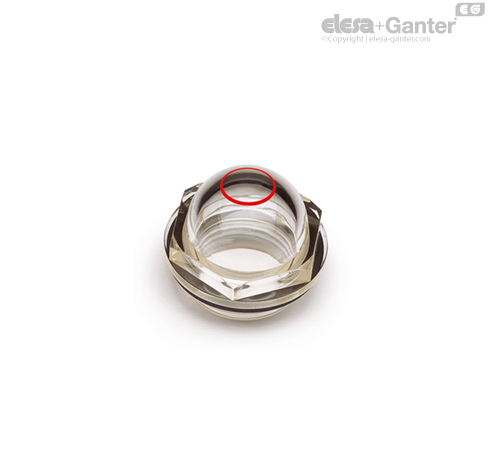
Elesa+Ganter HCFE.15/CB-1/2 Oil Level Sight Glass Guide
The Elesa+Ganter HCFE.15/CB-1/2 oil level sight glass is a compact inspection component designed for quick visual monitoring of lubricant and oil levels in hydraulic tanks, gear housings, and industrial reservoirs. In applications where maintenance teams need a clear reading point without adding unnecessary complexity, this model offers a practical and durable solution.
This version belongs to the HCFE-CB family, which features a white reference circle for easier level reading. That small design detail matters in real operating environments, especially where lighting conditions vary or fluid visibility needs to be checked at a glance during routine inspection rounds.
Technical Features of HCFE.15/CB-1/2
The HCFE.15/CB-1/2 uses a G 1/2 threaded connection and is manufactured from transparent polyamide-based technopolymer (PA-T). It includes an NBR synthetic rubber sealing ring and is intended for a maximum continuous working temperature of 100°C. For this size, the published dimensions include A 10.5 mm, B 16 mm, D 26 mm, d 19 mm, d2 6 mm, d3 7 mm, and s 22 mm, with a recommended tightening torque of 4 to 6 Nm.
Why This Oil Level Sight Glass Is Useful
Many engineers and maintenance planners choose a hydraulic oil sight glass like this because it supports faster inspections and reduces guesswork. Instead of opening the system unnecessarily, operators can visually confirm the fluid condition and fill level from outside the housing. This helps support preventive maintenance routines and keeps inspection workflows simple.
The transparent body is especially useful in machinery where service access is limited. In mobile equipment, compact hydraulic assemblies, and enclosed industrial systems, a reliable oil level indicator helps teams detect low fluid conditions before performance drops or wear accelerates.
Where HCFE.15/CB-1/2 Fits Best
This model is well suited to hydraulic power units, gearboxes, lubrication systems, industrial tanks, and general machinery where a threaded oil level window is required. The G 1/2 thread size makes it a practical choice for smaller and medium-sized reservoirs where space efficiency matters.
Because the printed marking is designed to resist oils with additives, greases, alkali, and white spirit under normal working conditions, the component is also a smart option for industrial settings where readability must remain stable over time.
Elesa+Ganter HCFE.15/CB-1/2 Installation and Maintenance Notes
Correct installation is important. The recommended tightening torque helps achieve proper sealing while protecting the packing ring position. As with many transparent engineering polymer parts, contact with alcohol or detergents containing alcohol should be avoided. For tanks with wall thickness below 5 mm, a brass GH nut may be requested as an accessory.
For more information about Elesa+Ganter, it is worth reviewing the broader range of hydraulic system accessories for matching installation requirements.
Elesa+Ganter HCFE.15/CB-1/2 FAQ
What is the main purpose of the Elesa+Ganter HCFE.15/CB-1/2 oil level sight glass?
Its main purpose is to provide a fast, direct visual check of oil or lubricant level inside a tank or housing. This helps maintenance staff monitor fluid presence without disassembling the equipment or interrupting normal inspection routines.
What makes the HCFE.15/CB-1/2 different from other HCFE versions?
This model belongs to the HCFE-CB version, which includes a white reference circle for level reading. That makes it easier to distinguish the viewing zone and can improve readability in applications where operators need a clean visual reference point.
Which thread size does HCFE.15/CB-1/2 use?
It uses a G 1/2 thread. This makes it suitable for machinery and reservoirs designed around BSP-type threaded mounting points in this size category.
Is this oil sight glass suitable for high-temperature use?
It is designed for continuous use up to 100°C. That makes it appropriate for many standard industrial lubrication and hydraulic applications, provided the operating fluid and surrounding conditions remain compatible with the specified materials.
What should be avoided during cleaning or service?
Alcohol and detergents containing alcohol should be avoided because they may affect the transparent technopolymer. Using compatible cleaning methods helps preserve long-term clarity and performance.