
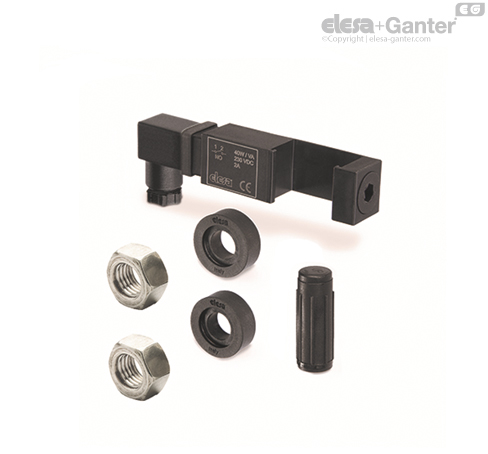
Elesa+Ganter 110083-R SLCK-NC Fluid Level Sensor Kit
The Elesa+Ganter 110083-R SLCK-NC fluid level sensor kit is built for users who need stable and readable hydraulic fluid level monitoring with a normally closed contact configuration. Designed for use with HCK and HCK-GL column level indicators, this kit adds an electrical switching function without giving up the simplicity of direct visual inspection.
Designed for Reliable Hydraulic Level Control
In many hydraulic and lubrication systems, visual level indication alone is not enough. Maintenance teams often need a signal that can trigger a warning, feed a controller, or support automatic machine logic. The Elesa+Ganter 110083-R SLCK-NC fluid level sensor kit answers that need by adding a preset electrical switching point to the column indicator assembly.
This standard SLCK version is intended for applications up to 80°C and uses a polypropylene-based technopolymer float. That makes it suitable for a wide range of common oil monitoring environments where temperatures remain within the standard operating window.
Technical Characteristics That Matter
The 110083-R code corresponds to the SLCK-NC execution, which means the electrical contact is normally closed. It uses a DIN 43650 C male connector and supports a maximum applicable voltage of 230 Vdc / Vac. Maximum current is 2 A, while maximum commutable power is 40 W / VA. For engineers working on conventional machine interfaces, that DIN connection can be a practical and familiar option.
The kit is compatible with HCK and HCK-GL level indicators from the version with 127 mm hole centre distance onward. The sensor holder can be adjusted along the indicator axis to define the switching point according to the required fluid level. This flexibility helps when system designers need an alarm threshold that reflects real operating needs instead of a generic factory setting.
Practical Benefits in Daily Operation
One of the strengths of the Elesa+Ganter 110083-R SLCK-NC fluid level sensor kit is how easily it fits into existing maintenance logic. The user keeps visual confirmation of the oil level, while also gaining an electrical status signal. In compact hydraulic power units, machine tools, industrial pumps, and lubrication reservoirs, that dual-check approach can simplify troubleshooting and reduce response time when levels move outside the preferred range.
The connector can also be rotated in four 90° positions during wiring, which helps adapt the installation to real cable routing conditions. In environments where cabinet space is tight or access angles are limited, that small design feature can be surprisingly useful.
Where This NC Version Fits Best
The Elesa+Ganter 110083-R SLCK-NC fluid level sensor kit is a strong fit for users who prefer normally closed contact logic in standard-temperature hydraulic applications. It is especially relevant in plants where DIN connector layouts are already common and where straightforward integration is more important than adopting a lower-voltage M12 architecture.
For more information about Elesa+Ganter, it helps to review compatible level indicators and related hydraulic accessories within the same product ecosystem.
FAQ
What does the NC contact mean on the Elesa+Ganter 110083-R SLCK-NC fluid level sensor kit?
NC stands for normally closed. This means the contact logic is based on a closed status in its normal condition and changes state when the float reaches the set intervention point. Many users prefer this setup for monitoring circuits that are designed around continuity in the default condition.
Is this product suitable for high-temperature oil systems?
This specific version is intended for applications up to 80°C. If the system regularly operates at higher temperatures, the SLCK-HT versions are generally more appropriate because they are designed for use up to 120°C.
Which indicators is it compatible with?
It is designed for use with HCK and HCK-GL column level indicators, starting from versions with a 127 mm hole centre distance.
Can the switching point be adjusted?
Yes. The sensor holder can be moved along the axis of the indicator so the switching level can be set according to the application.
Why choose the DIN connector version?
The DIN 43650 C connector version is often chosen for traditional industrial installations where this connector style is already standard, where higher voltage capability is needed, or where service teams prefer a familiar connection format.
Can it be used for more than one level threshold?
Yes. More than one kit can be mounted on the same transparent column, as long as the available indicator height supports the required switching points.