
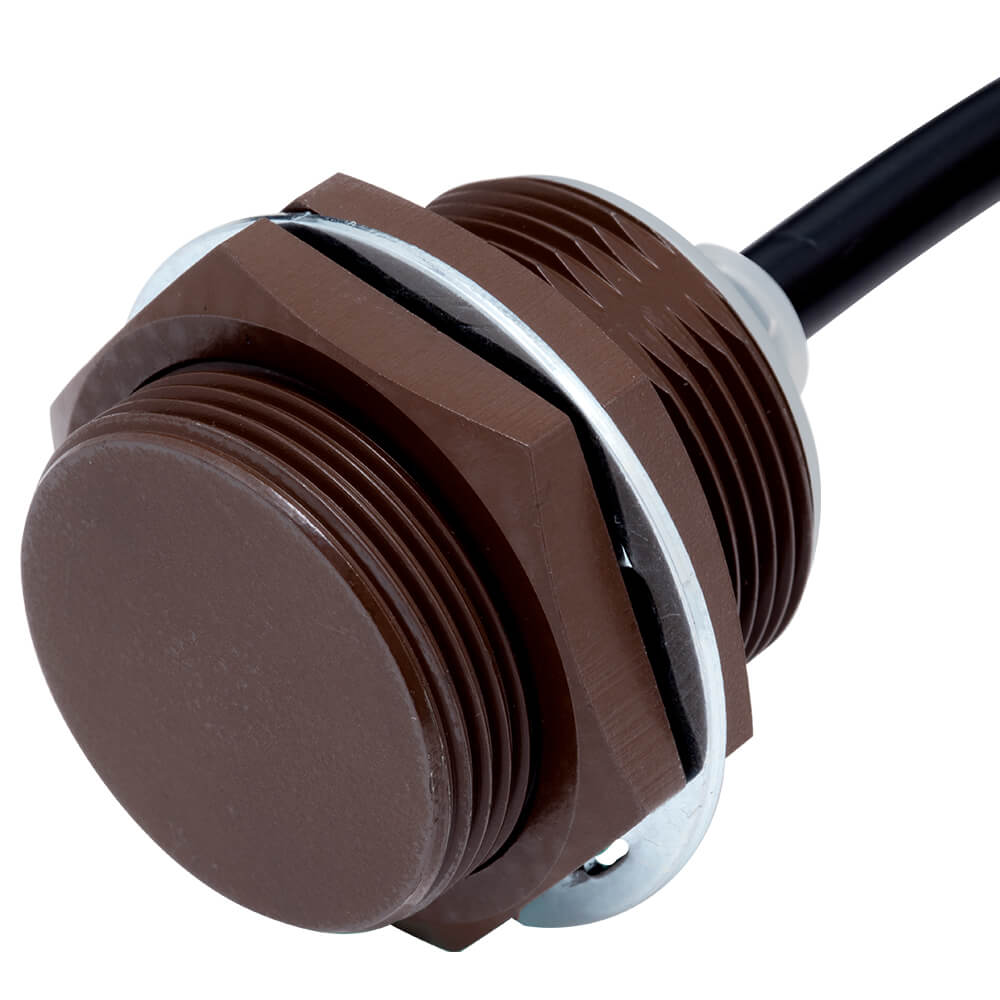
Omron E2EW-QX10B130 2M All-Metal Inductive Proximity Sensor
| Specification | Value |
|---|---|
| Sensor Type | All-Metal Inductive Proximity Sensor |
| Series | E2EW |
| Sensing Distance | 10 mm |
| Housing Size | M30 |
| Output Type | PNP Normally Open (NO) |
| Connection Method | 2 m Cable |
| Supply Voltage | 10 to 30 VDC |
| Housing Material | Stainless Steel |
| Protection Rating | IP67 / IP69K |
| Operating Temperature | -25°C to +70°C |
| Response Frequency | 300 Hz |
| Mounting Style | Shielded |
| Cable Length | 2 m |
Technical Description
The Omron E2EW-QX10B130 2M All-Metal Inductive Proximity Sensor is designed for industrial environments where conventional inductive sensors may be exposed to aggressive cleaning agents, metal abrasion, mechanical impacts, or harsh process conditions. The E2EW series utilizes an all-metal sensing surface and stainless-steel housing construction to enhance durability while maintaining reliable metal detection performance.
Unlike standard proximity sensors that incorporate plastic sensing faces, the Omron E2EW-QX10B130 2M All-Metal Inductive Proximity Sensor is engineered with a fully metallic sensing structure. This design helps improve resistance to physical damage and supports operation in demanding applications commonly found in food processing, metalworking, automotive manufacturing, and heavy industrial facilities.
How the Sensor Operates
The sensor functions through electromagnetic induction. An oscillating electromagnetic field is generated at the sensing surface. When a conductive metallic object enters the detection zone, eddy currents are induced within the target.
These induced currents absorb energy from the oscillator circuit, creating measurable changes in the sensor’s internal electronics. Once the detection threshold is reached, the output switches and communicates the target’s presence to the machine controller or PLC.
The Omron E2EW-QX10B130 2M All-Metal Inductive Proximity Sensor performs this process without physical contact, reducing wear and supporting long service life in applications involving repetitive movement and continuous operation.
All-Metal Construction Advantages
A distinguishing feature of the E2EW series is its robust all-metal construction.
- Stainless-steel sensing face
- High resistance to mechanical impact
- Improved durability in abrasive environments
- Suitable for aggressive cleaning procedures
- Enhanced resistance to cutting fluids and oils
- Long operational lifespan in industrial applications
- Reduced risk of sensing face damage
These characteristics make the sensor particularly suitable for installations where equipment is regularly cleaned or exposed to harsh operating conditions.
Industrial Applications
The Omron E2EW-QX10B130 2M All-Metal Inductive Proximity Sensor is used across a wide range of industrial sectors.
Food and Beverage Processing
Production lines in food facilities often require equipment capable of withstanding frequent washdown procedures. The sensor’s all-metal design and IP69K rating support these operating conditions.
Metalworking Machinery
Metal fabrication equipment frequently generates chips, debris, lubricants, and coolant exposure. The sensor can detect metallic components while maintaining resistance to contamination.
Automotive Manufacturing
Assembly lines use proximity sensors to verify fixture positions, monitor transfer equipment, and confirm workpiece presence throughout production processes.
Heavy Industry
Industrial equipment operating in harsh environments can benefit from the mechanical robustness of the E2EW sensor platform.
Performance Benefits
The Omron E2EW-QX10B130 2M All-Metal Inductive Proximity Sensor offers several operational advantages.
- Non-contact metallic object detection
- Stainless-steel sensing face durability
- High environmental protection ratings
- Resistance to oils and cleaning chemicals
- Reduced maintenance requirements
- Reliable switching performance
- Compatibility with PLC-based automation systems
- Long-term operation in demanding environments
These characteristics help support stable machine operation while minimizing sensor replacement frequency.
Industry-Specific Examples
The Omron E2EW-QX10B130 2M All-Metal Inductive Proximity Sensor can be integrated into numerous engineering applications.
- Monitoring stainless-steel conveyor components
- Detecting machine fixture positions
- Verifying actuator travel limits
- Monitoring pallet transfer systems
- Detecting metallic containers in processing plants
- Position sensing in automated handling systems
- Workpiece detection in metal fabrication equipment
Organizations seeking additional sensing technologies can review Omron sensor products for complementary automation solutions.
Selection Considerations
Before implementing the Omron E2EW-QX10B130 2M All-Metal Inductive Proximity Sensor, engineers should evaluate several application-specific requirements.
- Target material characteristics
- Required sensing distance
- Environmental exposure conditions
- Mechanical installation constraints
- Electrical interface requirements
- Machine operating speed
- Maintenance accessibility
Careful consideration of these factors helps ensure reliable operation and proper integration into industrial control systems.
Frequently Asked Questions
What makes this sensor different from conventional inductive sensors?
The sensor features an all-metal sensing face and stainless-steel construction for improved durability in harsh environments.
What is the sensing distance?
The nominal sensing distance is 10 mm.
What output configuration is used?
The sensor provides a PNP normally open output.
Can the sensor withstand washdown procedures?
Yes. It supports IP67 and IP69K environmental protection ratings.
What voltage range does the sensor require?
The operating voltage range is 10 to 30 VDC.
What housing size is used?
The sensor utilizes an M30 threaded cylindrical housing.
Can it detect non-metallic materials?
No. The sensing technology is intended for metallic object detection.
Which industries commonly use the Omron E2EW-QX10B130 2M All-Metal Inductive Proximity Sensor?
Food processing, automotive manufacturing, metalworking, logistics, and heavy industrial sectors commonly utilize this sensor.
Why is an all-metal sensing surface beneficial?
It improves resistance to impact, abrasion, cleaning chemicals, and mechanical damage compared to conventional sensing surfaces.