
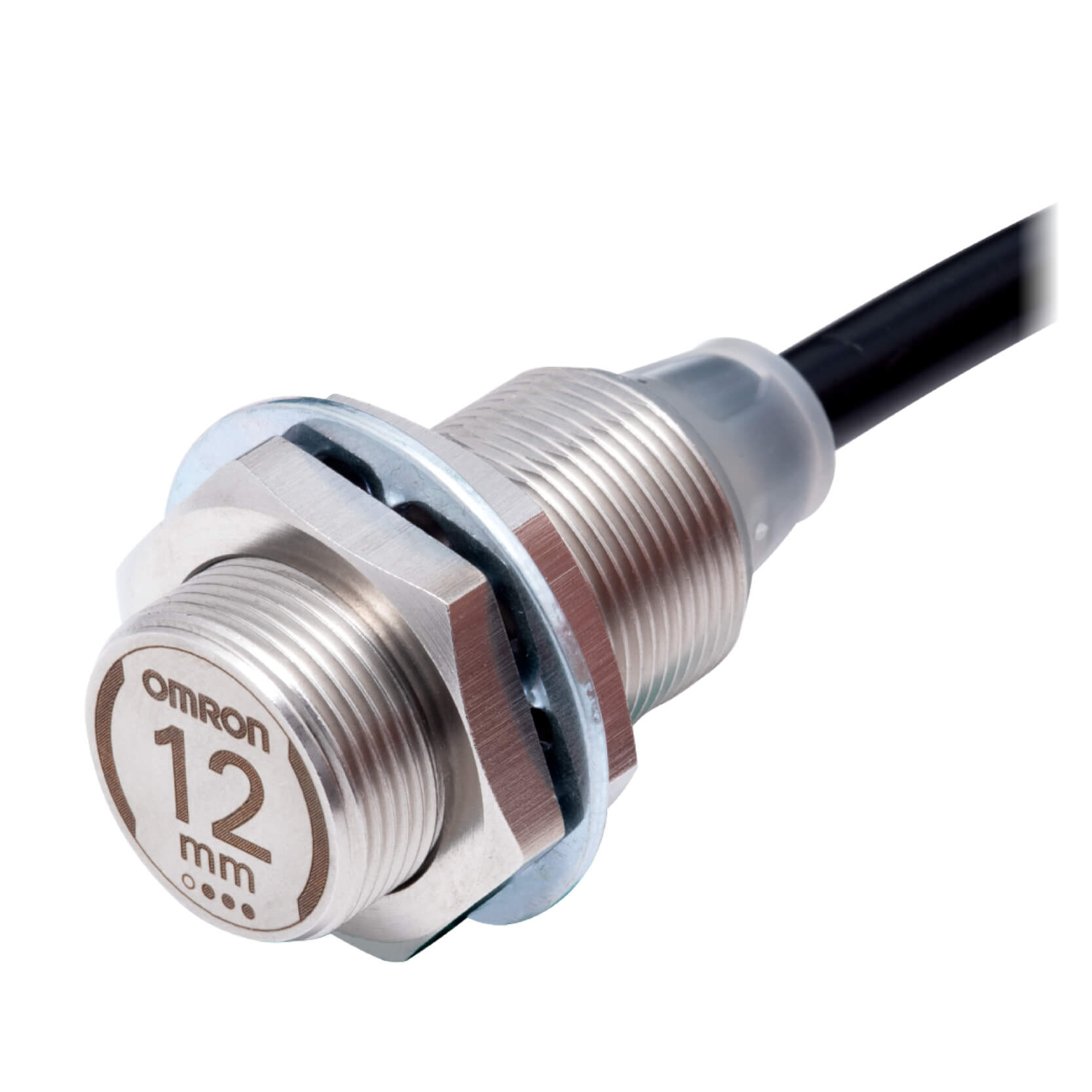
Omron E2EW-QX10B230-M1TJ Inductive Proximity Sensor
| Feature | Value |
|---|---|
| Manufacturer | Omron |
| Series | E2EW |
| Sensor Type | Inductive Proximity Sensor |
| Housing Diameter | M18 |
| Mounting Style | Flush (Shielded) |
| Sensing Distance | 10 mm |
| Output Configuration | PNP Normally Open (NO) |
| Supply Voltage | 10 to 30 VDC |
| Connection Type | M12 Pigtail Connector |
| Cable Length | 0.3 m |
| Protection Rating | IP67 |
| Housing Material | SUS303 Stainless Steel |
| Sensing Surface | Fluororesin Coated |
Modern manufacturing facilities require sensors that can operate reliably under continuous production conditions while maintaining consistent detection performance. The Omron E2EW-QX10B230-M1TJ Inductive Proximity Sensor is developed for industrial applications involving metal target detection, machine monitoring, and automated process control. Its compact M18 housing and short M12 pigtail connection make it suitable for installations where connector accessibility and cable management are important considerations.
Technical Description
The Omron E2EW-QX10B230-M1TJ Inductive Proximity Sensor belongs to the E2EW family of industrial proximity sensors. It provides a 10 mm sensing distance and utilizes a PNP normally open output. The sensor is designed with a flush-mount structure, allowing installation within metallic machine frames while maintaining specified sensing characteristics.
The robust SUS303 stainless-steel housing supports operation in environments exposed to vibration, machining residues, industrial fluids, and routine cleaning procedures. The fluororesin-coated sensing face further improves resistance against contamination and process-related exposure.
Working Principle
The sensor generates an electromagnetic field at the active sensing face. When a conductive metal target enters this field, electrical eddy currents are created within the target material.
These currents influence the sensor’s internal oscillator circuit. Once the measured change exceeds the switching threshold, the output state changes. In the PNP normally open configuration, the output activates when a target is detected within the sensing range.
The Omron E2EW-QX10B230-M1TJ Inductive Proximity Sensor incorporates Factor 1 sensing characteristics, helping reduce variations in sensing performance between different metallic materials.
Advantages of the Sensor
- 10 mm sensing range in a compact M18 format
- PNP normally open output for industrial control systems
- Flush installation capability
- Short 0.3 m pigtail connection for flexible wiring
- IP67 environmental protection
- Durable stainless-steel housing
- Improved resistance to coolant and oil exposure
- Reliable non-contact metal detection
Typical Applications
The Omron E2EW-QX10B230-M1TJ Inductive Proximity Sensor is suitable for numerous automation and machinery applications.
- Automated assembly equipment
- Industrial transfer systems
- Conveyor positioning stations
- Robotic handling equipment
- Packaging machinery
- Automated warehouse systems
- Machine tool monitoring
- Metal fabrication equipment
Engineers looking for additional industrial sensing solutions can review Omron sensor product ranges for related applications.
Industrial Use Cases
Automated Part Detection
Production systems often require verification of metal component presence before machining, assembly, or packaging operations begin. Inductive sensing enables this verification without mechanical contact.
Position Monitoring in Robotics
Industrial robots frequently utilize proximity sensors to confirm actuator positions, fixture locations, and end-of-travel points. Consistent sensing performance supports repeatable automated movements.
Material Handling Systems
Automated logistics equipment can use inductive sensors to monitor metallic carriers, pallets, and transfer devices throughout transportation processes.
Packaging Equipment Integration
Packaging systems often require precise detection of machine components and indexing mechanisms. Reliable switching performance contributes to process continuity.
Considerations When Selecting a Sensor
Choosing the correct proximity sensor requires evaluating application-specific requirements and installation conditions.
- Required sensing distance
- Target material characteristics
- Output configuration compatibility
- Mounting constraints
- Environmental protection requirements
- Connection preferences
- Available installation space
- Maintenance accessibility
The Omron E2EW-QX10B230-M1TJ Inductive Proximity Sensor is appropriate for applications requiring a compact pigtail-connected sensor with a PNP normally open output and durable industrial construction.
Maintenance Considerations
Routine maintenance should include inspection of the mounting hardware, cable condition, and sensing surface cleanliness. Although the sensor contains no moving components, periodic verification of switching operation can help maintain process reliability.
Connector integrity should also be checked during scheduled maintenance intervals, particularly in installations exposed to vibration or repeated washdown procedures.
Frequently Asked Questions
1. What type of targets can this sensor detect?
The sensor is designed to detect metallic objects using inductive sensing technology.
2. What is the nominal sensing distance?
The sensing distance is 10 mm.
3. Which output type does this model provide?
It features a PNP normally open output.
4. Does the sensor support flush mounting?
Yes. The shielded construction allows flush installation.
5. What connection style is included?
The sensor uses a 0.3-meter pigtail cable with an M12 connector interface.
6. What protection level does the device offer?
The sensor is rated IP67.
7. Is the Omron E2EW-QX10B230-M1TJ Inductive Proximity Sensor suitable for robotic applications?
Yes. It is commonly used for position monitoring and metal object detection in robotic systems.
8. What housing material is used?
The sensor incorporates a SUS303 stainless-steel housing.
9. What supply voltage range is supported?
The operating voltage range is 10 to 30 VDC.
10. Why is non-contact sensing advantageous?
It eliminates mechanical wear, reduces maintenance requirements, and supports long-term operational consistency.