
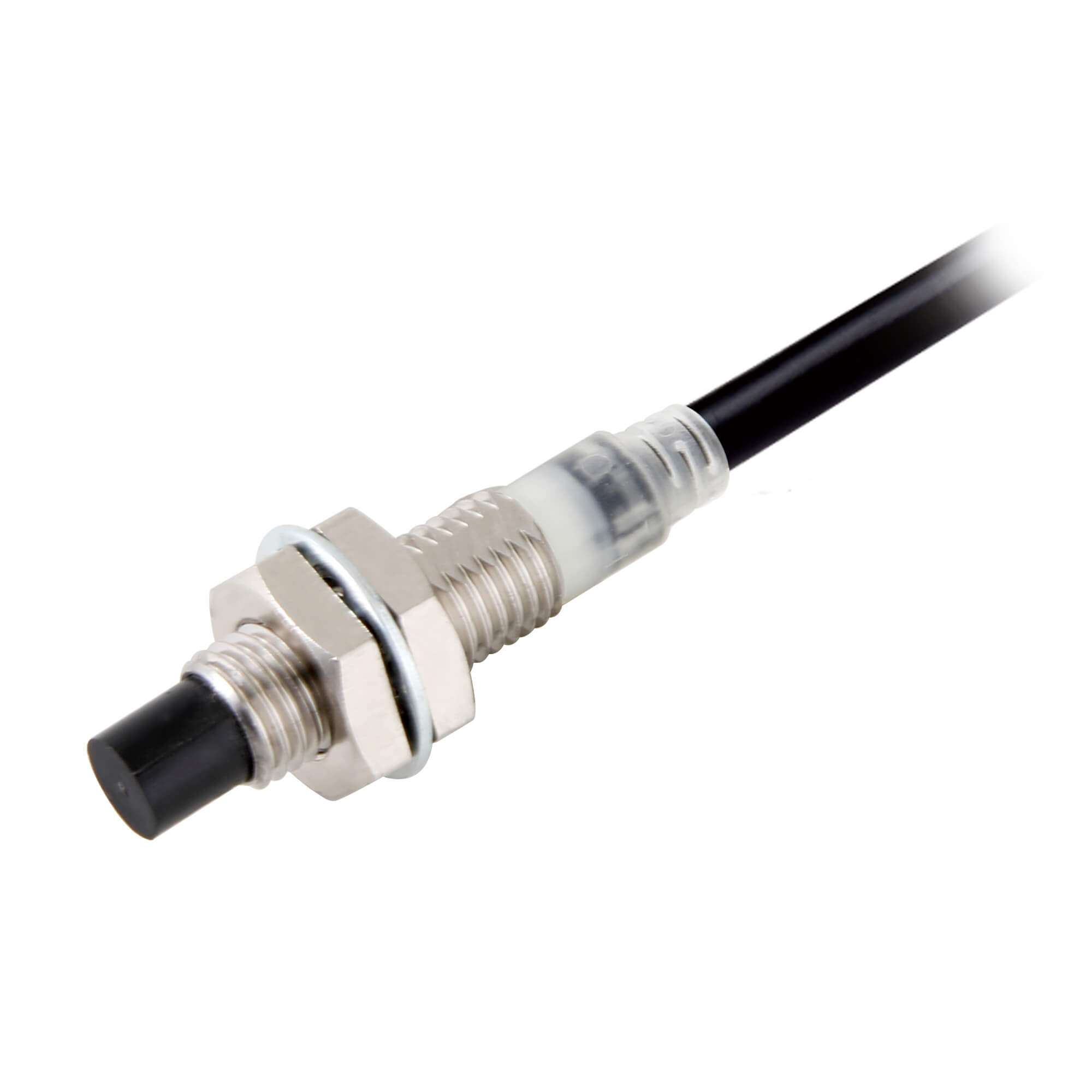
Omron E2E-X6MD18-T 2M Inductive Proximity Sensor
| Feature | Value |
|---|---|
| Sensor Type | Inductive Proximity Sensor |
| Series | E2E NEXT |
| Housing Diameter | M18 |
| Mounting Style | Non-Flush |
| Sensing Distance | 6 mm |
| Output Type | DC 2-Wire Normally Open |
| Connection Method | Pre-Wired Cable |
| Cable Length | 2 m |
| Housing Material | Stainless Steel |
| Cable Material | Oil-Resistant PVC |
| Protection Rating | IP67 / IP67G / IP69K |
| Thread Length | 35 mm |
| Operating Principle | Electromagnetic Induction |
Industrial sensing applications often require reliable object detection without physical contact. The Omron E2E-X6MD18-T 2M inductive proximity sensor is designed to identify metallic objects accurately while maintaining long-term operational stability in demanding automation environments. Its robust construction, extended environmental protection, and compact cylindrical design make it suitable for a wide range of machine-building and process-control applications.
As part of the E2E NEXT series, the sensor combines proven inductive sensing technology with modern durability requirements. The Omron E2E-X6MD18-T Inductive Proximity Sensor is particularly suitable for installations where metal detection, equipment monitoring, and positional feedback are essential to automated processes.
Technical Description
The sensor features an M18 threaded cylindrical housing manufactured from stainless steel. This construction provides mechanical strength and resistance against industrial contaminants commonly encountered in production facilities.
The Omron E2E-X6MD18-T Inductive Proximity Sensor offers a 6 mm sensing distance and utilizes a DC 2-wire normally open output configuration. The pre-wired 2-meter cable facilitates straightforward installation while minimizing the need for additional connection accessories.
Its oil-resistant PVC cable supports operation in machinery exposed to lubricants, hydraulic fluids, and other industrial substances. Combined with IP67, IP67G, and IP69K protection ratings, the sensor can withstand harsh operating environments that include moisture, dust, and frequent cleaning procedures.
Operating Principle
The sensor functions by generating a high-frequency electromagnetic field from its sensing surface. When a conductive metallic object enters this field, eddy currents are induced within the target material.
These currents influence the oscillation characteristics of the sensor circuit. Internal electronics continuously monitor these changes and activate the output when the target reaches the defined sensing range.
Since detection occurs without direct physical contact, the sensor avoids wear-related issues associated with mechanical switches. This contributes to longer service life and reduced maintenance requirements in automation systems.
Typical Application Areas
- Industrial automation systems
- Automated assembly lines
- Machine tools
- Packaging machinery
- Conveyor systems
- Robotic production cells
- Material handling equipment
- Metal fabrication machinery
The sensor can be used to confirm the presence of metallic workpieces, verify machine positions, and provide feedback to programmable control systems during automated production processes.
Industrial Applications
Assembly Automation
Automated assembly systems often require verification that metal components are correctly positioned before subsequent operations begin. The sensor can provide reliable confirmation signals throughout the production cycle.
Robotic Manufacturing Cells
Industrial robots depend on accurate position feedback to perform handling and assembly tasks. The sensor can detect metallic fixtures, grippers, and positioning elements that support robotic operations.
Packaging and Processing Equipment
Packaging machinery frequently incorporates inductive sensors to monitor machine movements and synchronize mechanical actions. Reliable detection contributes to process consistency and operational control.
Machinery Production
Machine builders often integrate inductive proximity sensors into equipment for position sensing, motion monitoring, and end-of-travel detection functions involving metallic machine components.
Advantages
- Reliable non-contact metal detection.
- Normally open output suitable for many automation systems.
- Durable stainless-steel construction.
- High resistance to moisture and contaminants.
- Suitable for washdown applications.
- Long operational service life.
- Simple installation using a pre-wired cable.
- Stable sensing performance in industrial environments.
Sector-Specific Usage Examples
In logistics operations, the sensor can detect metallic transport carriers moving through automated conveyor systems. In metal fabrication facilities, it may be used to verify workpiece positioning before machining or welding operations begin.
Manufacturers of food processing machinery often require sensors capable of withstanding aggressive cleaning cycles. The environmental protection characteristics of this sensor support installation in such equipment.
Omron E2E-X6MD18-T Engineers seeking additional automation sensing technologies can review Omron sensor solutions for related industrial applications and product families.
Considerations When Selecting This Sensor
- Confirm that metallic targets are being detected.
- Verify suitability of the normally open output configuration.
- Ensure the required sensing distance matches application needs.
- Provide adequate clearance for non-flush mounting.
- Review cable routing requirements.
- Evaluate environmental exposure conditions.
- Check compatibility with the intended control system.
Frequently Asked Questions
What type of objects can this sensor detect?
The sensor is designed for detecting metallic objects using inductive sensing technology.
What is the sensing distance?
The rated sensing distance is 6 mm.
What output configuration does the sensor use?
The sensor features a DC 2-wire normally open output.
How long is the cable?
The sensor is supplied with a 2-meter pre-wired cable.
Omron E2E-X6MD18-T Can it detect plastic components?
No. Inductive proximity sensors are intended for metallic target detection.
Is the sensor suitable for wet production environments?
Yes. The sensor carries IP67, IP67G, and IP69K protection ratings.
Where is the Omron E2E-X6MD18-T Inductive Proximity Sensor commonly used?
Common applications include robotics, conveyors, packaging systems, machine tools, and automated production equipment.
What housing material is used?
The sensor housing is manufactured from stainless steel.
How does the Omron E2E-X6MD18-T Inductive Proximity Sensor operate?
It generates an electromagnetic field and detects metallic targets through eddy current interaction.
Why is non-contact sensing important in automation?
Non-contact sensing reduces mechanical wear, improves reliability, and minimizes maintenance requirements over time.