
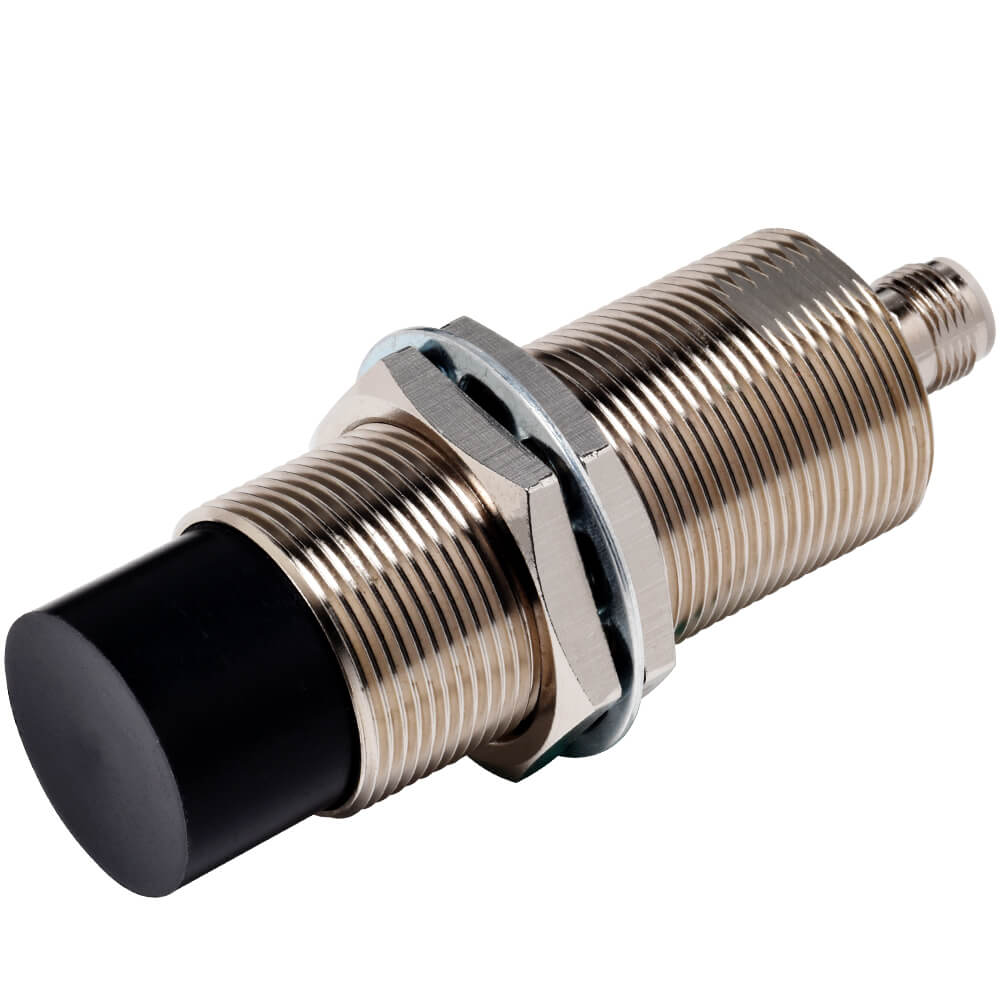
Omron E2E-X50MC1L30-M1 Inductive Proximity Sensor
| Feature | Value |
|---|---|
| Sensor Type | Inductive Proximity Sensor |
| Series | Omron E2E NEXT |
| Housing Size | M30 |
| Mounting Style | Non-flush (Unshielded) |
| Sensing Distance | 50 mm |
| Output Type | NPN |
| Operation Mode | Normally Open (NO) |
| Connection Type | M12 Connector |
| Supply Voltage | 10 to 30 VDC |
| Response Frequency | 100 Hz |
| Housing Material | Nickel-plated Brass |
| Protection Rating | IP67 / IP67G / IP69K |
| Operating Temperature | -25°C to +70°C |
| Thread Size | M30 |
Technical Description
The Omron E2E-X50MC1L30-M1 Inductive Proximity Sensor is developed for reliable non-contact detection of metallic objects in industrial automation environments. As a member of the E2E NEXT series, this model combines a long sensing distance of 50 mm with durable construction and stable switching performance. The sensor is particularly suitable for applications where installation flexibility and resistance to harsh operating conditions are important.
Equipped with an M12 connector, the Omron E2E-X50MC1L30-M1 Inductive Proximity Sensor allows simplified wiring and faster maintenance procedures compared to permanently wired installations. The sensor’s NPN normally open output configuration makes it compatible with a wide range of industrial control systems, PLC architectures, and machine automation platforms.
Operating Principle
The sensor operates by generating an electromagnetic field through an internal oscillator. When a conductive metallic object enters the sensing area, eddy currents are induced within the target. These currents influence the oscillator characteristics, allowing the sensor electronics to detect the object’s presence and change the output state.
Because no mechanical contact occurs during operation, the sensing process remains highly reliable over long operating periods. This principle also reduces maintenance requirements and eliminates wear associated with mechanical switches.
Key Features
- 50 mm sensing distance for long-range detection
- NPN normally open switching output
- M12 connector interface
- M30 cylindrical threaded housing
- Nickel-plated brass construction
- Resistance to industrial contaminants
- IP67, IP67G, and IP69K protection ratings
- Designed for non-contact metallic object detection
Omron E2E-X50MC1L30-M1 Application Areas
The sensor can be integrated into production systems requiring dependable detection of metallic components, moving machine elements, and automated positioning devices.
- Automated conveyor systems
- Machine building applications
- Industrial robotics
- Packaging equipment
- Metal fabrication machinery
- Automated storage systems
- Production transfer lines
- Industrial material handling systems
Industrial Applications
Robotic Production Cells
Industrial robots frequently require position verification of fixtures, tooling, and transfer mechanisms. The sensor can provide reliable detection while maintaining adequate installation clearance from moving equipment.
Packaging Automation
Packaging systems often use inductive sensors to monitor actuator positions, machine sequences, and metal machine components during high-speed production cycles.
Automated Warehousing
Warehouse automation equipment relies on accurate position monitoring of metallic carriers, transfer assemblies, and transport mechanisms. Long sensing distances simplify installation in these systems.
Omron E2E-X50MC1L30-M1 Machine Tool Operations
Machining centers and automated manufacturing equipment can use the sensor to monitor mechanical movement and verify operational status throughout production processes.
Omron E2E-X50MC1L30-M1 Advantages
- Extended sensing range supports flexible installation
- Connector-based design simplifies replacement procedures
- Non-contact operation minimizes mechanical wear
- Suitable for demanding industrial environments
- Robust metal housing improves durability
- High ingress protection ratings
- Reliable performance during continuous operation
Sector-Specific Usage Examples
In automotive assembly facilities, the sensor may be used to verify fixture alignment before robotic fastening or welding operations are initiated.
In logistics centers, metallic transport carriers can be detected before entering sorting or transfer sections, helping coordinate automated material flow.
Food and beverage packaging machinery often uses inductive sensors to confirm the position of metal machine components throughout production sequences.
In metal fabrication environments, the sensor can monitor the movement of workpiece carriers between cutting, forming, and inspection stations.
Omron E2E-X50MC1L30-M1 Considerations When Selecting a Sensor
Proper sensor selection requires evaluation of mechanical, electrical, and environmental requirements. The chosen sensing distance should provide adequate clearance while maintaining reliable target detection.
- Required detection range
- NPN output compatibility
- Environmental protection requirements
- Connector preferences
- Available installation space
- Control system integration requirements
For additional industrial sensing technologies and related product families, engineers can review Omron sensor product ranges.
Frequently Asked Questions
1. What type of target can this sensor detect?
The sensor is designed for the detection of metallic objects using inductive sensing technology.
2. What is the nominal sensing distance?
The sensor provides a nominal sensing distance of 50 mm.
3. Which output configuration does this model use?
This model features an NPN normally open output.
4. What connection method is available?
The sensor uses an industrial M12 connector connection.
5. Is physical contact required for detection?
No. Detection occurs through an electromagnetic field without contact between the sensor and the target.
6. Can the sensor operate in harsh industrial environments?
Yes. The device includes IP67, IP67G, and IP69K protection ratings suitable for demanding industrial applications.
7. What supply voltage range is supported?
The sensor operates with a supply voltage range of 10 to 30 VDC.
8. Which industries commonly use this sensor?
Automotive, packaging, logistics, machine building, and manufacturing industries commonly integrate this sensor into automation systems.
9. What material is used for the housing?
The housing is manufactured from nickel-plated brass for improved mechanical durability.
10. Why choose a connector version instead of a cable version?
Connector versions simplify installation, replacement, and maintenance while reducing downtime during service operations.