
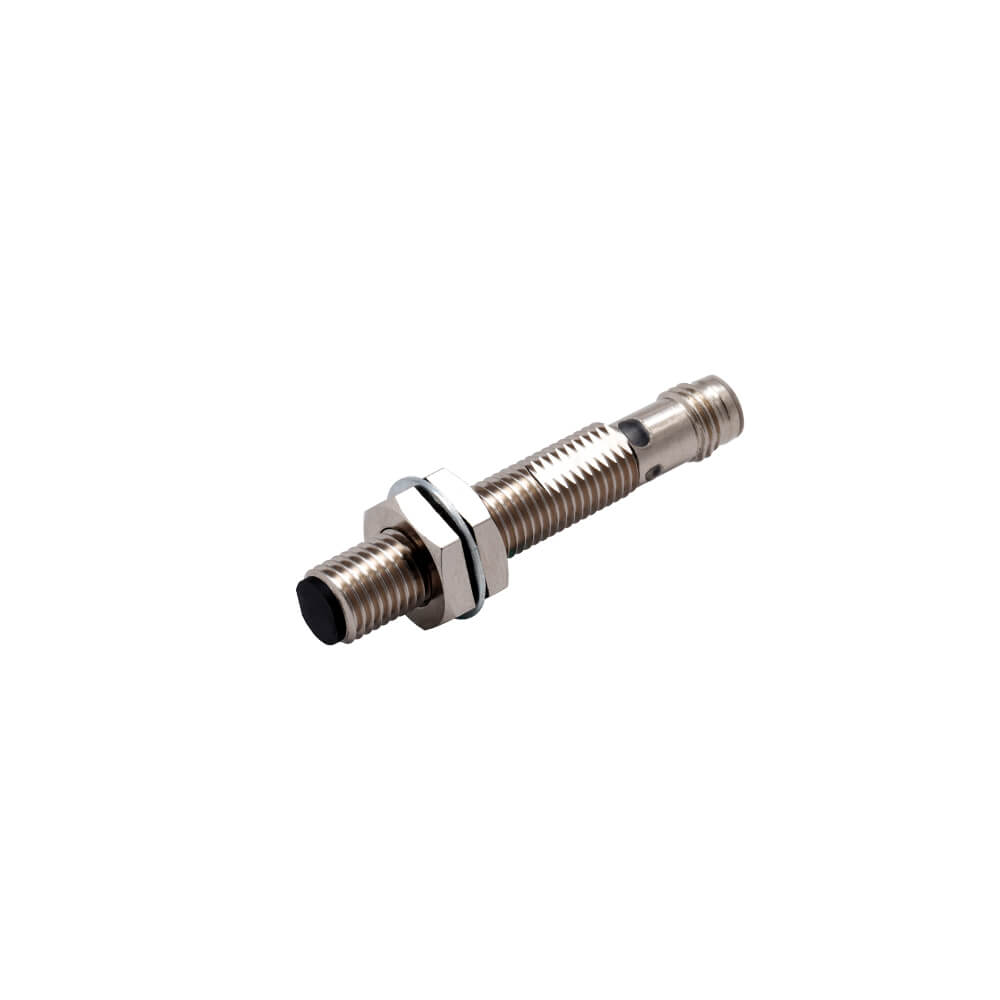
Omron E2E-X4B2L8-M3 Inductive Proximity Sensor
| Feature | Value |
|---|---|
| Sensor Type | Inductive Proximity Sensor |
| Series | E2E NEXT |
| Housing Size | M8 |
| Mounting Type | Shielded (Quasi-flush) |
| Sensing Distance | 4 mm |
| Output Type | PNP |
| Operation Mode | Normally Closed (NC) |
| Supply Voltage | 10 to 30 VDC |
| Connection Method | M8 Connector |
| Response Frequency | 700 Hz |
| Housing Material | Nickel-Plated Brass |
| Operating Temperature | -25°C to 60°C |
| Protection Rating | IP67 / IP67G / IP69K |
| Overall Length | 53 mm |
Compact sensing devices play a critical role in modern industrial automation systems where machine space is limited and detection reliability is essential. The Omron E2E-X4B2L8-M3 Inductive Proximity Sensor is engineered to provide stable metallic object detection while maintaining a compact installation footprint. As a member of the E2E NEXT product family, this sensor combines a miniature M8 threaded housing, a 4 mm sensing distance, and a connector-based wiring solution suitable for a wide range of automation applications.
The Omron E2E-X4B2L8-M3 Inductive Proximity Sensor is designed for use in machinery where accurate position monitoring, component detection, and process verification are required without physical contact between the sensor and the target object.
Technical Description
This sensor utilizes inductive sensing technology to detect metallic targets within a rated sensing range of 4 mm. The shielded sensing structure allows installation near metal surfaces while minimizing interference from surrounding machine components. The M8 housing offers installation flexibility in compact equipment where larger sensors may not fit.
The sensor provides a PNP normally closed output configuration and operates within a supply voltage range of 10 to 30 VDC. An M8 connector enables quick replacement and simplified wiring during maintenance procedures.
The nickel-plated brass body improves resistance to vibration, mechanical impact, and industrial contaminants. IP67, IP67G, and IP69K protection ratings support operation in environments exposed to dust, oil, moisture, and high-pressure cleaning procedures.
Working Principle
The sensor generates an electromagnetic field at its sensing surface. When a metallic object enters the detection zone, eddy currents are created within the target material. These currents modify the sensor’s oscillation characteristics.
Internal electronic circuitry continuously evaluates these changes and switches the output once the detection threshold is reached. Since no physical contact is required, wear on both the sensor and the target object is minimized.
This operating principle allows the Omron E2E-X4B2L8-M3 Inductive Proximity Sensor to perform reliably in applications involving continuous machine movement and repetitive production cycles.
Application Areas
- Industrial assembly systems
- Automated conveyor lines
- Robotic handling equipment
- Packaging machinery
- Machine tool monitoring
- Automated storage systems
- Metal fabrication equipment
- Transfer and sorting machines
The compact housing makes the sensor particularly useful for installations where equipment designers must optimize available space while maintaining dependable sensing performance.
Industrial Applications
Automated Conveyor Equipment
Conveyor systems often require position feedback for actuators, gates, and transfer mechanisms. The sensor can detect metallic machine components and support system synchronization.
Packaging Production Lines
Packaging equipment may utilize proximity sensors to monitor indexing mechanisms, machine positions, and actuator status throughout production cycles.
Robotic Automation Cells
Industrial robots frequently depend on proximity sensors to confirm fixture engagement and verify the location of moving components before executing automated operations.
Machine Building Industry
Equipment manufacturers integrate compact inductive sensors into custom machinery where reliable object detection and long service life are required.
Advantages
- Compact M8 housing supports installation flexibility.
- Extended 4 mm sensing range.
- Reliable non-contact metallic object detection.
- M8 connector simplifies maintenance and replacement.
- Shielded construction supports installation near metal surfaces.
- High environmental protection ratings.
- Durable nickel-plated brass housing.
- Compatible with common industrial control systems.
Industry-Specific Usage Examples
In logistics facilities, the sensor can monitor diverter positions on conveyor systems that route packages to different destinations. Within automated assembly lines, it may verify that metal fixtures are properly engaged before processing operations begin.
Manufacturers of CNC machinery often use compact proximity sensors to detect moving machine components and monitor mechanical positioning systems. In food processing facilities, sensors with elevated ingress protection ratings can support operation in equipment that undergoes frequent cleaning cycles.
The Omron E2E-X4B2L8-M3 Inductive Proximity Sensor is also suitable for automated storage and retrieval systems where dependable position sensing contributes to efficient material handling operations.
Considerations When Selecting This Sensor
- Confirm that the target material is metallic.
- Verify that 4 mm sensing distance is suitable for the application.
- Ensure compatibility with PNP control inputs.
- Check available installation space.
- Confirm M8 connector compatibility.
- Review environmental exposure conditions.
- Evaluate operating temperature requirements.
- Consider future maintenance accessibility.
Omron E2E-X4B2L8-M3 Additional information regarding Omron sensor may help engineers compare different sensor formats, connection methods, and sensing distances when selecting automation components.
Omron E2E-X4B2L8-M3 Frequently Asked Questions
1. What type of sensing technology is used?
The sensor uses inductive sensing technology designed for metallic object detection.
2. What is the rated sensing distance?
The nominal sensing distance is 4 mm.
3. Is this sensor suitable for compact machinery?
Yes. The M8 housing supports installation in space-constrained equipment.
4. What output configuration does it provide?
The sensor uses a PNP normally closed output.
5. Which voltage range is supported?
The device operates from 10 to 30 VDC.
6. What connector type is used?
The model uses an M8 connector connection method.
7. Can it operate in washdown environments?
Yes. The IP67, IP67G, and IP69K ratings support operation in demanding industrial conditions.
8. What industries commonly use this sensor?
Packaging, logistics, machine building, automotive, and manufacturing industries commonly use inductive proximity sensors of this type.
9. What material is used for the housing?
The housing is manufactured from nickel-plated brass.
10. Why is non-contact sensing beneficial?
Non-contact detection reduces mechanical wear and helps maintain consistent sensing performance over time.