
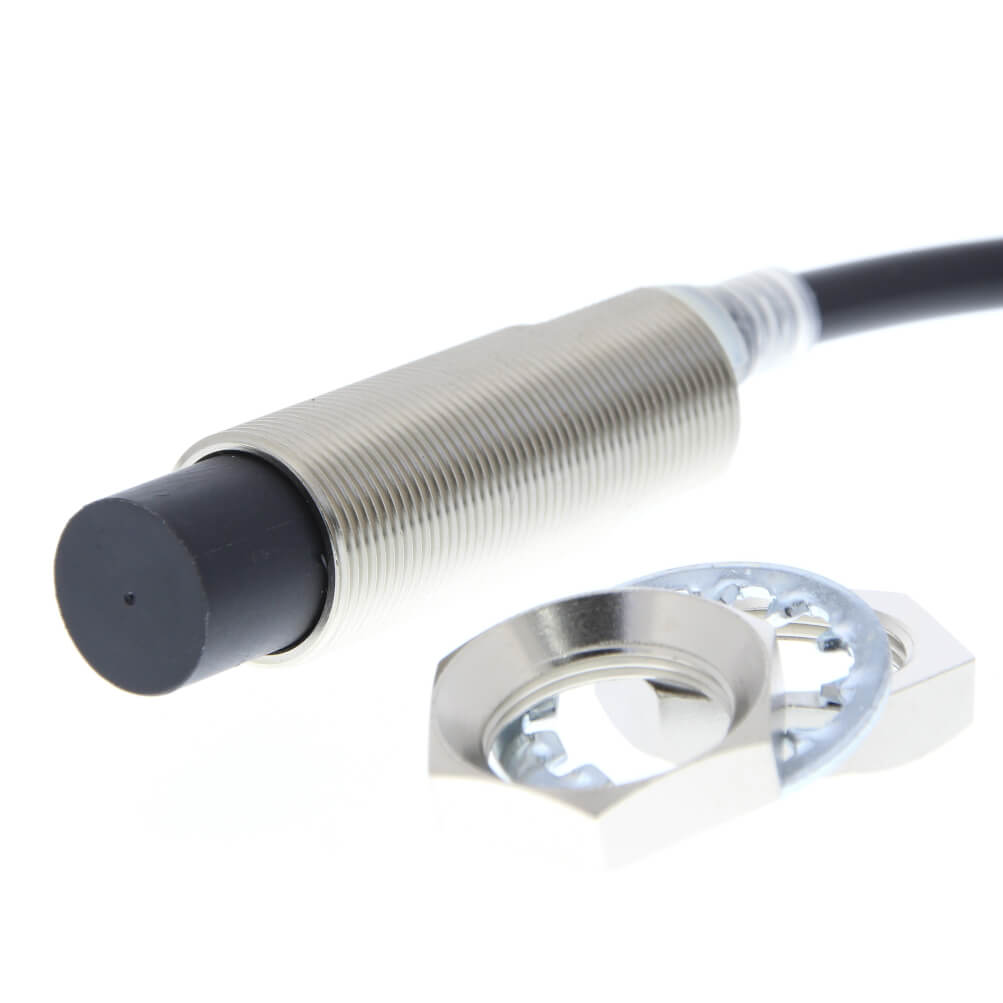
Omron E2E-X20MD2L18-TR 2M Inductive Proximity Sensor
| Feature | Value |
|---|---|
| Manufacturer | Omron |
| Series | E2E NEXT |
| Sensor Type | Inductive Proximity Sensor |
| Housing Size | M18 |
| Mounting Type | Non-Flush |
| Sensing Distance | 20 mm |
| Output Type | 2-Wire DC |
| Operation Mode | NC (Normally Closed) |
| Connection Method | Cable |
| Cable Length | 2 m |
| Cable Material | PVC (Oil-Resistant) |
| Housing Material | Nickel-Plated Brass |
| Thread Length | 47 mm |
| Overall Length | 77.3 mm |
| Protection Rating | IP67 / IP67G / IP69K |
Technical Overview
The Omron E2E-X20MD2L18-TR 2M Inductive Proximity Sensor is designed for non-contact detection of metallic objects in industrial automation environments. Built within an M18 nickel-plated brass housing, the sensor provides a sensing distance of 20 mm while maintaining stable operation under demanding environmental conditions. Its non-flush mounting design allows for extended sensing performance compared to flush-mounted alternatives.
This model belongs to the E2E NEXT family and incorporates a flexible oil-resistant cable intended for dynamic machine installations. The Omron E2E-X20MD2L18-TR 2M Inductive Proximity Sensor is frequently integrated into automated production equipment, conveyor systems, machine tools, and material handling installations where reliable object detection is required.
How the Sensor Works
Inductive sensing technology operates by generating an electromagnetic field at the sensing face. When a conductive metallic target enters this field, eddy currents are induced within the target material. These currents alter the oscillator characteristics inside the sensor, causing the output stage to change state.
Because detection is performed without physical contact, wear on sensing components is minimized. This operating principle allows the sensor to maintain consistent detection performance even in applications involving vibration, repetitive movement, or contamination.
Key Technical Characteristics
Extended Sensing Distance
With a nominal sensing distance of 20 mm, the sensor can detect metallic targets from a relatively long range for its housing size. This additional distance may simplify mechanical installation and reduce alignment constraints.
Industrial Protection Ratings
The IP67, IP67G, and IP69K protection levels support deployment in environments exposed to dust, moisture, washdown procedures, and industrial fluids. Such protection is particularly valuable in equipment requiring frequent cleaning or operation in harsh production areas.
Flexible Cable Design
The integrated 2-meter oil-resistant cable provides installation flexibility in machinery where routing paths involve moving assemblies or compact control cabinets.
Typical Applications
- Metal part presence detection
- Automated assembly systems
- Packaging machinery
- Conveyor monitoring stations
- Transfer and indexing mechanisms
- Robotic material handling equipment
- Machine tool positioning systems
- Industrial transport systems
Industrial Use Cases
In automotive manufacturing facilities, the sensor can verify the presence of stamped metal components before robotic assembly operations begin. In packaging equipment, it may monitor metal carriers moving through indexing stations to ensure synchronization between mechanical and control processes.
Metalworking facilities often use inductive sensors for position verification of fixtures, slides, and machine components. Warehousing automation systems can also incorporate proximity sensing technology to confirm the movement and positioning of metal pallets and transfer equipment.
Advantages of the Sensor
- Non-contact metal detection
- 20 mm sensing distance
- M18 industrial housing format
- Oil-resistant cable construction
- Suitable for demanding industrial environments
- High ingress protection ratings
- Reduced mechanical wear compared with contact switches
- Simple integration into automation systems
Selection Considerations
When selecting an inductive proximity sensor, engineers should evaluate target material characteristics, mounting configuration, environmental exposure, cable routing requirements, and control system compatibility. The NC output configuration should also be verified against machine safety logic and PLC input requirements.
For installations requiring additional inductive sensing solutions, engineers may review Omron sensor product lines for alternative sensing distances, mounting styles, and connection options.
Frequently Asked Questions
1. What type of objects can this sensor detect?
The sensor is designed for detecting metallic objects through inductive sensing technology.
2. What is the sensing distance?
The nominal sensing distance is 20 mm.
3. What output configuration does the sensor use?
It uses a DC 2-wire output with Normally Closed (NC) operation.
4. Is the sensor suitable for wet environments?
Yes. The IP67, IP67G, and IP69K ratings provide protection against water ingress and demanding industrial cleaning procedures.
5. What housing material is used?
The housing is manufactured from nickel-plated brass.
6. Where is the Omron E2E-X20MD2L18-TR 2M Inductive Proximity Sensor commonly used?
It is commonly installed in manufacturing lines, conveyors, robotic systems, packaging equipment, and machine tools.
7. Does the sensor require physical contact with the target?
No. Detection is performed without contact through an electromagnetic field.
8. What cable length is supplied?
The sensor includes a 2-meter oil-resistant PVC cable.
9. What mounting style does the sensor use?
The device is designed for non-flush mounting installations.
10. What are the benefits of inductive sensing technology?
Inductive sensors provide reliable metal detection, reduced mechanical wear, fast operation, and suitability for harsh industrial environments.