
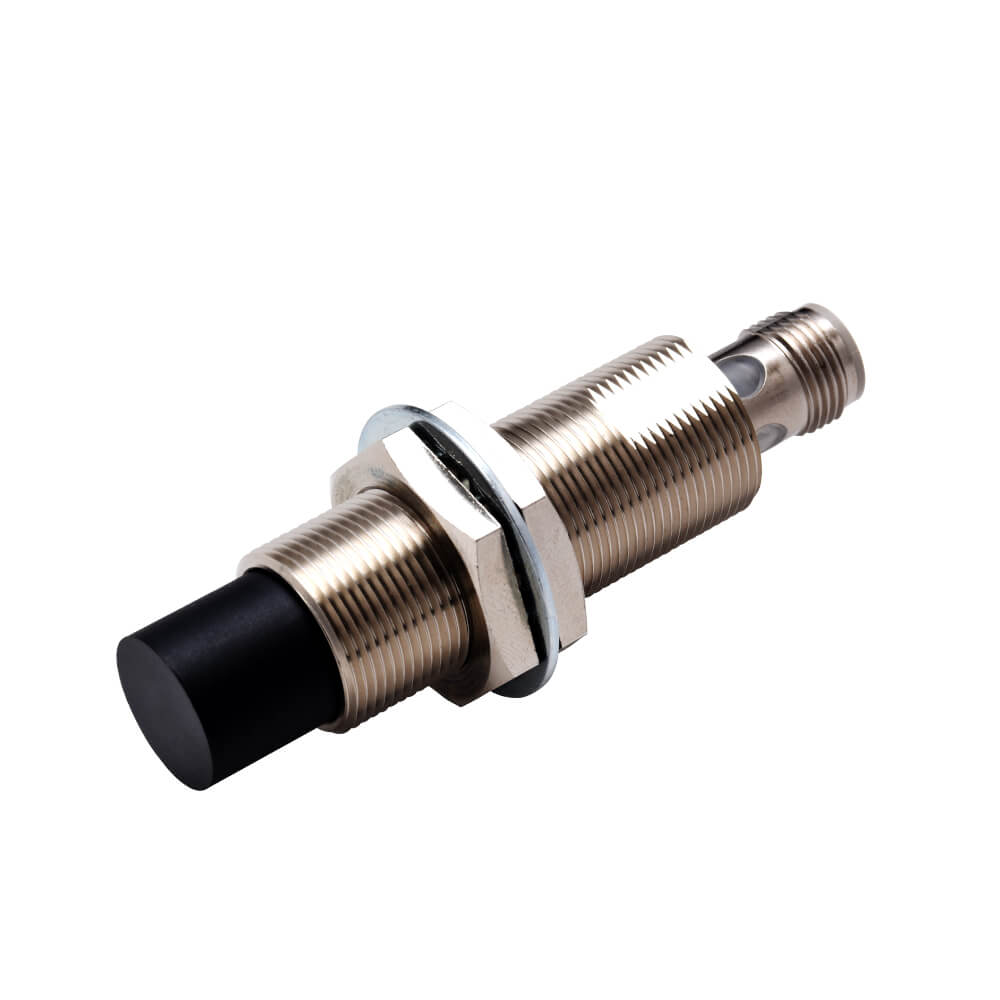
Omron E2E-X10MB1TL18-M1 Inductive Proximity Sensor
| Feature | Value |
|---|---|
| Sensor Type | Inductive Proximity Sensor |
| Series | E2E NEXT |
| Housing Diameter | M18 |
| Mounting Type | Non-Flush |
| Sensing Distance | 10 mm |
| Output Type | PNP Normally Open with IO-Link |
| Supply Voltage | 10 to 30 VDC |
| Connection Type | M12 Connector |
| Communication Protocol | IO-Link COM3 |
| Response Frequency | 300 Hz |
| Housing Material | Nickel-Plated Brass |
| Sensing Face Material | PBT |
| Protection Rating | IP67 / IP69K |
| Operating Temperature | -25°C to +70°C |
| Connection Interface | M12 4-Pin Connector |
Technical Description
Industrial automation systems increasingly require sensors that not only provide reliable detection performance but also support advanced communication and diagnostics. The Omron E2E-X10MB1TL18-M1 Inductive Proximity Sensor is designed to meet these requirements through a combination of robust inductive sensing technology, IO-Link communication capabilities, and a compact M18 cylindrical housing.
As part of the E2E NEXT sensor family, this model is intended for non-contact detection of metallic objects in demanding production environments. The sensor offers a nominal sensing distance of 10 mm and features a non-flush mounting design that allows greater installation flexibility compared to flush-mounted alternatives.
The Omron E2E-X10MB1TL18-M1 Inductive Proximity Sensor utilizes an M12 connector interface, making it suitable for modular machine designs where quick installation, replacement, and maintenance are important. The connector-based configuration also supports standardized industrial wiring practices and simplifies integration into distributed I/O architectures.
Its rugged nickel-plated brass housing and high ingress protection ratings make the sensor suitable for applications exposed to dust, moisture, vibration, and regular cleaning procedures.
Working Principle
The sensor operates using electromagnetic induction. An oscillating electromagnetic field is generated at the sensing face. When a metallic object enters this field, eddy currents are induced within the target material.
These eddy currents influence the oscillation characteristics of the sensor’s internal circuit. Once the change reaches the predefined threshold, the sensor activates its PNP normally open output. This process occurs without mechanical contact, reducing wear and supporting consistent operation over extended periods.
In addition to switching functionality, IO-Link communication allows the sensor to exchange operational data, device identification information, and diagnostic parameters with compatible automation systems.
Applications
- Automated assembly systems
- Industrial conveyor lines
- Machine tool equipment
- Packaging machinery
- Robotic manufacturing cells
- Material handling systems
- Metal fabrication processes
- Automated storage systems
- Industrial transfer stations
- Position verification applications
Industrial Application Examples
In automotive manufacturing facilities, the sensor can verify the presence and position of metallic components before welding, fastening, or assembly operations begin.
Packaging machinery often utilizes the Omron E2E-X10MB1TL18-M1 Inductive Proximity Sensor to monitor actuator positions and mechanical indexing mechanisms that rely on precise timing and synchronization.
Robotic systems can employ the sensor to confirm workpiece availability and fixture positioning before automated handling sequences are executed.
In metal processing operations, the sensor helps ensure that metallic parts arrive at machining stations correctly positioned before production cycles are initiated.
Advantages
- 10 mm sensing distance for reliable detection
- Integrated IO-Link communication support
- M12 connector for simplified installation
- PNP normally open output configuration
- IP67 and IP69K protection ratings
- Durable nickel-plated brass housing
- Non-contact operation minimizes wear
- Suitable for harsh industrial environments
- Supports advanced diagnostics and parameterization
Important Selection Considerations
Communication Requirements
Applications requiring device diagnostics, parameter management, and condition monitoring can benefit from the integrated IO-Link functionality.
Mounting Conditions
The sensor is designed for non-flush installation. Recommended installation clearances should be maintained to achieve specified sensing performance.
Target Material
Detection characteristics may vary depending on the material properties, dimensions, and geometry of the target object.
Environmental Factors
The IP67 and IP69K ratings support use in environments where exposure to dust, moisture, coolant, and cleaning processes is common.
Integration Within Modern Automation Architectures
The Omron E2E-X10MB1TL18-M1 Inductive Proximity Sensor can be integrated with PLCs, industrial Ethernet networks, distributed I/O systems, machine controllers, and predictive maintenance platforms. Through IO-Link communication, operational information can be transmitted directly to higher-level automation systems for improved visibility and diagnostics.
Engineers developing complete sensing architectures can explore additional Omron sensor solutions for applications involving photoelectric sensing, safety monitoring, machine vision, and industrial networking.
Frequently Asked Questions
What is the sensing distance of this sensor?
The nominal sensing distance is 10 mm.
What type of objects can the sensor detect?
The sensor is designed for detecting metallic objects using inductive sensing technology.
Does this model support IO-Link communication?
Yes. The sensor supports IO-Link COM3 communication for diagnostics and parameter management.
What output type is provided?
The sensor uses a PNP normally open output configuration.
How is the sensor connected?
The device uses a standard M12 4-pin connector interface.
Can it operate in washdown environments?
Yes. The IP69K protection rating supports operation in environments that require high-pressure cleaning procedures.
What industries commonly use this sensor?
Automotive manufacturing, packaging, robotics, logistics, machine building, and metal processing industries frequently utilize this model.
What is the operating temperature range?
The sensor is designed to operate between -25°C and +70°C.
How does IO-Link improve maintenance activities?
IO-Link provides access to diagnostic data, device identification information, and parameter settings that support more efficient maintenance planning.
Why is non-contact sensing beneficial?
Because the sensor does not physically contact the target, mechanical wear is minimized, helping maintain stable performance throughout its service life.