
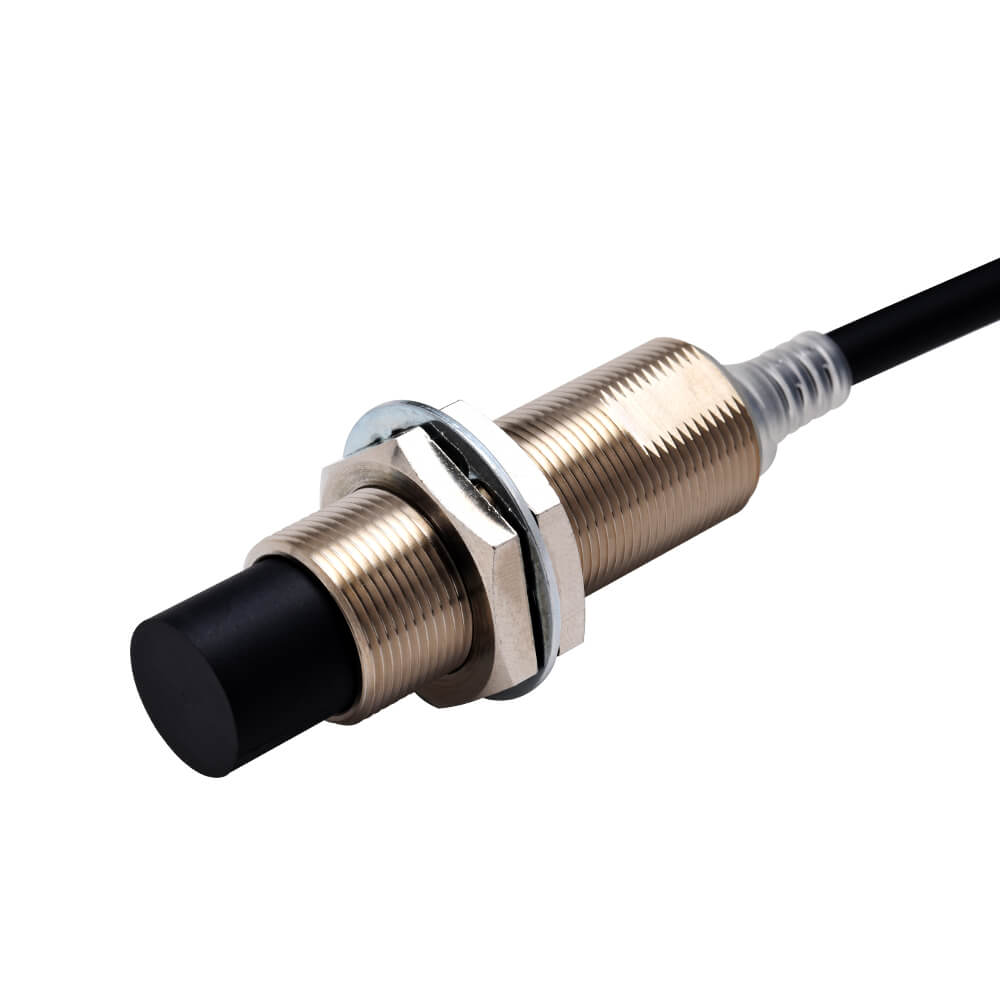
Omron E2E-X10MB1TL18 5M Inductive Proximity Sensor
| Feature | Value |
|---|---|
| Sensor Type | Inductive Proximity Sensor |
| Series | E2E NEXT |
| Housing Diameter | M18 |
| Mounting Type | Non-Flush |
| Sensing Distance | 10 mm |
| Output Type | PNP Normally Open |
| Supply Voltage | 10 to 30 VDC |
| Connection Method | 5 m Cable |
| Response Frequency | 300 Hz |
| Housing Material | Nickel-Plated Brass |
| Sensing Face Material | PBT |
| Protection Rating | IP67 / IP69K |
| Operating Temperature | -25°C to +70°C |
| Cable Length | 5 m |
Technical Description
Production facilities often require sensing devices that can maintain reliable detection performance while accommodating longer cable runs between field equipment and control cabinets. The Omron E2E-X10MB1TL18 5M Inductive Proximity Sensor is designed for these environments, combining robust inductive sensing technology with an integrated 5-meter cable connection.
As a member of the E2E NEXT family, this sensor provides stable detection of metallic targets using non-contact sensing principles. Its M18 cylindrical housing supports installation in machinery, conveyor systems, transfer equipment, and automated production cells where dependable object detection is required.
The Omron E2E-X10MB1TL18 5M Inductive Proximity Sensor offers a nominal sensing distance of 10 mm through its non-flush mounting design. This configuration enables greater installation flexibility while maintaining reliable switching performance across industrial applications.
The extended cable length makes the sensor particularly useful in larger machinery layouts where the sensing point is located at a significant distance from the control system.
Working Principle
The sensor operates by generating an electromagnetic field from its sensing surface. When a metallic object enters the detection zone, eddy currents are created within the target material. These currents alter the oscillation characteristics of the sensor’s internal circuit.
The electronics continuously monitor these changes and activate the PNP normally open output when the detection threshold is reached. Since the sensing process occurs without mechanical contact, performance remains stable even during high-frequency operation.
This detection method reduces component wear and supports long service life in applications involving repetitive motion and continuous production cycles.
Areas of Application
- Automated production lines
- Conveyor and transfer systems
- Packaging machinery
- Industrial robotics
- Machine tool equipment
- Material handling systems
- Automated storage facilities
- Metal fabrication machinery
- Assembly automation systems
- Industrial positioning tasks
Industrial Application Examples
In large manufacturing facilities, sensors may be installed several meters away from centralized control cabinets. The 5-meter cable of the Omron E2E-X10MB1TL18 5M Inductive Proximity Sensor simplifies installation by reducing the need for additional extension wiring.
Automated conveyor systems frequently utilize the sensor to detect metallic carriers and machine components involved in transport operations.
In metal fabrication environments, the sensor can confirm workpiece arrival at processing stations before machining or handling sequences begin.
Industrial packaging equipment often uses inductive sensors to monitor actuator positions, guide mechanisms, and indexing assemblies that contain metallic components.
Omron E2E-X10MB1TL18 5M Advantages
- 10 mm sensing distance
- Extended 5-meter integrated cable
- M18 industrial housing design
- PNP normally open output
- IP67 and IP69K protection levels
- Nickel-plated brass housing construction
- Reliable non-contact metal detection
- Reduced maintenance requirements
- Suitable for demanding industrial conditions
Important Selection Considerations
Installation Environment
The sensor is suitable for applications exposed to dust, moisture, and routine washdown procedures due to its IP67 and IP69K ratings.
Cable Routing Requirements
The integrated 5-meter cable supports installations where long wiring distances are necessary. Proper routing helps prevent excessive mechanical stress on the cable.
Target Characteristics
Sensing performance may vary depending on target material, geometry, and orientation. Application-specific testing is recommended when detecting non-standard metallic objects.
Mounting Conditions
Because the device is designed for non-flush installation, recommended installation clearances should be observed to achieve specified sensing performance.
Integration Within Industrial Systems
The Omron E2E-X10MB1TL18 5M Inductive Proximity Sensor is commonly integrated with PLC platforms, distributed I/O systems, machine controllers, and industrial automation networks. It is often deployed alongside photoelectric sensors, safety switches, servo systems, and motion control equipment to support coordinated machine operation.
Additional information regarding Omron sensor solutions can assist engineers when selecting complementary sensing technologies for complex automation projects.
Omron E2E-X10MB1TL18 5M Frequently Asked Questions
What is the sensing distance of the sensor?
The nominal sensing distance is 10 mm.
What type of objects can be detected?
The sensor is designed to detect metallic targets using inductive sensing technology.
What output configuration does the sensor provide?
The sensor features a PNP normally open output.
What is the cable length?
The model includes an integrated 5-meter cable.
Can the sensor be used in wet environments?
Yes. The IP67 and IP69K ratings provide protection against water and dust ingress.
Which industries commonly use this sensor?
Automotive manufacturing, packaging, logistics, robotics, machine building, and metal processing industries commonly utilize this model.
What is the operating temperature range?
The sensor supports operation from -25°C to +70°C.
How does inductive sensing work?
The sensor detects metallic objects by monitoring changes in an electromagnetic field generated at the sensing surface.
Why is a 5-meter cable beneficial?
It allows installation at greater distances from control panels and can reduce the need for additional extension cabling.
What housing material is used?
The housing is manufactured from nickel-plated brass for durability in industrial environments.