
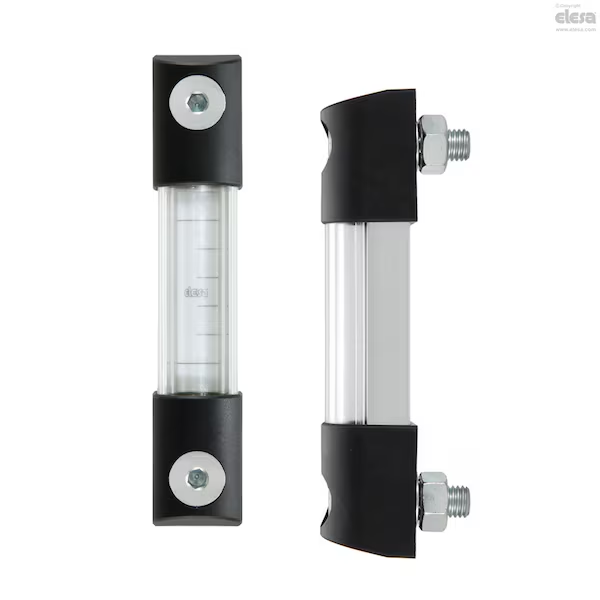
Elesa+Ganter 113653 HCK.127-SST316-M12-NBR-GL-P-E-NO Electrical Level Indicator
Overview
The Elesa+Ganter 113653 HCK.127-SST316-M12-NBR-GL-P-E-NO electrical level indicator is developed for applications where visual level reading and electrical low-level detection are both required. It is used in industrial machinery, hydraulic systems, oil tanks and fluid reservoirs where reliable monitoring supports operational safety.
Technical Character
This model uses the HCK.127 column format with 127 mm hole centre distance and M12 mounting. The SST316 execution provides stainless steel hardware for improved resistance in demanding environments. NBR packing supports oil-related sealing requirements, while the GL version is relevant for water and water/glycol-based solutions under suitable conditions.
Normally Open Electrical Contact
The E-NO code is especially important. It identifies an electrical level sensor with a normally open contact. In practical use, this allows the indicator to support a signal when the float reaches the defined intervention point. This can be connected to alarms, control panels or monitoring systems depending on the machine design.
Industrial Use
The Elesa+Ganter 113653 HCK.127-SST316-M12-NBR-GL-P-E-NO electrical level indicator is valuable in systems where a simple sight glass is not enough. The electrical function helps reduce dependence on manual inspection alone. For facilities with preventive maintenance routines, this type of indicator can support faster response to low fluid levels and potential leakage.
More details about the manufacturer can be found through Elesa+Ganter product information.
FAQ
What is Elesa+Ganter 113653 HCK.127-SST316-M12-NBR-GL-P-E-NO?
It is an electrical column level indicator with normally open level sensor contact.
What does E-NO mean?
E-NO refers to an electrical level sensor with a normally open contact configuration.
Why is SST316 useful?
SST316 stainless steel improves durability in environments where corrosion resistance is required.
Can this indicator replace manual inspection?
It supports monitoring, but visual checks and maintenance procedures should still be followed.
Is it suitable for hydraulic oil?
Yes, HCK indicators are commonly used in hydraulic oil systems, subject to fluid and condition verification.