
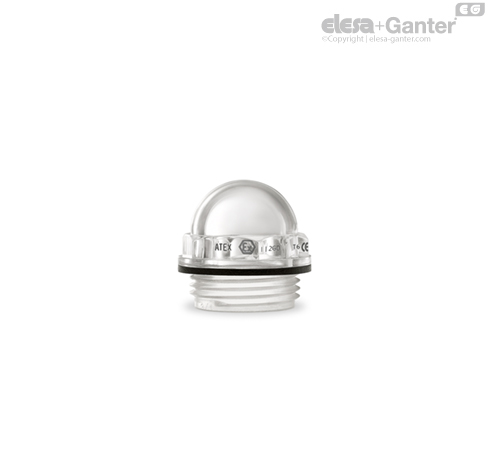
Elesa+Ganter HCFE.20-3/4-EX ATEX Oil Level Sight Glass Guide
The Elesa+Ganter HCFE.20-3/4-EX ATEX oil level sight glass is designed for applications where fluid level visibility is required in environments that may involve explosive atmospheres. For engineers and maintenance teams working in regulated industrial settings, this kind of component is important because it combines practical level monitoring with documented compliance requirements.
Unlike a standard oil sight glass, the HCFE.20-3/4-EX belongs to the HCFE-EX series and is intended for use in applications aligned with the ATEX Directive 2014/34/EU. This makes it especially relevant in sectors where gas, vapor, or combustible dust risks must be taken seriously.
Technical Features of HCFE.20-3/4-EX
The HCFE.20-3/4-EX uses a G 3/4 threaded connection and is manufactured from transparent polyamide-based technopolymer (PA-T) with an NBR synthetic rubber packing ring. The model is identified under the ATEX marking II 2GD Ex h X. The stated ambient and/or fluid temperature range is -20°C to +80°C. Published dimensions include A 10.5 mm, B 19.5 mm, D 31.5 mm, d 25 mm, and s 27 mm, with a recommended tightening torque of 6 to 8 Nm.
Why an ATEX Oil Level Sight Glass Matters
In standard machinery, a basic oil level indicator may be sufficient. In hazardous areas, the specification process is different. Components must be chosen with greater care because ignition protection, environmental risk, and regulatory compliance all matter. That is where a dedicated ATEX oil level sight glass becomes essential.
The HCFE.20-3/4-EX supports visual monitoring while fitting into applications where the equipment design must align with ATEX-related safety expectations. This helps maintenance teams perform level checks without moving away from compliance-oriented design choices.
Elesa+Ganter HCFE.20-3/4-EX Suitable Applications
This model can be relevant in process industry equipment, hydraulic systems, industrial tanks, and machine assemblies used in environments where flammable gases, vapors, or combustible dust may be present. Its G 3/4 thread size also makes it practical for established industrial installations that already use this fitting standard.
For specifiers, the value lies in choosing a hazardous area oil sight glass that addresses both functional inspection needs and safety-driven equipment requirements.
Elesa+Ganter HCFE.20-3/4-EX Installation and Use Notes
Installation should always respect the recommended tightening torque and the application instructions associated with the EX version. The transparent technopolymer should not be exposed to alcohol or detergents containing alcohol. Where tanks have wall thickness below 5 mm, a GH brass nut is available on request.
For more information about Elesa+Ganter, it is helpful to compare standard and EX-series hydraulic accessories when planning installations for regulated industrial environments.
Elesa+Ganter HCFE.20-3/4-EX FAQ
What makes the Elesa+Ganter HCFE.20-3/4-EX different from the standard HCFE.20-3/4?
The key difference is its ATEX-oriented design and compliance status. The EX version is intended for environments where explosive atmospheres may be present, while the standard version is aimed at general industrial use.
What ATEX marking applies to this oil level sight glass?
The product is identified with the marking II 2GD Ex h X. This indicates suitability for specific hazardous-area conditions in line with the product documentation and usage limitations.
What temperature range is specified for HCFE.20-3/4-EX?
The stated ambient and/or fluid temperature range is from -20°C to +80°C. This is different from the standard HCFE series and should be considered carefully during product selection.
Where is an ATEX oil level sight glass typically used?
It is typically used in industrial systems located in environments with potential exposure to flammable gases, vapors, or combustible dust, where compliant component selection is part of the engineering requirement.
Why is this component useful in maintenance planning?
It allows operators to perform quick visual oil checks while maintaining alignment with regulated equipment design requirements. That supports safer and more efficient inspection routines in demanding industrial settings.