
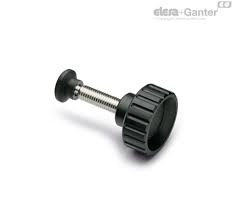
Elesa+Ganter 108835 BT.40-SST-P-M10X55-SV40 Fluted Knob
The Elesa+Ganter 108835 BT.40-SST-P-M10X55-SV40 fluted knob is designed for secure manual clamping in industrial assemblies where repeatable tightening, surface protection, and corrosion resistance matter. This component combines a black polyamide-based technopolymer knob body with an AISI 303 stainless steel threaded stud and a technopolymer thrust pad, making it a practical choice for machinery, fixtures, positioning devices, guards, and adjustment systems.
What Makes This Fluted Knob Different?
In many machine setups, a standard clamping knob can mark or damage the contact surface over time. This model is built with a locking thrust pad that helps reduce direct contact between the threaded stud and the clamped surface. That detail is useful in applications where operators adjust parts frequently and want to preserve the finish of plates, covers, or moving machine elements.
The fluted outer profile also improves hand grip. That matters in production environments where fast manual tightening is part of routine setup work. The stainless steel stud supports use in humid, washdown-sensitive, or corrosion-aware settings, while the technopolymer body keeps the knob lightweight and comfortable to handle.
Technical Features of the Elesa+Ganter 108835 BT.40-SST-P-M10X55-SV40 Fluted Knob
This version belongs to the BT-SST-p-SV series. It features a 40 mm knob diameter, an M10 threaded stud, and a 55 mm stud length. The thrust pad size for this configuration is SV40. The construction is intended for reliable hand-operated locking without exposing the mating surface to unnecessary wear. The knob body has a matte black finish, while the threaded metal insert is manufactured in stainless steel for improved resistance to corrosion.
Because the stud ends with a thrust pad arrangement rather than simple direct metal contact, the component is especially suitable where machine parts need frequent repositioning. This makes it relevant for packaging equipment, food processing machinery, adjustment rails, inspection systems, and production tooling.
Typical Application Areas
The Elesa+Ganter 108835 BT.40-SST-P-M10X55-SV40 fluted knob is often selected for manual locking points on machines that need dependable hand adjustment. It is well suited for guide rails, articulated brackets, protective covers, stops, support arms, and machine-format change parts. Engineers also prefer this style when they need a clean, compact clamping point that is easy for operators to recognize and use.
Its combination of grip, stud length, and surface-friendly locking action gives it an advantage in environments where adjustments are made several times per shift. That is why this knob style is often seen on production lines, maintenance assemblies, and custom mechanical frames.
FAQ
Why would someone choose a fluted knob with a thrust pad instead of a standard stud knob?
A thrust pad helps reduce direct pressure from the stud onto the clamped surface. In practical terms, that can help limit scratches, dents, or local wear on the component being locked. It is a smart choice when the same point is tightened and loosened repeatedly.
Elesa+Ganter 108835 BT.40-SST-P-M10X55-SV40 Is stainless steel important for this product?
Yes. The AISI 303 stainless steel stud makes the knob more suitable for environments where corrosion resistance is relevant. That can include humid rooms, cleaning-sensitive installations, or machinery exposed to moisture and chemical residue.
Elesa+Ganter 108835 BT.40-SST-P-M10X55-SV40 Where is this knob commonly used?
It is commonly used on industrial equipment, machine guards, adjustment points, inspection fixtures, and positioning assemblies. Any application that needs quick manual locking with a comfortable grip and reduced surface damage can benefit from this design.
Does the 55 mm stud length matter in real use?
Absolutely. Stud length affects reach, thread engagement, and compatibility with the target assembly. A 55 mm length can be useful when the knob has to pass through brackets, covers, or intermediate components before tightening against the final surface.
For more technical background and component options, find more information about Elesa+Ganter here.