
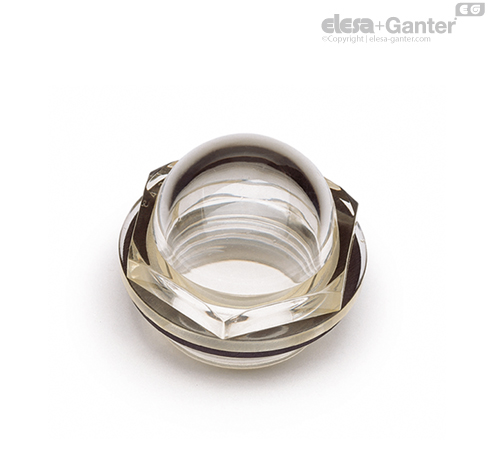
Elesa+Ganter HCFE.19-M27x1,5 Oil Level Sight Glass Explained
The Elesa+Ganter HCFE.19-M27x1,5 oil level sight glass is built for industrial users who need a simple, durable, and clearly readable way to monitor fluid levels. In many machines, a direct visual check is still one of the most effective methods for confirming whether oil or lubricant remains within the expected range.
This model is part of the HCFE oil level sight glass series and is especially relevant where a M27x1.5 threaded oil sight glass is required. It combines compact installation with the practical benefits of a transparent inspection window, making it suitable for a wide range of maintenance-oriented applications.
Technical Features of HCFE.19-M27x1,5
The HCFE.19-M27x1,5 uses a M27x1.5 thread and is made from transparent polyamide-based technopolymer (PA-T). Sealing is provided by an NBR synthetic rubber flat washer. The series is rated for a maximum continuous working temperature of 100°C. Technical dimensions listed for this version include A 9 mm, B 19.5 mm, D 31 mm, d 25 mm, and s 26.5 mm, with a recommended tightening torque of 6 to 8 Nm.
Elesa+Ganter HCFE.19-M27x1 Benefits in Industrial Maintenance
A quality oil level indicator helps maintenance staff work faster and with more confidence. Instead of opening a housing or relying on less immediate inspection methods, technicians can check fluid condition visually during regular service intervals. In practice, that makes equipment care more consistent.
The HCFE.19-M27x1,5 also supports cleaner system monitoring. In applications such as industrial gear units, process machinery, and hydraulic assemblies, having a visible level point helps reduce unnecessary intervention and supports better preventive maintenance planning.
Elesa+Ganter HCFE.19-M27x1 Best-Fit Applications
This model is often appropriate for hydraulic systems, lubrication circuits, machine tools, industrial tanks, and enclosed mechanical assemblies that use metric threaded mounting points. It is a practical option when designers want a compact oil reservoir sight glass without moving toward more complex monitoring hardware.
Its transparent construction and standard metric thread make it a dependable choice for machine builders and maintenance professionals who value easy installation and straightforward inspection.
Elesa+Ganter HCFE.19-M27x1 Handling and Compatibility Notes
As with other HCFE models, the transparent body should be protected from contact with alcohol or detergents containing alcohol. If the fluid contains unusual additives, additional compatibility confirmation is advisable. Proper torque application remains important for sealing quality and long-term durability.
For more information about Elesa+Ganter, reviewing related mounting accessories and hydraulic system components can help support a more consistent specification process.
Elesa+Ganter HCFE.19-M27x1 FAQ
What kind of equipment uses the Elesa+Ganter HCFE.19-M27x1,5 oil level sight glass?
This model can be used in hydraulic units, gearbox housings, lubrication tanks, and other industrial reservoirs where a direct visual oil level check is needed and an M27x1.5 threaded fitting is specified.
Why choose an M27x1.5 oil level sight glass?
An M27x1.5 thread is useful in systems already designed around metric fastening standards. It supports easier integration and avoids the inconvenience of adapting between different thread families.
Is the HCFE.19-M27x1,5 designed for continuous industrial use?
Yes, it is intended for industrial applications and uses materials selected for durability, visibility, and sealing performance. The published continuous working temperature limit is 100°C for the standard HCFE series.
What does the transparent body help operators see?
It allows operators and maintenance technicians to check whether oil is present at the expected level and to perform visual inspection quickly during service routines, helping support timely maintenance decisions.
Does installation require special care?
Installation should follow the recommended tightening torque to ensure proper sealing. Over-tightening is not advisable, and fluid compatibility should be checked when the application uses non-standard additives.