
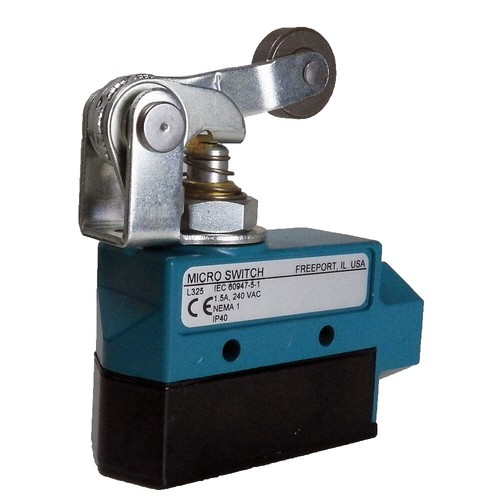
Honeywell 13LS1-4C Limit Switch: A Practical Guide for Industrial Position Detection
The Honeywell 13LS1-4C limit switch is part of the well-known Honeywell MICRO SWITCH limit switch family used for dependable position sensing in industrial machinery. In many distributor listings, this model is associated with the LS Series format, a compact industrial switch platform built for demanding environments where repeatability and mechanical durability matter. For engineers, maintenance teams, and machine builders, the appeal of a Honeywell 13LS1-4C limit switch lies in its rugged construction, consistent actuation, and suitability for equipment that needs clear, repeatable end-of-travel or presence detection.
What Makes the Honeywell 13LS1-4C Limit Switch Relevant?
A Honeywell 13LS1-4C limit switch is typically chosen when a machine needs physical contact sensing with strong mechanical feedback. Honeywell’s LS limit switch platform is known for metal construction, a sealed industrial design, and long service life in applications exposed to dust, water, oil, or vibration. In practical terms, that means the switch is suitable for conveyors, machine guards, transfer systems, packaging equipment, and automated assemblies where mechanical confirmation is more valuable than a non-contact sensing method.
Distributor references commonly list this Honeywell model with an SPDT contact configuration, roller lever actuation, screw terminals, and an industrial enclosure format associated with IP67-level protection. Listings also associate this switch family with 10 A switching capability, operation up to 480 Vac, and mechanical life up to 10,000,000 cycles. That specification profile helps explain why the Honeywell 13LS1-4C limit switch is relevant in repetitive industrial motion systems.
Technical Characteristics in Daily Use
From a technical perspective, the Honeywell 13LS1-4C limit switch fits environments where a compact but durable electromechanical switch is needed. Honeywell’s LS family is described as oil-tight, water-tight, and dust-tight, with die-cast housings, heads, and actuators that support long-term use in industrial indoor and outdoor installations. That combination matters because many facilities need a switch that is not only electrically reliable, but also physically robust enough to tolerate repeated actuation and exposure to contaminants.
Because the product is part of an industrial limit switch family, it is well suited for position verification, travel limit detection, safety interlock support, and machine sequencing. A Honeywell 13LS1-4C limit switch can help confirm whether a moving part has reached a required position before the next machine action begins.
Where the Honeywell 13LS1-4C Limit Switch Is Commonly Used
Common use cases include packaging lines, factory automation cells, gate or door position feedback, conveyor endpoints, and tooling stations. The reason many engineers specify a Honeywell 13LS1-4C limit switch is simple: it gives a clear mechanical response and a familiar switching architecture that is easy to integrate into control circuits.
For teams standardizing on Honeywell components, more information about Honeywell can be useful when comparing switch families, enclosure styles, and mounting options across a wider machine platform.
FAQ
What type of product is the Honeywell 13LS1-4C?
The Honeywell 13LS1-4C limit switch is an industrial electromechanical limit switch used for physical position detection. It is intended for machinery that requires reliable contact-based sensing at a specific point of travel.
Is the Honeywell 13LS1-4C suitable for harsh industrial environments?
Yes. The broader Honeywell LS family is designed for industrial environments and is described with sealed, rugged construction intended to resist water, oil, dust, and mechanical wear. That makes it a strong choice for many factory and processing applications.
Why do engineers still use limit switches instead of only non-contact sensors?
Limit switches remain useful because they provide direct mechanical confirmation. In applications where a machine component must physically reach a location before a signal is valid, a product such as the Honeywell 13LS1-4C limit switch can offer a very practical and trusted solution.
What should be checked before replacing a Honeywell 13LS1-4C?
Before replacement, verify the actuator style, mounting dimensions, contact arrangement, electrical rating, enclosure type, and environmental protection needs. Those details ensure the replacement behaves the same way inside the machine.
Is the Honeywell 13LS1-4C still a relevant part for maintenance teams?
Yes. Even when a part has a long market history, it can still be highly relevant in maintenance, retrofit, and installed-base support. Many facilities continue using proven industrial switch families because they simplify service and reduce redesign work.